A cymbal’s fading shimmer, the grain of a bow crossing a cello string, the weight behind an upright bass – these are the moments that reveal a loudspeaker’s character. A thoughtful speaker driver materials comparison is not simply a catalog of aluminum, paper, or ceramic cones. It is a way to understand why one speaker sounds immediate and alive while another may sound brilliant yet emotionally distant.
The driver is where an electrical signal becomes physical motion. Its diaphragm must start and stop with precision, remain stable under pressure, and avoid adding a voice of its own to the recording. No single material is universally superior. The finest results come from matching a material’s strengths, limitations, motor system, crossover design, cabinet behavior, and intended musical experience.
Speaker Driver Materials Comparison: What Matters Most
A driver diaphragm is judged by three closely related qualities: stiffness, mass, and internal damping. Stiffness helps a cone preserve its shape as it moves. Low mass helps it respond quickly to small musical changes. Internal damping helps control unwanted resonances that can color the sound.
The challenge is that these properties rarely arrive together in ideal proportion. A very stiff material can store and release energy in a narrow frequency range, creating a resonance that must be carefully managed. A highly damped material may sound naturally composed but can give up some ultimate extension or transient sharpness if poorly engineered. This is why material alone never tells the full story.
For the listener, the practical question is more refined: does the speaker preserve the natural color, scale, timing, and emotional force of a performance? The answer depends on the entire loudspeaker, not a single line on a specification sheet.
Paper and Natural-Fiber Cones
Paper remains one of the most respected diaphragm materials in serious loudspeaker design, despite its humble name. In premium applications, it is rarely ordinary paper. It may be formed from carefully selected pulp fibers, treated with coatings, blended with other fibers, or built in layered structures to achieve a particular balance of weight, rigidity, and damping.
Its defining virtue is often its natural self-damping. Rather than allowing resonant energy to ring conspicuously, a well-designed paper cone tends to dissipate it gracefully. The result can be a midrange with convincing body and tonal ease – qualities that matter enormously with voices, piano, acoustic guitar, and strings.
Paper cones can also deliver bass with a sense of suppleness and texture. They do not automatically produce deeper bass than other materials, but they can make bass instruments feel less mechanical and more dimensional. The trade-off is that paper’s behavior is influenced by formulation and environmental resistance, so the engineering and treatment of the cone are critical. A poorly designed paper driver is no more inherently musical than a poorly designed driver of any other type.
Polypropylene and Other Polymer Cones
Polypropylene and related polymers became popular for their consistency, durability, and strong inherent damping. These materials can suppress resonances effectively, contributing to a smooth, forgiving presentation. In the right implementation, they make it easier to create a coherent and listenable loudspeaker over long sessions.
The potential limitation is that some polymer diaphragms can sound slightly soft or less immediate when compared with very light paper or rigid metal designs. This is not a rule. Cone geometry, thickness, motor strength, and crossover execution can transform the outcome. Still, listeners seeking the last degree of microdynamic contrast – the subtle rise and fall of a singer’s phrasing, for example – may prefer a different material balance.
Polymer drivers often make particular sense where tonal composure and broad everyday usability are priorities. They can be excellent choices in designs intended to remain smooth at higher playback levels or in rooms where a brighter driver might become fatiguing.
Aluminum, Magnesium, and Metal Cones
Metal diaphragms are valued for high stiffness and excellent piston-like behavior through much of their working range. Aluminum cones, in particular, can offer articulate transients, clean leading edges, and an impression of exceptional detail. A well-executed metal midrange can illuminate the inner structure of an orchestral recording, separating instrumental lines with impressive precision.
Yet this strength introduces one of the central lessons in any speaker driver materials comparison. When a metal cone reaches its breakup region, it can produce a pronounced resonance. If that behavior is not controlled by careful driver design and crossover integration, the speaker may acquire a sharp, glassy, or overly insistent character.
Great metal-driver loudspeakers avoid this outcome through sophisticated engineering. The crossover may be placed well below the resonance, the cone profile may be optimized to shift or reduce it, and damping treatments may be used strategically. When these elements are handled with judgment, metal can combine authority, speed, and remarkable clarity without sacrificing musical grace.
Magnesium offers lower mass than aluminum for a given stiffness, which can be attractive for high-resolution designs. It also requires rigorous control, particularly at breakup. The material is not a shortcut to superior sound. It is an invitation to more exacting engineering.
Ceramic, Diamond, and Other Ultra-Rigid Diaphragms
Ceramic and diamond diaphragms occupy the rarefied end of driver technology. Their extraordinary rigidity can extend piston-like operation very far into the frequency range, supporting exceptional resolution, low coloration, and a sense of effortless transparency.
Ceramic cones, often derived from treated aluminum substrates, can reveal fine spatial information with startling poise. A quiet studio acoustic, the air around a vocal, or the harmonic tail of a concert grand can appear with remarkable clarity. Diamond tweeters take this pursuit further, offering extremely high stiffness and potentially exceptional high-frequency extension.
However, ultra-rigid materials are not automatically more musical. Their resonant behavior may occur at frequencies beyond the main operating band, but it still demands precise filtering and sympathetic partnering with other drivers. In a revealing system, every weakness in the recording, amplifier, room, or crossover becomes easier to hear. For some listeners, that exposure is exhilarating. For others, a slightly more forgiving balance may offer greater long-term pleasure.
Soft-Dome and Metal-Dome Tweeters
Tweeter material shapes the emotional character of the upper registers more than many listeners expect. Fabric soft domes – commonly silk, textile blends, or coated fabrics – are admired for their smooth dispersion and natural decay. They can present violins, brass, and vocal sibilants with refinement rather than glare.
Metal domes, often aluminum or beryllium in elite applications, can bring exceptional speed, extension, and low-level definition. They may reveal the metallic shimmer of percussion and the leading edge of a plucked string with extraordinary focus. As with metal midrange cones, resonance control is central to the final result.
Neither presentation should be reduced to a stereotype. A superb soft dome can be open and detailed. A superb metal dome can be silky and relaxed. The more relevant question is whether the tweeter integrates so naturally that it disappears, leaving only the recorded space and the musicians within it.
Why the Crossover and Cabinet Matter as Much as the Cone
A driver never performs in isolation. Its crossover determines where it hands music to the next driver, how phase relationships are managed, and whether the transition is heard as a discontinuity or experienced as a unified musical event. A beautiful cone can be undermined by an indifferent crossover, while a carefully voiced network can reveal the deeper virtues of a well-chosen diaphragm.
The cabinet is equally consequential. It must resist unwanted vibration, control internal reflections, and provide the acoustic loading required for the driver to produce convincing bass and scale. Heavy, inert construction is valuable, but so is intelligent control of resonant energy. The goal is not merely silence from the enclosure. It is freedom for the driver to communicate the recording without a cabinet signature obscuring its work.
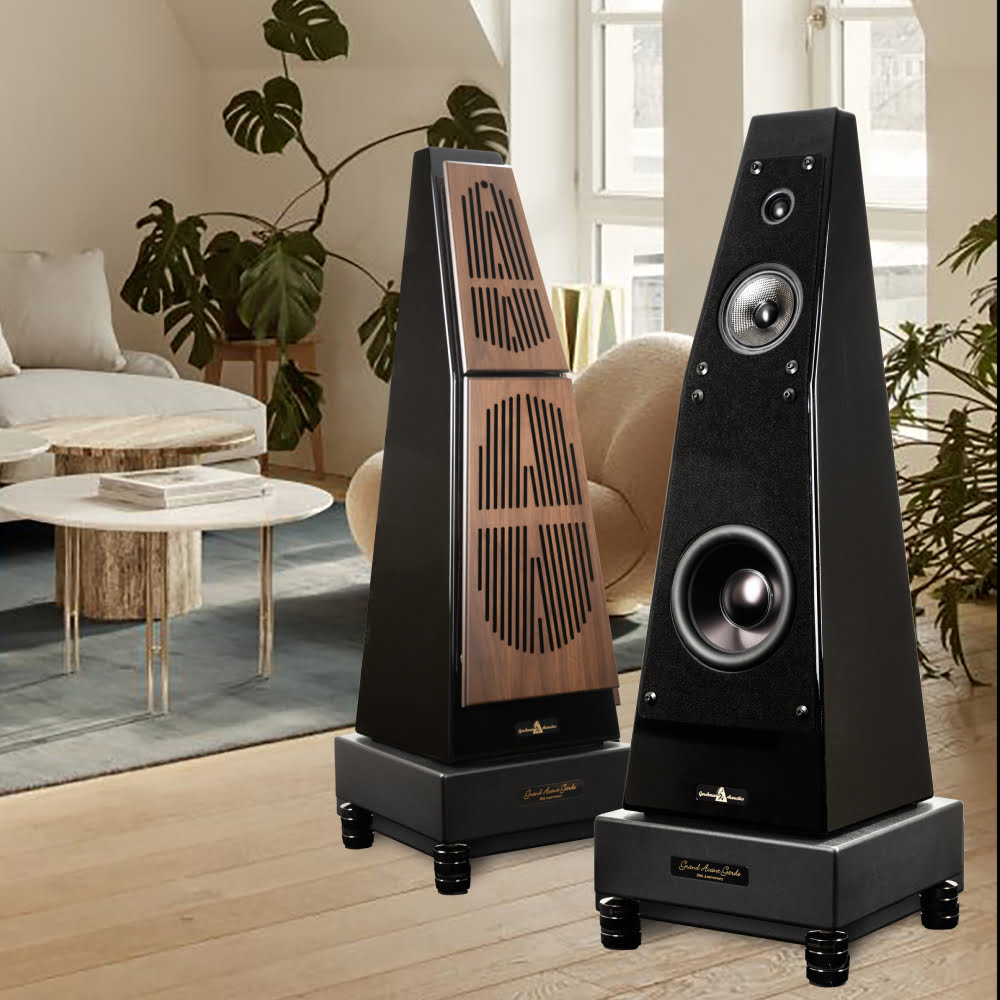
This holistic view has always distinguished genuinely high-end loudspeaker design. At Gershman Acoustics, driver selection is considered as part of a complete acoustic instrument, shaped by crossover voicing, cabinet craftsmanship, and the human experience of listening to music.
How to Listen Beyond the Material Label
When auditioning loudspeakers, resist the temptation to decide based on cone material before hearing the system. Bring recordings you know intimately and listen at realistic, comfortable levels. A familiar female vocal can expose midrange coloration. Solo piano reveals timing, tonal density, and decay. Acoustic bass indicates whether low frequencies are tuneful or merely abundant.
Pay attention to what happens when the arrangement becomes complex. Does the speaker preserve the distinct tone of each instrument? Does a crescendo expand naturally, or does the sound harden? At low volume, does the music retain color and presence? These observations will tell you more than a material label ever can.
Room acoustics and amplification also deserve respect. A revealing ceramic or metal driver may require more careful system matching than a naturally damped design. Conversely, a warm room may benefit from a speaker with more openness and transient energy. The best choice is the one that creates enduring connection, not the one that wins a brief technical comparison.
The most rewarding loudspeaker does not ask you to admire its drivers. It lets you forget them. Choose the material and design that make you stay for one more track, then another, because the performance feels less reproduced and more present.