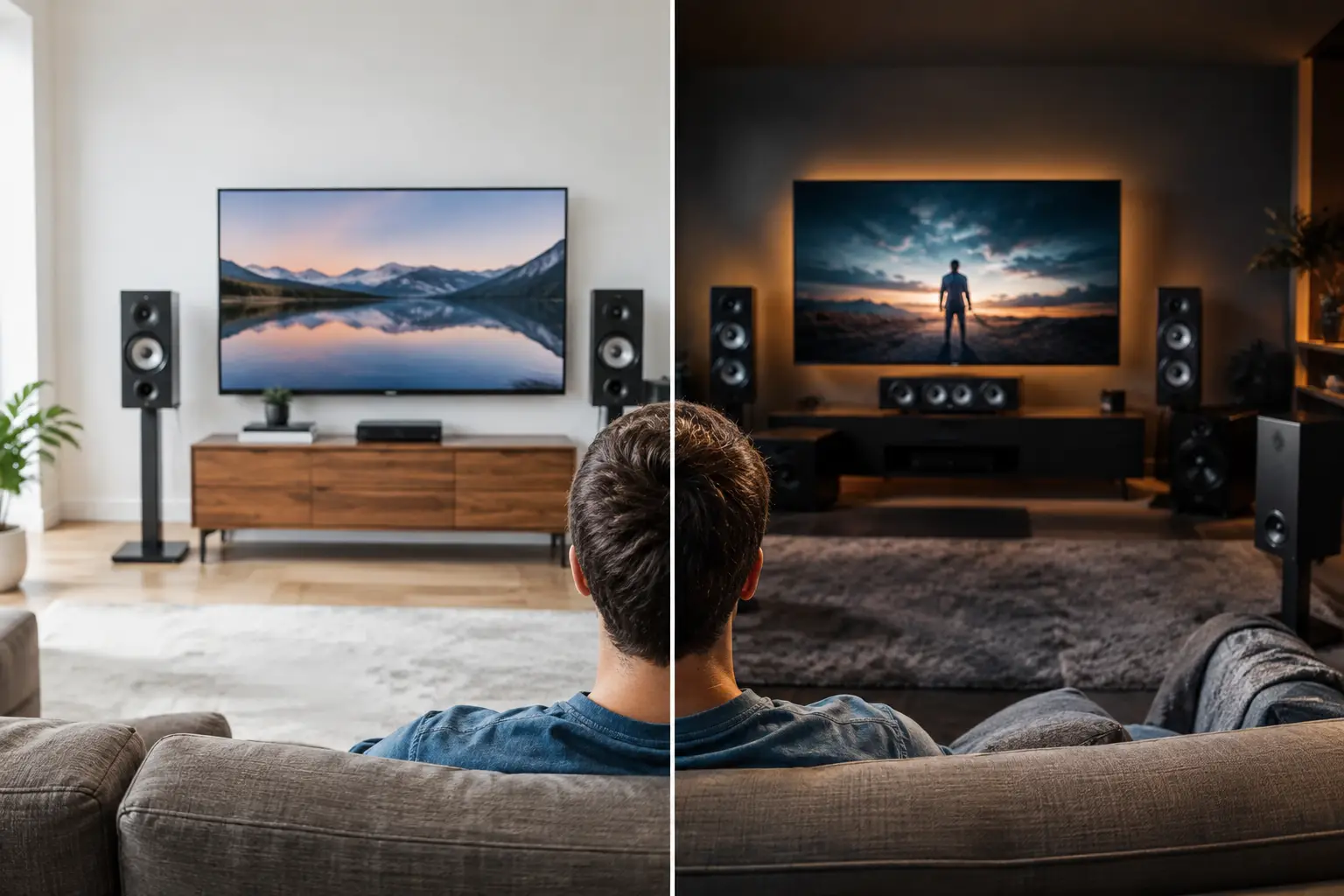
A system can impress for the first five minutes and still make you want to leave the room before an album ends. The cymbals become glassy, vocal sibilants pull forward, and even favorite recordings begin to feel like work. Learning how to reduce speaker fatigue is not about softening music or giving up resolution. It is about restoring the ease, dimensionality, and tonal truth that allow a performance to unfold naturally.
Listening fatigue is often blamed on the loudspeaker because that is where the sound enters the room. Yet it is usually a system-and-room issue: a small excess in upper-midrange energy, an overly reflective space, poor placement, or a mismatched amplifier can compound into a presentation that feels relentlessly insistent. The finest systems reveal extraordinary detail without asking the listener to endure it.
What Speaker Fatigue Actually Sounds Like
Speaker fatigue is a listener’s physical or emotional response to sound that is too aggressive, congested, bright, distorted, or simply unbalanced over time. It is not the same as hearing a revealing recording. A close-miked trumpet, an intentionally raw vocal, or the bite of a well-recorded violin may be startling when the music demands it. Fatigue occurs when that intensity becomes a constant character of the playback system.
You may notice yourself lowering the volume even when the system is not objectively loud. You may skip energetic tracks, find dialogue hard to follow, or prefer background listening to focused sessions. A more telling sign is that instruments lose their natural scale. Instead of a vocalist occupying a believable space between the loudspeakers, certain consonants or cymbal strikes appear detached and too close to the ear.
Do not rush to replace equipment based on one difficult album. Modern recordings vary dramatically in compression, tonal balance, and mastering quality. The useful question is whether the fatigue appears across many familiar recordings, especially those you know to be spacious, natural, and well balanced.
Start With Volume, Not a New Component
Many systems are voiced beautifully at modest levels but become strained when played louder. Human hearing changes with level: bass and low-level ambience can seem less apparent at lower volumes, tempting listeners to turn the system up until the music feels full. If the room or system has excess energy higher up, that extra gain can make brass, snare attacks, and vocal sibilance dominate the experience.
Begin with a simple experiment. Select an acoustic recording with a familiar voice, piano, and cymbals. Lower the volume slightly below your habitual setting, then listen for whether the voice becomes more settled and the soundstage more complete. If it does, the issue may be level, amplifier headroom, room reflections, or a combination of all three.
A satisfying high-end system should retain body, timing, and emotional presence without needing to be driven hard. It should invite another record rather than reward only a brief demonstration track.
How to Reduce Speaker Fatigue Through Placement
Speaker placement is among the most powerful and least expensive remedies. A loudspeaker does not perform in isolation. Its relationship to the front wall, sidewalls, floor, furnishings, and listening position shapes what you hear as decisively as many component changes.
Start by giving the speakers breathing room. Placement too close to the front wall can thicken bass and blur depth, while proximity to sidewalls can intensify early reflections that harden the upper midrange. There is no universal distance that suits every room, but small movements can have a surprisingly large effect. Work in inches, not feet, and listen after each adjustment.
Toe-in deserves particular attention. Pointing loudspeakers directly at the listening position can create precise imaging, but in some rooms it also delivers too much high-frequency energy directly to the ears. Try reducing toe-in slightly so the speakers cross behind the listening position. The image may become broader and less etched, yet voices often gain body and instruments occupy a more convincing acoustic space.
Your seat matters just as much. Avoid placing it directly against the rear wall, where bass buildup and reflected energy can obscure the music’s natural balance. A modest move forward can improve both low-frequency control and long-session comfort.
Treat Reflections With Taste and Restraint
Luxury interiors often include the very materials that can make a system sound more brilliant than intended: expanses of glass, stone, polished wood, and minimally furnished surfaces. These materials are visually striking, but they reflect sound efficiently. The result can be a room that feels lively at first and tiring over a full evening.
The goal is not to deaden the room. An overdamped space can remove air, life, and the sense of a real venue. Instead, seek a balance between absorption and diffusion. A substantial rug between the loudspeakers and listening chair can calm floor reflections. Curtains, upholstered furniture, bookcases, and thoughtfully placed acoustic treatments can reduce the most disruptive early reflections while preserving the room’s character.
Pay special attention to the first reflection points on the sidewalls. If a mirror held against the wall lets you see a speaker from the listening chair, that area is a likely reflection point. Before making permanent design decisions, temporarily place a thick textile or portable panel there and listen again. The change may reveal whether the room is contributing to fatigue.
Preserve Detail Without Chasing Brightness
A common mistake is to equate treble emphasis with resolution. True resolution is the ability to distinguish low-level musical information: the decay of a piano note, the texture of a bow crossing strings, the breath before a singer enters, and the spatial cues that define a recording venue. Brightness can create an immediate impression of detail, but it often replaces nuance with spotlighting.
When evaluating changes, listen to the center of the musical spectrum. Does a cello retain its woody resonance? Does a male or female vocal sound embodied rather than outlined? Can you follow the harmonic development of a piano without its upper register becoming brittle? These are more meaningful tests than whether a hi-hat seems especially sharp.
Handcrafted loudspeakers of the caliber pursued by Gershman Acoustics are designed to resolve this distinction: clarity should serve musical realism, not call attention to itself. If a system continually spotlights its treble, something in the setup deserves closer examination.
Consider Amplifier Control and System Matching
Fatigue is not always a tonal issue. It can also be the sound of an amplifier approaching its limits. When an amplifier lacks sufficient current delivery or headroom for a loudspeaker and room, dynamic peaks may flatten or harden. The listener perceives strain even if the average volume seems reasonable.
This does not mean that more watts automatically solve the problem. Amplifier quality, stability into changing impedance loads, damping behavior, and overall voicing all matter. A powerful but poorly matched amplifier can sound forceful rather than fluid, while a thoughtfully matched design may make the system feel calmer and more expansive at the same level.
Source components and digital settings deserve scrutiny as well. An aggressive digital filter, a poorly implemented streaming path, or excessive output level from a preamplifier can add edge. Change one variable at a time, returning to the same few reference tracks. The patience required is worthwhile because random swapping rarely identifies the true cause.
Give Bass the Attention It Deserves
It may seem counterintuitive, but uncontrolled bass can contribute to perceived treble fatigue. When low frequencies bloom in corners or overwhelm the room, listeners often raise the volume or focus on the upper range to recover clarity. The sound then becomes simultaneously thick and sharp – an exhausting combination.
Experiment with speaker distance from boundaries and listening-seat position before reaching for equalization. If the room still has persistent peaks, careful room correction or discreet bass treatment may help. Used with judgment, these tools can restore tonal proportion. Used aggressively, they can trade one problem for another by flattening the natural dynamics and warmth of music.
Build Listening Sessions Around Music, Not Analysis
Even a superbly balanced system can feel tiring when every session becomes an audition. Constantly checking imaging, bass extension, or treble air turns listening into analysis. Reserve a few familiar recordings for evaluation, then let complete albums take over.
Choose music with natural dynamics and tonal variety: a small jazz ensemble, an uncompressed vocal recording, a chamber work, or a well-captured live performance. Listen at a level where you can remain comfortable for an hour. The system should reveal more of the performance as your attention deepens, not make you increasingly aware of the equipment.
A room and system that honor the natural weight of instruments, the silence around notes, and the emotional arc of a performance make long listening effortless. Settle into a favorite record, resist the urge to adjust anything for one evening, and allow the music to be the only thing asking for your attention.