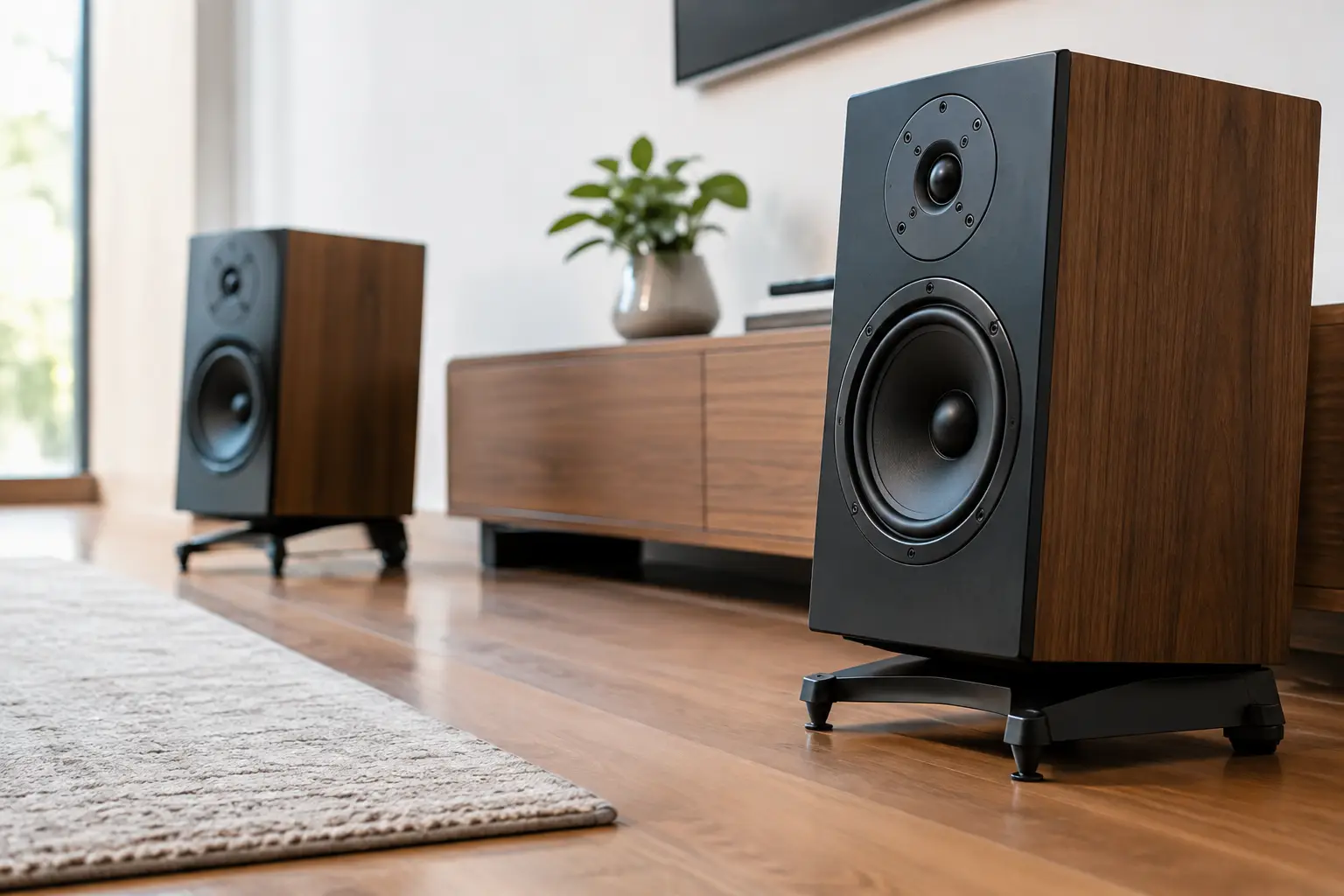
A familiar recording can reveal its true power in the first few seconds: the intake of breath before a vocal phrase, the wood and wire of an upright bass, the lingering decay of a piano chord. An emotional music listening experience begins there, in the moment a system stops presenting sounds and starts preserving the human intention within them.
For serious music lovers, this is not a matter of volume or spectacle. It is the rare sensation that an artist is communicating across time and distance with startling directness. A great loudspeaker does not impose a personality on that exchange. It creates the conditions for the recording to speak with its own voice.
Why an Emotional Music Listening Experience Feels Real
Emotion in music is carried by more than melody. It lives in microdynamics, phrasing, tonal color, timing, and silence. A singer leaning into a line, a drummer easing off a cymbal, or a violin section swelling just before its peak can alter the meaning of an entire passage. When those fine gradations are blurred, music may remain pleasant, but it loses conviction.
The most memorable systems preserve contrast without exaggeration. A whisper should have intimacy, not merely reduced volume. A full orchestra should expand with authority without turning congested or brittle. This balance is what lets a listener recognize not only what is being played, but why it was played that way.
Scale matters as well. A small jazz ensemble should appear coherent and naturally proportioned, with each musician occupying a believable place in the room. A large symphonic work should open outward, revealing depth behind the front plane of the loudspeakers and space around individual instruments. Imaging is not a parlor trick when it serves musical communication. It is a way of restoring the relationships captured in the performance.
The Difference Between Detail and Musical Truth
Many systems can emphasize detail. The more difficult achievement is resolving detail without making music feel dissected. A highlighted sibilant, an overlit cymbal, or unnaturally etched leading edge may initially sound impressive. Over a long evening, however, that kind of presentation can become fatiguing and emotionally distant.
Musical truth has a different character. It allows texture to emerge from a natural tonal foundation. You hear the rosined friction of a bow, yet the violin remains a violin rather than a collection of treble artifacts. You hear the resonance of a kick drum, yet its force remains connected to the rhythm of the performance.
This is why tonal balance is central to emotional engagement. Richness without control can obscure the recording’s structure. Analytical precision without body can make a favorite album feel unfamiliar. The aim is neither warmth for its own sake nor clinical neutrality. It is a convincing wholeness, where bass, midrange, and treble behave as parts of one musical event.
Dynamics Give Music Its Sense of Breath
A performance breathes through dynamic movement. The difference between soft and loud is only one part of the story. Equally vital are the small rises and falls inside a note, a phrase, or a measure. These microdynamic changes give a vocalist vulnerability, give a piano its touch, and give a percussionist physical presence.
A loudspeaker with genuine dynamic freedom can make moderate listening levels feel complete. It does not need to be pushed hard before rhythm gains momentum or an acoustic instrument gains body. This is particularly valuable in a refined home environment, where late-night listening may call for restraint without sacrificing emotional impact.
Silence Is Part of the Performance
The space around notes is not empty. It contains the acoustic signature of the studio, concert hall, or intimate club. It allows a vocal to hang in the air and lets reverberation tell the listener about the size and character of the venue.
A quiet, well-resolved system makes these moments audible without demanding attention. The result is less like observing audio effects and more like entering the atmosphere of a recording. You may notice that you are no longer waiting for the next impressive passage. You are simply following the music.
Building a More Emotional Music Listening Experience
The loudspeakers are the voice of a system, but their performance is shaped by the room and the care taken in setup. Even an exceptional design benefits from thoughtful placement. Small adjustments in distance from the front wall, spacing between speakers, and listening position can significantly change bass definition, image focus, and soundstage depth.
Begin by giving the loudspeakers room to breathe. Placing them too close to boundaries can add weight, but may also obscure low-frequency articulation and compress spatial cues. Moving them farther into the room often improves depth and clarity, though every room has practical limits. The right position is the one that brings the music into balance, not the one that follows a formula.
Listening height also deserves attention. The relationship between the listener and the tweeter affects image stability and tonal continuity. A carefully chosen chair, positioned so that the system forms a balanced listening triangle, can make a surprisingly meaningful difference. These refinements are not rituals for their own sake. They help the loudspeakers disappear as objects.
The room itself is a component. Glass, stone, large bare surfaces, and open-plan architecture can create beautiful living spaces while challenging a system’s ability to maintain focus. Heavy-handed treatment is not always desirable, especially in a carefully designed home. Often, a thoughtful combination of rugs, upholstery, books, art, and discreet acoustic consideration can preserve visual elegance while reducing distracting reflections.
Source quality and amplification matter, but not as a contest of specifications. A well-matched amplifier should offer control, ease, and tonal integrity. A fine source should preserve the recording’s timing, texture, and low-level information. Compatibility is more valuable than excess. A system assembled around synergy will often communicate more deeply than a collection of individually celebrated components.
Craftsmanship You Can Hear and Live With
Luxury loudspeakers occupy a distinctive place in the home. They are precision instruments, but they are also objects encountered every day. Their cabinet proportions, finish, materials, and visual presence should reward close attention without competing with the room around them.
That relationship between form and function is more consequential than it first appears. Cabinet construction influences resonance control and tonal purity. Driver integration influences coherence. The exterior, meanwhile, reflects the same discipline required inside: proportion, restraint, and respect for materials.
At Gershman Acoustics, this philosophy is expressed through handcrafted loudspeakers designed to unite engineering rigor with lasting visual elegance. The objective is not sound that calls attention to equipment. It is a presentation with sufficient control, scale, and natural ease to return attention to the artistry of the recording.
There is also a personal dimension to ownership. A thoughtfully built loudspeaker can become part of a home’s identity, much like a treasured instrument, artwork, or piece of furniture. It represents a decision to make room for focused listening in a life that rarely offers it by default.
Choose Recordings That Invite You Back
The best test of a system is not a checklist of audiophile effects. It is whether it encourages you to revisit music. Start with recordings you know deeply, including ones that are not flawless. A revealing system should not punish imperfect production. It should reveal what remains compelling about the performance.
Listen for whether a voice has believable scale and whether instruments retain their distinct character as arrangements become more complex. Notice whether bass supports the music’s foundation or simply announces itself. Most of all, notice your own attention. If you stop evaluating and begin feeling the arc of a song, the system is doing something meaningful.
An emotional connection will differ from listener to listener. One person may seek the physical sweep of Mahler, another the close-miked honesty of a folk recording, and another the pulse and architecture of electronic music. The common thread is not genre. It is the desire to hear music with enough fidelity that its intent survives the journey into the listening room.
Make time for an uninterrupted album. Lower the lights, set the phone aside, and let the recording establish its own pace. The finest systems do not merely make this ritual more luxurious. They make it more human.