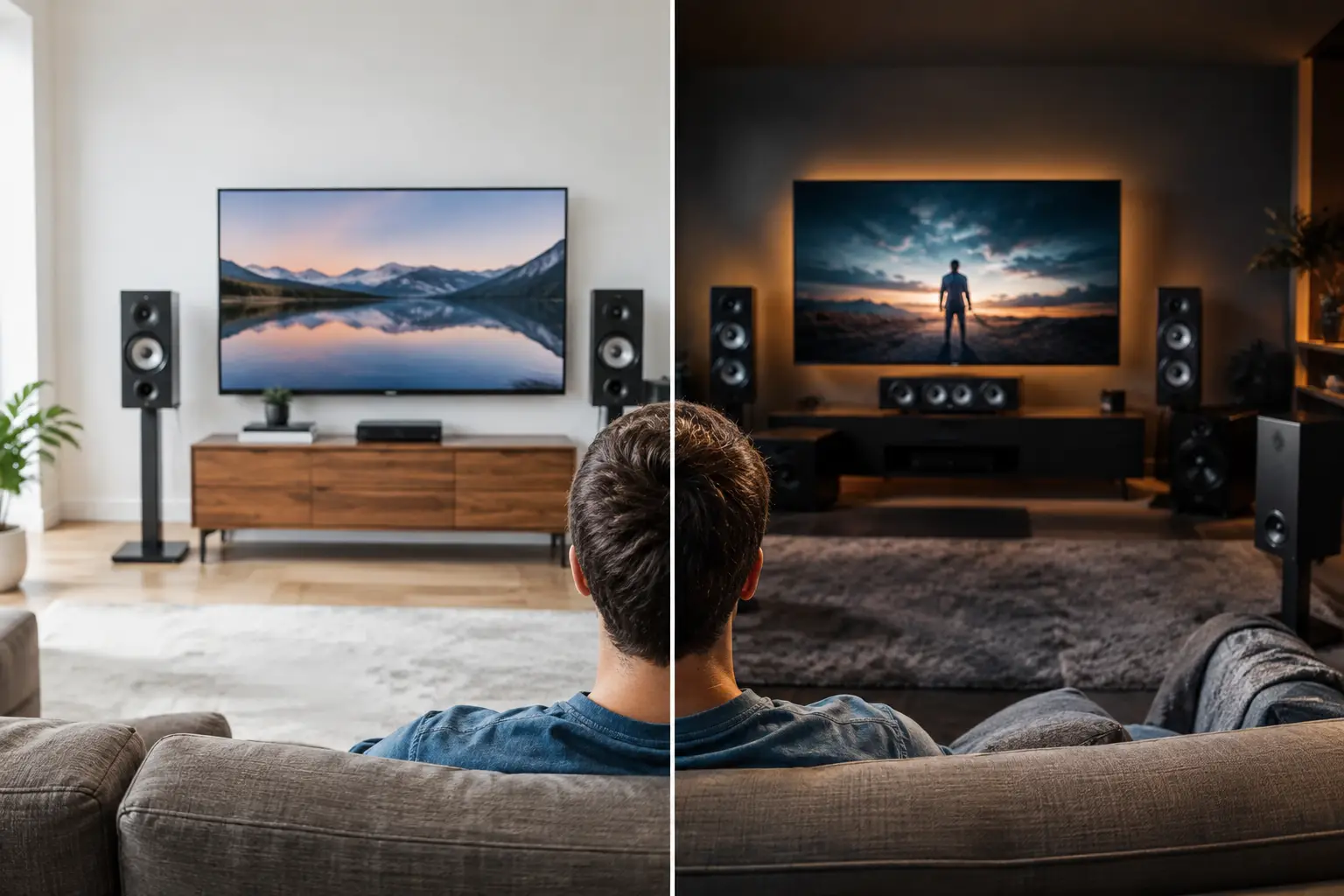
A familiar recording can expose the difference between luxury speakers vs mass market systems within the first few measures. A mass-market speaker may deliver the melody, the beat, and respectable volume. A truly accomplished loudspeaker reveals the breath before a singer’s phrase, the decaying shimmer of a cymbal, and the scale of the room in which the performance was captured.
This distinction is not about owning an expensive object for its own sake. It is about whether a system can preserve the emotional and spatial information that turns reproduced sound into an intimate musical event. For listeners who have built a meaningful record collection, attend live performances, or simply want their home to feel as considered as the rest of their lives, that difference can become profound.
Luxury Speakers vs Mass Market: The Real Difference
Price is the most visible distinction, but it is not the most useful one. Mass-market speakers are designed for broad appeal, efficient production, accessible price points, and performance that remains predictable across countless retail environments. There is real value in that mission. Many offer convenience, compact proportions, wireless connectivity, and a satisfying introduction to better sound.
Luxury loudspeakers are made for a narrower and more demanding purpose: to reproduce music with greater tonal truth, dynamic freedom, dimensionality, and long-term refinement. Their design process often begins with listening rather than a feature checklist. Engineers make decisions about cabinet geometry, crossover behavior, driver integration, resonance control, and material selection because each decision can influence what reaches the listener.
The result should not merely be more sound. It should be less obstruction between the listener and the performance.
The Cabinet Is an Instrument, Not a Container
A loudspeaker cabinet has a difficult job. It must support the drivers, resist vibration, control internal energy, and contribute as little unwanted character as possible. When a cabinet stores and releases energy, voices can harden, bass can become indistinct, and complex music can lose its ease.
Mass-market designs must usually balance these demands against material costs, shipping constraints, and assembly speed. A well-executed affordable cabinet can perform admirably, but it may rely on simpler construction, thinner panels, or finishes selected primarily for scale.
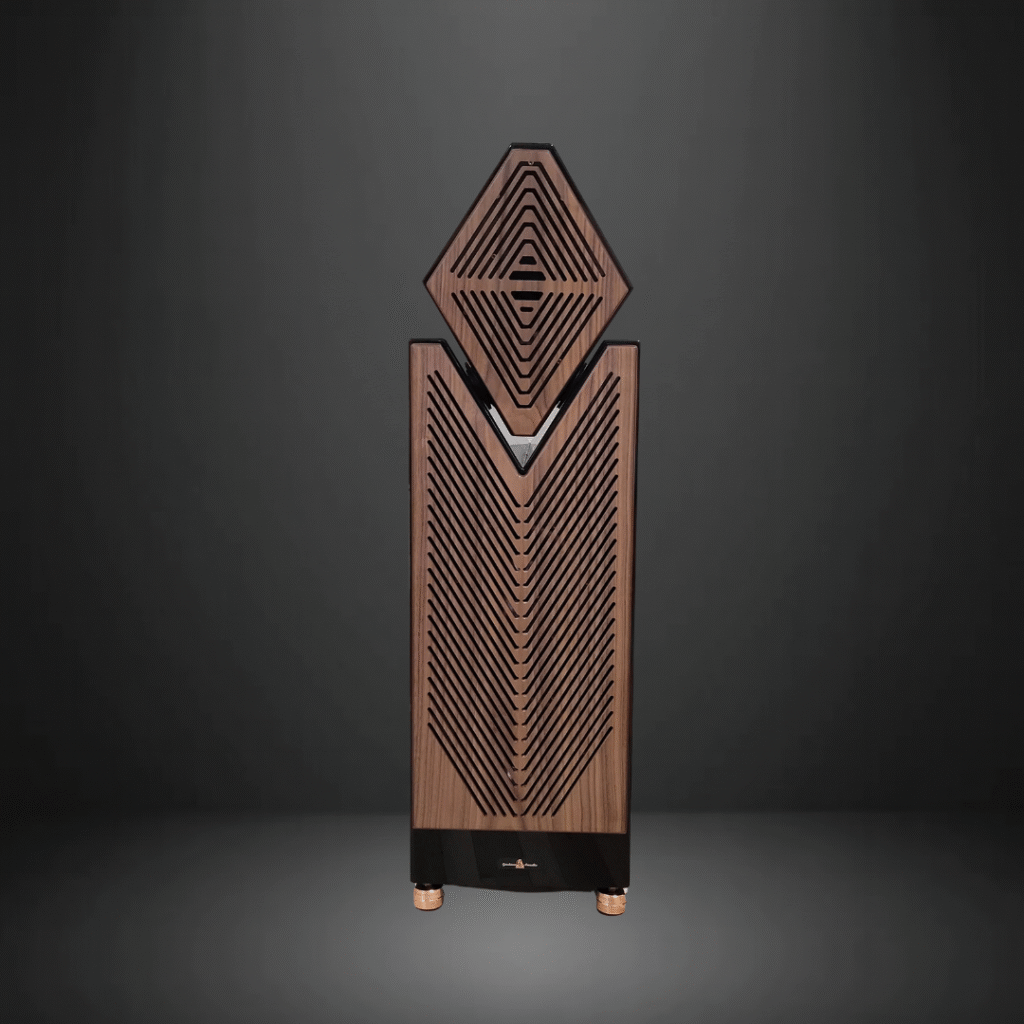
In a luxury loudspeaker, cabinet construction is often central to the acoustic design. Carefully chosen materials, extensive bracing, curved or non-parallel surfaces, and painstaking finishing are not decorative afterthoughts. They can help minimize resonance and allow instruments to emerge from a quieter, more stable foundation. The visual result also matters. A speaker that belongs naturally in a finely designed room invites listening rather than asking to be hidden.
Components Matter, but Integration Matters More
Premium drivers, capacitors, wiring, and terminals are frequently cited as reasons for higher cost. They do matter. Better components can offer lower distortion, greater control, more consistent behavior, and the ability to resolve fine musical detail without strain.
Yet a loudspeaker is not a collection of expensive parts. It is a system whose success depends on integration. The crossover must hand musical information from one driver to another without calling attention to itself. Bass must possess weight without obscuring the midrange. Treble must extend freely without becoming etched or fatiguing. The speaker must preserve a coherent image as the music grows from a solo instrument to a full orchestra.
This is where experienced voicing becomes invaluable. Measurements provide indispensable guidance, but they do not fully describe how a piano occupies space, how a cello’s body resonates, or why a vocal recording can feel present one moment and mechanical the next. The finest designs unite engineering discipline with extensive listening over time.
Detail Is Not the Same as Brightness
One common misunderstanding is that high-end sound simply means hearing more treble. In reality, excessive high-frequency energy can create an immediate impression of detail while becoming tiring over a longer session. Genuine resolution is more complete and more natural.
It allows the listener to follow a quiet instrumental line within a dense arrangement. It reveals the texture of a brushed snare drum without turning the brushes into hiss. It retains the character of a recording, whether it is a close-miked jazz trio, a large-scale symphony, or an imperfect but beloved vintage album.
A refined speaker does not impose one glossy personality on every recording. It gives each recording room to speak in its own voice.
Scale, Dynamics, and the Feeling of Presence
Mass-market speakers can often play loudly. The more telling question is what happens when music becomes demanding. Can the speaker reproduce the sudden force of an orchestral crescendo without flattening the image? Can it convey the physical impact of a kick drum while keeping a bass line tuneful? Can it move from a whisper to a full emotional peak without sounding compressed?
Luxury loudspeakers are often engineered with greater dynamic headroom and control. This does not mean every listener needs concert-level volume. Even at moderate levels, dynamic capability gives music a sense of life. Small shifts in intensity remain intact, and instruments retain their individuality when an arrangement becomes complex.
Soundstage is equally significant. With a properly matched system and thoughtful placement, a loudspeaker can create width, depth, and precisely located images that extend beyond the cabinets themselves. The speakers seem to disappear, leaving a believable musical space. That illusion is one of high fidelity’s enduring pleasures, and it cannot be reduced to a specification sheet.
Craftsmanship Has Value Beyond the First Listening Session
Luxury audio is also an investment in permanence. A carefully built loudspeaker is intended to remain musically relevant and physically beautiful for years, not to be replaced when the next connectivity standard appears. Its finish, proportions, and construction should reward close attention long after the initial excitement of installation.
Handcrafted production allows for closer quality control and a more deliberate relationship between design and execution. At Gershman Acoustics, that commitment is expressed through Canadian craftsmanship and a longstanding focus on musical realism, from controlled low frequencies to the spacious, natural presentation of voices and instruments.
Exclusivity is part of this experience, but not as a hollow badge. It reflects the time, skill, and limited-scale attention required to build a loudspeaker with exceptional care. For many owners, the object itself becomes part of the home’s character: sculptural, enduring, and purposeful.
When Mass-Market Speakers Are the Better Choice
There are circumstances where a mass-market product is entirely sensible. A secondary room, a casual streaming setup, a temporary residence, or a listener who prioritizes compact wireless convenience may not call for a reference-grade system. Budget also matters, and no responsible audio conversation should pretend otherwise.
The better question is not whether every household needs luxury speakers. It is whether music occupies a meaningful place in your life, and whether your listening room deserves a more serious instrument. If the answer is yes, the benefits extend beyond isolated moments of technical appreciation. You may find yourself listening longer, returning to albums you thought you knew, and becoming more attentive to the artistry within a performance.
How to Listen Before You Decide
Auditioning should be unhurried. Bring music you know deeply, preferably across several genres and recording styles. Listen first for tonal balance and vocal authenticity. Then pay attention to whether bass has pitch and shape, whether the sound remains composed during demanding passages, and whether the presentation invites you to stay in the chair.
Do not judge by spectacular effects alone. A speaker that impresses for five minutes may not satisfy for five years. The more meaningful sign is ease: music sounds open, coherent, and emotionally convincing without demanding constant attention to the equipment.
A luxury loudspeaker earns its place when it makes the system feel less like technology and more like a direct encounter with music. Choose the one that brings you closer to the performances you love, and give it the room, amplification, and listening time necessary to reveal what it can truly do.