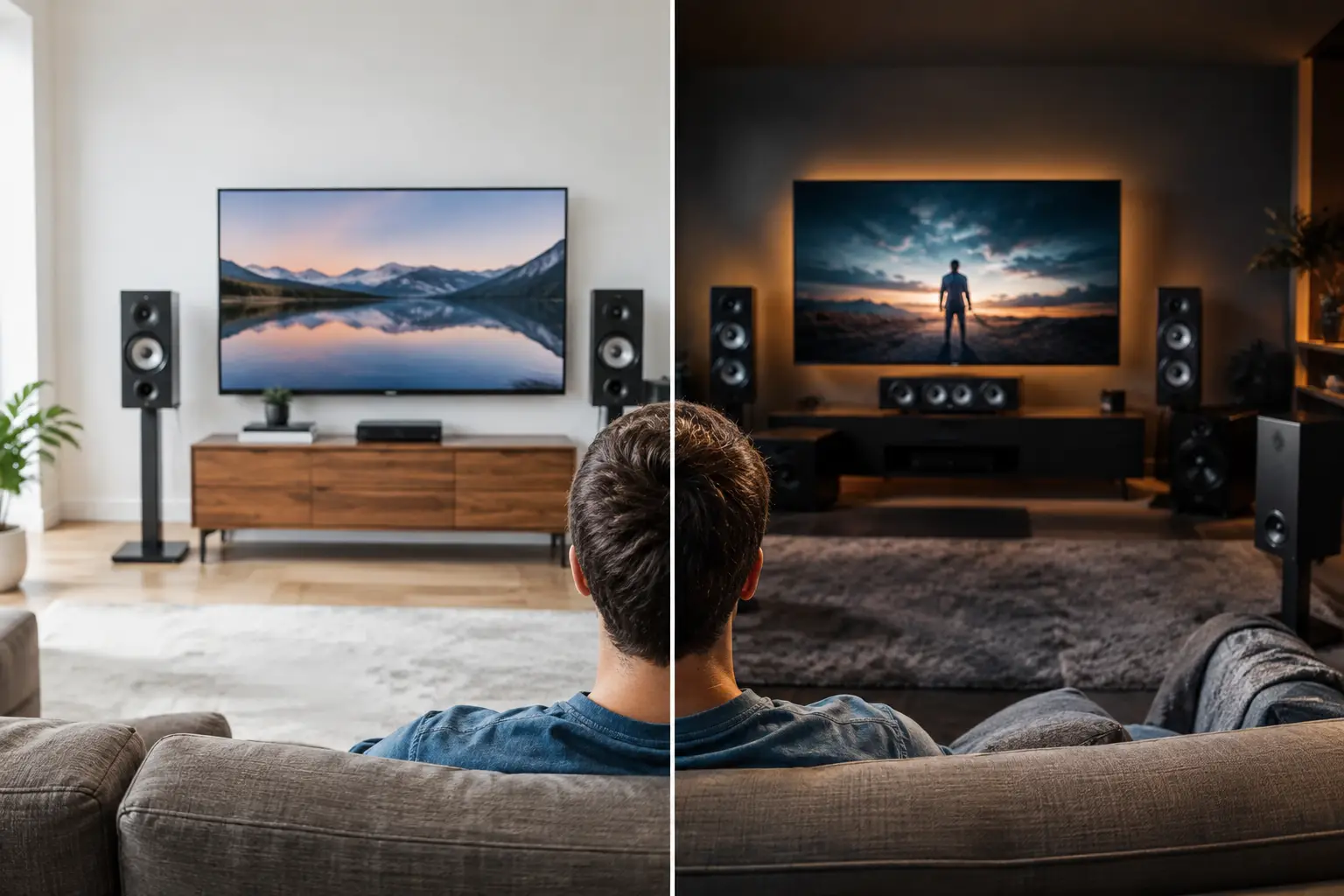
A reference loudspeaker does not flatter a recording into sounding better than it is. It reveals the breath before a vocal line, the weight of a double bass, the space around a piano, and, when present, the rough edges of the source. That honest relationship with music is what makes reference speakers so compelling. They are designed not merely to impress in the first minute, but to remain believable through an entire symphony, an intimate jazz session, or a cherished album heard for the hundredth time.
For the discerning listener, reference quality is not a sterile technical exercise. It is the foundation of emotional connection. When a loudspeaker preserves timing, tonal color, scale, and dynamic contrast, the performance becomes more immediate. The room recedes. The recording begins to feel less like playback and more like an event unfolding in the home.
What Makes Reference Speakers Different?
The word “reference” is often used loosely in high-end audio. A speaker may have a detailed treble response or powerful bass and be called a reference model, yet true reference performance asks for a far more complete balance. It requires a loudspeaker to reproduce the recording with tonal integrity, spatial precision, and dynamic ease across a wide range of music.
A credible reference design should not make every singer sound identical, every orchestra sound oversized, or every bass line sound artificially heavy. It should allow the character of the recording to come through. A close-miked studio vocal should feel intimate. A live hall recording should open beyond the speaker boundaries. A great loudspeaker reveals these distinctions without forcing a sonic signature onto every performance.
This is why the best reference systems are often described in musical terms rather than only technical ones. Listeners speak of natural flow, presence, body, air, and a convincing sense of scale. Measurements matter deeply, but they serve a larger purpose: preserving the human and instrumental truth contained in the recording.
Accuracy Is More Than Detail
Many listeners first associate accuracy with detail. Certainly, reference speakers should resolve fine information: a guitarist’s fingers moving across strings, a quiet brushstroke on a cymbal, the decay of a note in a concert hall. But excess detail can become an illusion of accuracy when it is created by an elevated treble range or an overly lean tonal balance.
Real accuracy is more holistic. It is the ability to hear detail without having it pushed forward. It is hearing a violin as richly textured rather than merely bright, and a kick drum as physically convincing rather than oversized. It is the coherence that allows bass, midrange, and treble to arrive as one musical event.
The midrange deserves particular attention. It carries the tonal center of voices and many acoustic instruments, and it is where listeners most quickly recognize whether a system feels believable. If a speaker reproduces a singer with natural body, clear diction, and no glassy edge, it establishes trust. That trust then extends to the full musical picture.
Dynamic behavior is equally essential. Music is not a constant stream of sound at one volume. A small change in a pianist’s touch, the sudden surge of an orchestra, and the controlled impact of a drum all depend on dynamic contrast. Reference performance does not simply mean playing loudly. It means responding quickly and cleanly to changes in energy, from the faintest ambient cue to a full-scale crescendo.
The Soundstage Must Serve the Performance
A vast soundstage can be spectacular, but width alone is not realism. The meaningful question is whether the stage is organized. Can you locate the singer in space? Does the cello occupy a believable position and size? Do instruments remain stable when the arrangement becomes complex?
Fine reference speakers create an image that is specific without becoming artificially etched. They allow depth to develop naturally, so that foreground performers, supporting instruments, and the acoustic boundaries of the venue occupy distinct layers. When this happens, the listener does not need to analyze imaging. The spatial illusion simply feels right.
Why Cabinet Craftsmanship Matters
A loudspeaker cabinet is not decorative packaging around a collection of drivers. It is an active part of the acoustic system. If the enclosure stores energy, vibrates excessively, or allows internal resonances to intrude, those problems color the music. The result may be a bass line that loses definition, a vocal that becomes cloudy, or a soundstage that never fully settles into focus.
Thoughtful cabinet engineering addresses this through material selection, internal bracing, damping, geometry, and careful integration with the drivers and crossover. The goal is not to make a cabinet disappear visually. It is to help it disappear sonically.
This is also where handcrafted loudspeakers distinguish themselves from mass-market alternatives. Precision assembly, finish work, and close attention to tolerances are not luxuries detached from performance. They contribute to long-term consistency and to the sense that every part of the speaker has been considered as part of one whole. A beautiful cabinet can elevate a room, but its finest achievement is the silence it brings to the music.
The Room Is Part of the System
Even exceptional reference speakers cannot fully express their capability in an unsuitable placement. The room shapes bass behavior, tonal balance, image depth, and the perceived size of the soundstage. This is not a reason to fear high-performance loudspeakers. It is an invitation to treat setup as part of the listening experience.
Begin by giving the speakers room to breathe. Placement too close to the front wall can overemphasize bass and reduce depth, while placement too far into the room may sacrifice useful low-frequency reinforcement. The ideal distance depends on the speaker, its porting or loading arrangement, the room dimensions, and personal listening preferences.
Symmetry matters as well. If one speaker sits near a side wall while the other opens into a large adjacent space, imaging may pull to one side. A centered listening position and reasonably similar left-right boundaries offer the best starting point. Small adjustments can have a surprisingly large effect. Moving a speaker by a few inches, refining toe-in, or changing the listening seat can bring a vocalist into sharper focus and restore balance to the bass.
Room treatment can be valuable, especially where glass, stone, or large bare surfaces create persistent reflections. Yet a reference room should not be acoustically dead. Music needs life and bloom. The aim is controlled reflection, not the removal of all energy. A knowledgeable dealer or experienced setup professional can often shorten this process dramatically.
Choosing a Reference Speaker for Your Music
There is no single reference sound that suits every home and every listener. A person who lives with large-scale orchestral music may prioritize effortless dynamics, expansive scale, and low-frequency authority. Someone devoted to vocal jazz or chamber music may place greater value on midrange intimacy, image density, and the natural decay of acoustic instruments. Most serious music lovers want both, but priorities help guide the audition.
Amplifier matching is another essential consideration. A speaker’s sensitivity, impedance behavior, and crossover design influence the type of amplifier that will let it perform at its best. A reference speaker should expose the virtues of excellent electronics, but it should not demand an impractical system merely to sound coherent at normal listening levels.
During an audition, bring music you know deeply and listen beyond the familiar showpiece moments. Play a sparsely recorded voice, a dense arrangement, a quiet acoustic track, and something with genuine rhythmic drive. Ask whether the speaker remains composed as the music changes. Does it make you lean into the performance? Can you listen for an hour without fatigue? The answers will reveal more than a quick comparison of bass output or treble sparkle.
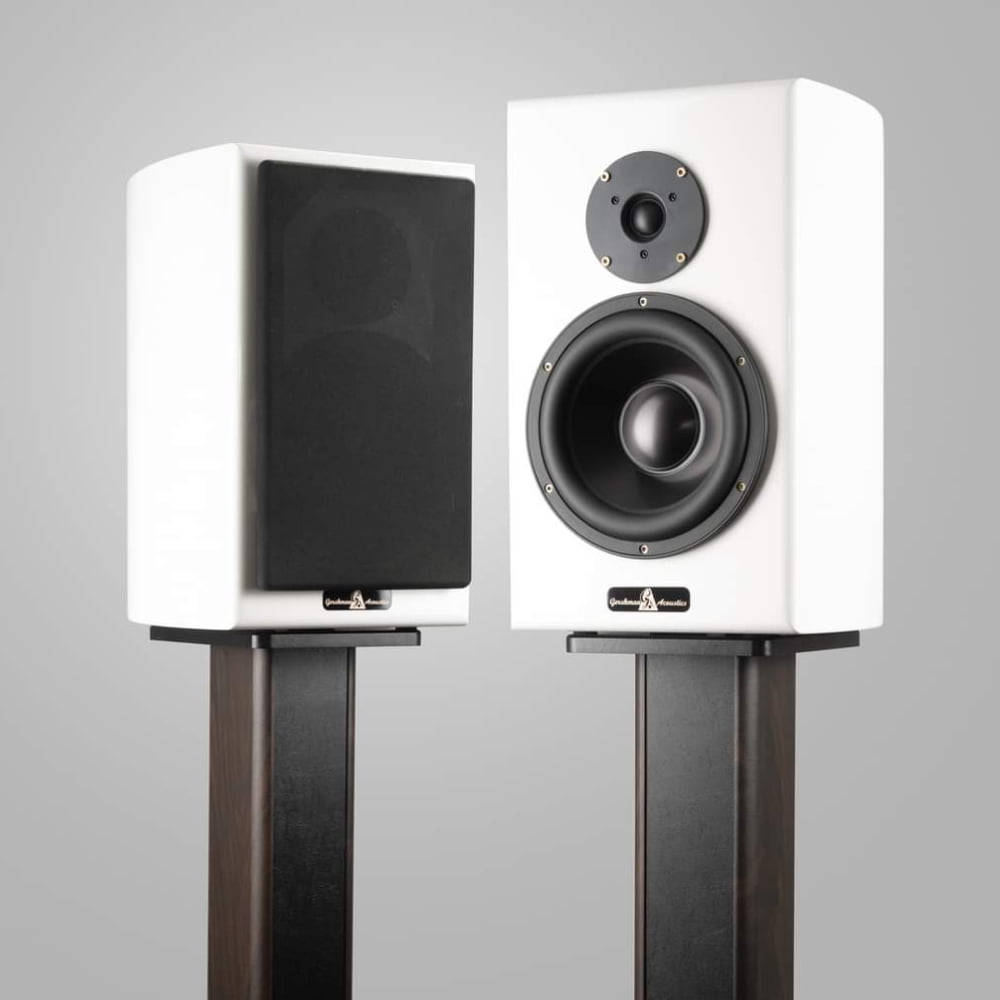
Gershman Acoustics approaches this standard through loudspeakers crafted to unite precision with musical generosity. The objective is not analysis for its own sake, but a more truthful encounter with the artistry preserved in a recording.
A Reference System Should Invite You Back
The most rewarding reference speakers do not turn a music collection into a laboratory. They make familiar recordings newly revealing while preserving the pleasure that made those recordings meaningful in the first place. They show the difference between productions, performances, venues, and instruments, yet never reduce music to a checklist of sonic effects.
Give yourself time with any serious loudspeaker. Let it play music at realistic levels, at late-night levels, and across genres. The right reference speaker will not ask to be admired constantly. It will quietly earn its place by making one more album feel worth hearing before the evening ends.