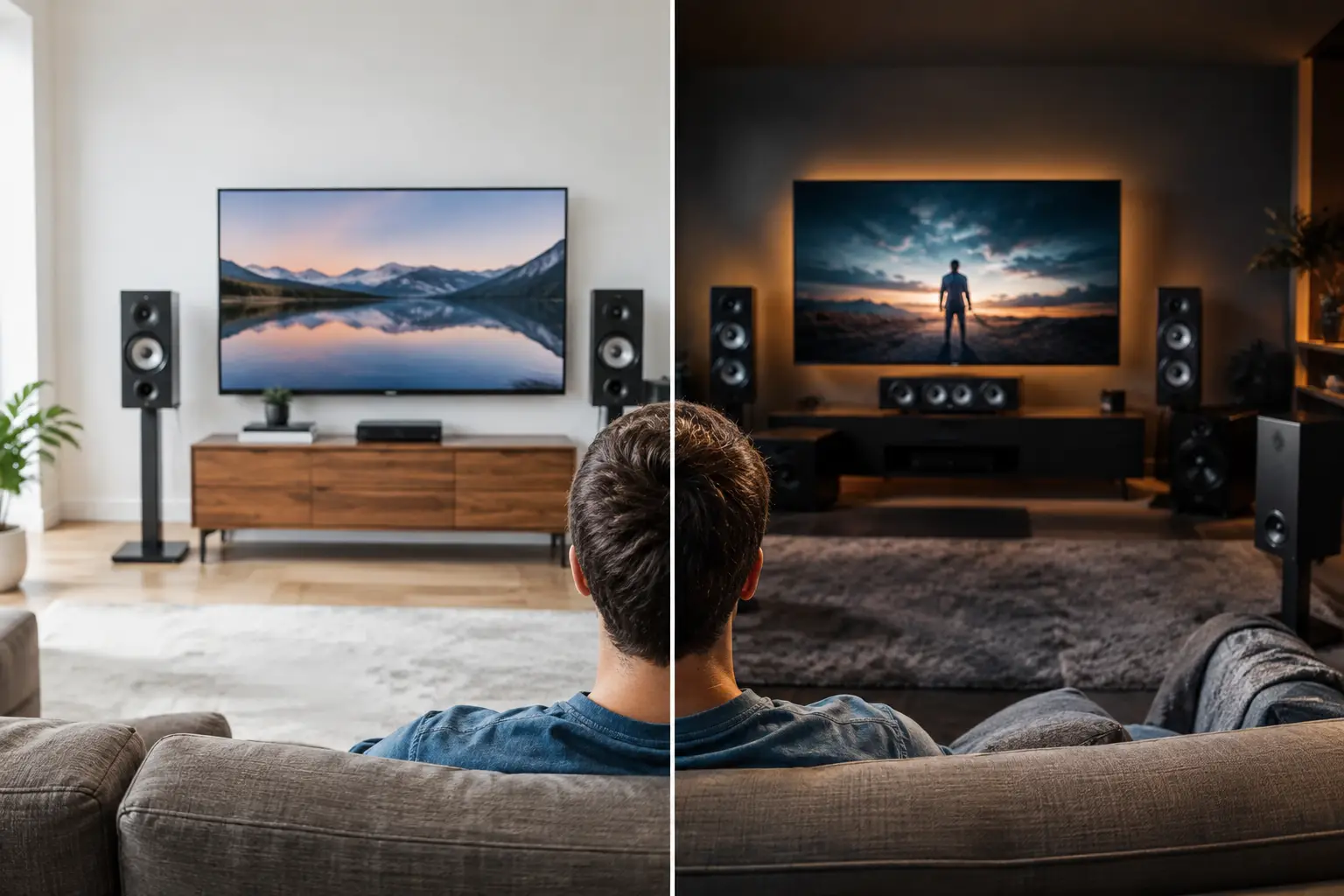
A speaker can hit hard and still miss the music. That is the difference listeners hear when comparing ordinary low-end output to speakers with deep controlled bass. The goal is not simply more bass. It is bass with shape, pitch, timing, and authority – the kind that lets a double bass sound woody and resonant, a kick drum land with conviction, and an orchestra build power without turning the room into a blur.
For discerning listeners, bass is often where the illusion of realism is won or lost. Treble may impress in a showroom, and a broad soundstage may catch attention quickly, but low frequencies reveal whether a loudspeaker is genuinely composed. When bass is overripe, slow, or boomy, everything above it begins to suffer. Imaging softens, midrange clarity loses focus, and the emotional impact of a performance becomes less believable.
What makes speakers with deep controlled bass different
Deep bass is easy to describe and harder to execute. It means a loudspeaker can reach convincingly into the lower octaves without sounding thin, strained, or artificially inflated. Controlled bass is the more demanding part. Control means the speaker starts and stops with precision. It tracks dynamic shifts gracefully. It preserves texture instead of turning low notes into a single heavy mass.
This distinction matters because many speakers can produce the impression of bass by emphasizing upper bass or midbass energy. At first listen, that tuning feels full and exciting. Over time, it can become tiring and less truthful. Genuine low-frequency performance is more refined. It carries weight without excess and remains articulate even when the music becomes complex.
A well-designed loudspeaker does not treat bass as a special effect. It integrates bass into the whole musical picture. The result is scale without bloat, impact without aggression, and warmth without vagueness. You do not simply hear more low end. You hear more of the recording.
Why controlled bass matters more than exaggerated bass
In luxury audio, restraint is often the mark of real mastery. That is certainly true in bass reproduction. Exaggerated bass can create drama in a quick demo, but it rarely sustains long listening sessions. It can flatten the emotional range of music by making everything sound larger than life, even when the recording calls for intimacy, nuance, or silence between notes.
Controlled bass, by contrast, respects the intent of the performance. On a jazz trio recording, it allows the body of the acoustic bass to breathe naturally. On a large-scale symphonic piece, it supports the hall, the timpani, and the foundation of the orchestra without clouding strings or winds. On well-recorded vocals, it keeps the lower register grounded while preserving openness through the midband.
There is also a practical reason this matters. Rooms tend to magnify low frequencies in unpredictable ways. A speaker that already overstates bass energy can become overwhelming in a real living environment. One with disciplined low-frequency behavior is easier to place, easier to live with, and far more rewarding over time.
The engineering behind deep, controlled bass
The finest bass performance begins long before the first note plays. Cabinet design, driver quality, crossover execution, and enclosure tuning all shape how convincingly a speaker handles low frequencies.
Cabinet construction is especially important. A poorly controlled cabinet adds its own voice to the music, smearing transients and introducing bloom where none should exist. A meticulously built enclosure reduces unwanted resonance so the listener hears the driver and the recording, not the box. This is one of the least glamorous aspects of speaker design, yet it is central to bass integrity.
Driver behavior matters just as much. A woofer must move enough air to reproduce low frequencies with authority, but size alone is not a guarantee of quality. Motor strength, cone material, suspension design, and excursion control all affect whether bass remains agile and resolved. The best systems balance power with refinement.
Crossover design plays a quieter but equally decisive role. If the handoff between drivers is poorly judged, the low end can feel disconnected from the midrange. That is when bass seems to come from a different place than the rest of the music. In a truly coherent loudspeaker, bass is not a separate event. It is part of a continuous, believable sonic image.
This level of integration is one reason handcrafted, high-end loudspeakers continue to command respect. Careful tuning and uncompromising build standards allow bass to feel natural rather than engineered for effect. In the best examples, you sense both technical control and musical ease.
How speakers with deep controlled bass transform listening
When bass is done properly, the entire presentation changes. The soundstage gains scale and stability. Instruments occupy space more convincingly. Rhythms lock in with greater assurance. Even quiet passages feel more complete because the harmonic foundation is intact.
This is not only about genres known for strong low frequencies. Yes, electronic music, rock, and cinematic recordings benefit from extension and slam. But chamber music, solo piano, folk, and vocal recordings also depend on correct bass behavior. The lower octaves support tone, timing, and the sense of an instrument existing in a real acoustic space.
There is a physical dimension as well. Deep, controlled bass can be felt, but it should never become crude. It should energize the room in a way that feels lifelike and proportionate. The sensation is one of presence rather than pressure. That is a subtle difference, yet experienced listeners recognize it immediately.
For many music lovers, this is the moment high-end audio becomes emotionally persuasive. A system stops sounding like equipment and starts sounding like musicians performing with weight, distance, and human expression. Bass is not the whole story, but it often provides the foundation for that transformation.
Choosing the right speaker for bass quality
Not every listener needs the same kind of bass performance, and not every room rewards the same design choices. A large open-plan space may benefit from a speaker with greater scale and low-frequency reach. A more intimate listening room may call for a design that prioritizes balance and articulation over sheer output. Better bass is not always bigger bass.
Listening habits matter too. If your library spans intimate jazz, orchestral works, and well-recorded contemporary music, you want a loudspeaker that can differentiate character and texture from one performance to the next. If every bass line sounds equally thick, something is being lost.
Placement, amplification, and room interaction should also be considered part of the equation. Even extraordinary loudspeakers need sympathetic setup to reveal their full bass capability. A refined speaker in a poorly arranged room may sound less convincing than it should. This is why serious buyers often benefit from careful auditioning and system matching rather than quick specification comparisons.
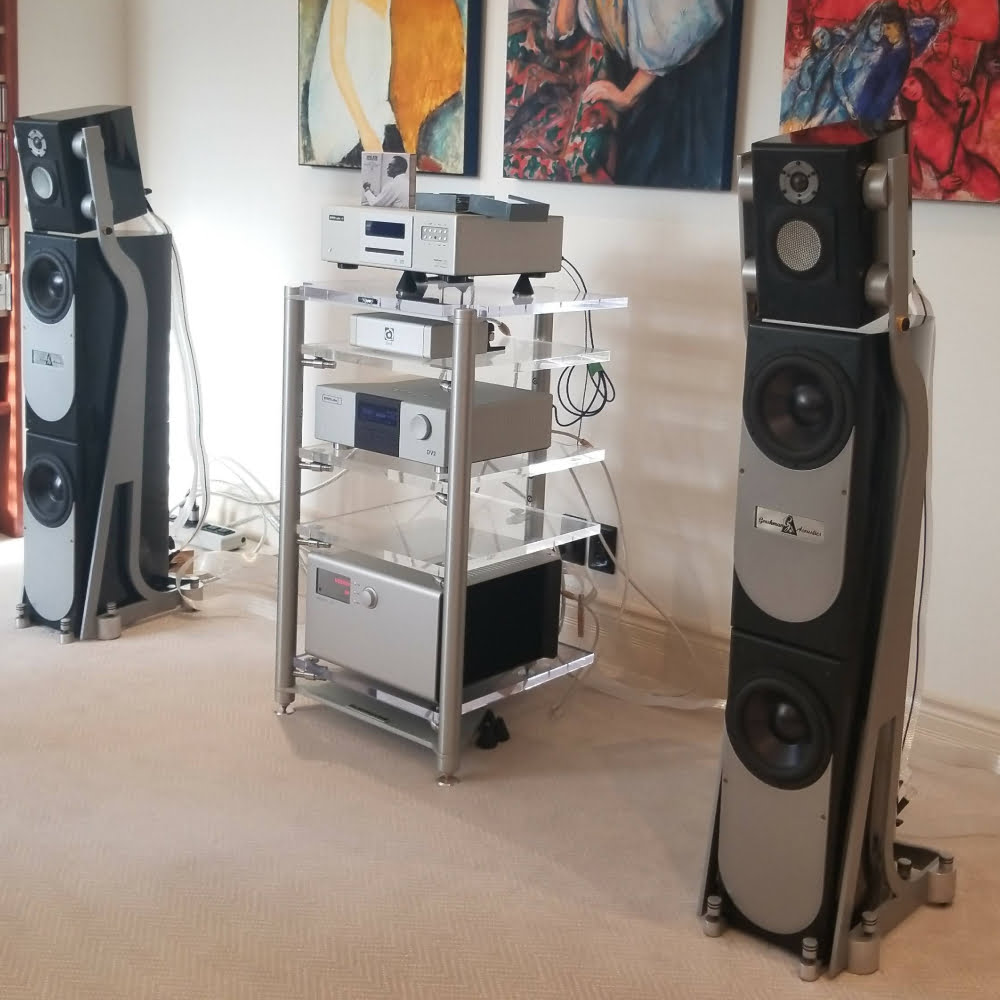
Among truly accomplished designs, there is a clear difference between bass that impresses for a few minutes and bass that supports years of listening pleasure. Gershman Acoustics has built its reputation, in part, on understanding that difference – creating loudspeakers that deliver authority and depth while preserving the natural tonal balance and emotional truth of music.
The luxury of hearing bass as music
In premium audio, luxury is not about excess. It is about refinement, confidence, and the absence of compromise where it matters most. Speakers with deep controlled bass embody that idea beautifully. They do not shout for attention. They earn it through composure, realism, and an ability to reveal the architecture of a performance from the ground up.
When evaluating a loudspeaker, it is worth asking a simple question: does the bass serve the music, or does it dominate it? The finest speakers do not confuse force with fidelity. They allow low frequencies to be powerful, textured, and proportionate, so every recording feels more complete and more emotionally alive.
If you listen for the full emotional weight of music, not just its surface excitement, bass quality becomes impossible to ignore. The right loudspeaker does more than go low. It brings gravity, elegance, and truth to every note – and once you hear that difference, it is very hard to settle for less.