A great system does more than play music loudly or cleanly. It changes the feeling of a room. The best handcrafted high end speakers do this with a kind of ease that is hard to fake – a voice hangs in space with human texture, a piano has weight and air, and bass arrives with authority rather than blur. For listeners who know that realism is not a spec sheet slogan, that difference is everything.
Mass-market speakers are built to satisfy broad expectations at efficient scale. Boutique loudspeakers are built to satisfy a far narrower ambition: to bring recorded music closer to its emotional truth. That ambition affects every choice, from cabinet geometry and crossover execution to material selection, resonance control, finish work, and final voicing. When a speaker is truly handcrafted, you are hearing a designer’s philosophy made physical.
What sets handcrafted high end speakers apart
The phrase is often used loosely, so it helps to be precise. Handcrafted high end speakers are not simply expensive speakers with polished veneers. Their distinction comes from the union of acoustic engineering and human attention. Cabinet construction is more deliberate. Driver integration is more carefully judged. Parts are selected not only for measurement targets but for how they behave together over time and across real musical material.
That last point matters. A speaker can impress in a showroom with etched detail, oversized bass, or a vivid top end that initially feels exciting. Yet long-term listening reveals whether that presentation is genuinely natural or merely dramatic. Handcrafted loudspeakers are typically voiced for sustained engagement. They aim for tonal balance, image stability, low listening fatigue, and the uncanny sense that musicians occupy a believable acoustic space.
There is also a physical integrity to fine construction that affects performance. Cabinets that are inert in the right ways and resonant in the wrong ways less often preserve low-level detail, dynamic nuance, and focus. Precision is not only about what the driver does. It is also about what the enclosure refuses to do.
The craft behind handcrafted high end speakers
In luxury audio, craftsmanship is not cosmetic decoration added after engineering is finished. It is part of the engineering. The shape of a cabinet, the density of materials, the internal bracing strategy, the relationship between driver placement and diffraction, and the tolerances used during assembly all influence how convincingly a speaker disappears.
That idea – a speaker disappearing – is one of high-end audio’s simplest and most revealing tests. When a design is successful, you stop noticing boxes and begin noticing the recording venue, the body of a cello, the breath before a phrase. This is where handcrafted work earns its reputation. Careful assembly reduces variation. Better matching improves coherence. Final inspection becomes more than quality control; it becomes protection of the musical intent.
The finish matters too, though not only for aesthetic reasons. A beautifully executed cabinet belongs comfortably in an elevated interior, which is important for owners who expect audio to complement architecture and design rather than fight with it. But the visual refinement also reflects a deeper standard. Brands that obsess over joinery, surfaces, and detailing often bring the same discipline to the invisible parts of performance.
Why artisanal speakers often sound more lifelike
Lifelike sound is not just detail retrieval. Many systems retrieve detail. Far fewer organize that information into a convincing musical event. The difference usually lies in coherence.
Coherence is what allows a singer’s voice to sound embodied rather than fragmented into frequencies. It is what makes the transition from bass to midrange feel natural, so instruments carry proper scale and tonal continuity. It is what keeps a soundstage stable as music becomes complex. In handcrafted loudspeaker design, coherence often comes from painstaking crossover refinement, cabinet control, and a refusal to chase flashy effects at the expense of musical truth.
Dynamic expression is another dividing line. Real music expands and contracts constantly. A fine loudspeaker should preserve not only impact, but gradation – the subtle swell of a bow stroke, the decay of a cymbal, the microdynamic shifts that communicate emotion. This is where premium designs justify themselves. They can make recordings feel less reproduced and more inhabited.
The trade-off is that honest speakers are rarely forgiving of poor setup or weak partnering equipment. Better resolution reveals upstream choices. A modest amplifier may flatten a speaker capable of extraordinary dimensionality. A lively room can harden the treble or loosen the bass. High performance asks for care.
Beyond prestige: the real value of handcrafted high end speakers
There is certainly a luxury component in this category. Exclusive objects, built in limited numbers with serious materials and recognizable design language, carry a kind of quiet prestige. But reducing them to status pieces misses the point.
The true value is longevity of satisfaction. A speaker built with conviction tends to outlast trends. It does not rely on exaggerated voicing that becomes tiring after six months. It invites deeper listening over years. Owners often find themselves revisiting entire libraries because familiar recordings reveal new harmonic texture, spatial information, and emotional shading.
This is also where heritage matters. A manufacturer with a long design history has usually learned what not to do. It has moved beyond novelty and toward mature judgment. In a field crowded with marketing claims, that discipline is worth more than fashionable terminology.
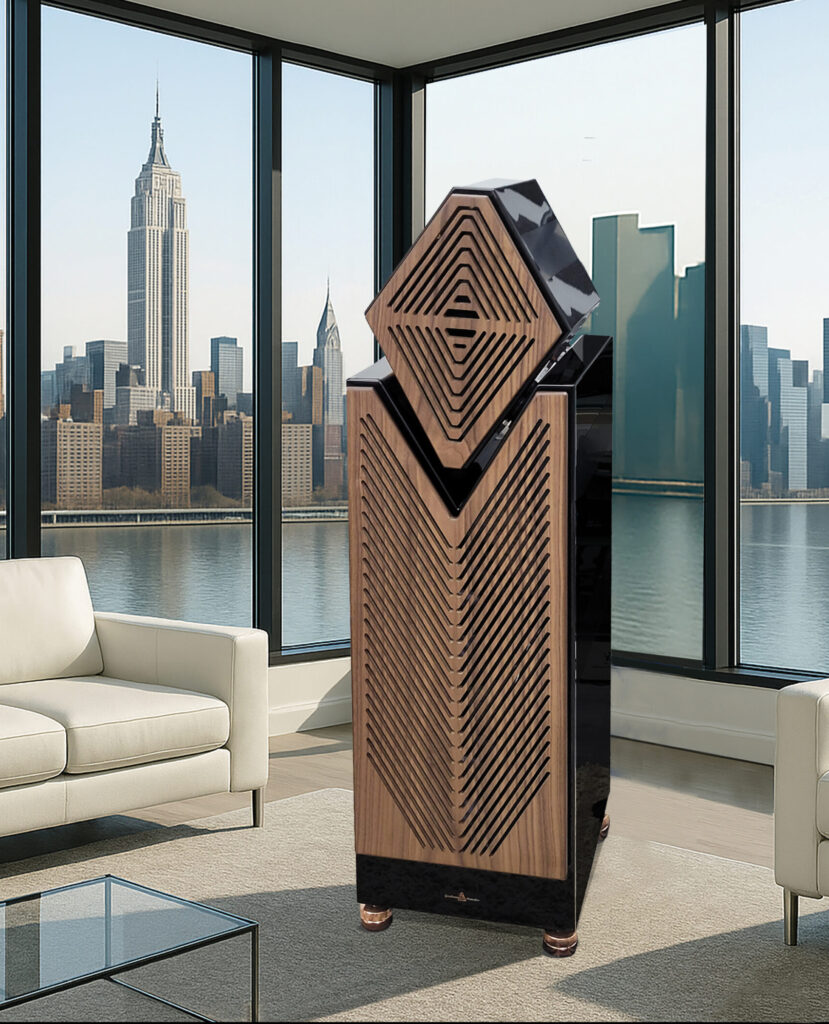
For listeners who view audio as part of a complete lifestyle, there is another layer of value. A handcrafted speaker can anchor a room with the same authority as fine furniture or art. It does not ask to be hidden. It earns its place.
How to choose handcrafted high end speakers well
The right choice depends less on price alone than on alignment. Room size matters. Listening distance matters. Your musical priorities matter. If you live for chamber music, vocal jazz, and acoustic recordings, your ideal speaker may differ from someone whose library centers on large-scale orchestral works or electronic music with demanding low-end energy.
It also depends on how you like music presented. Some listeners prefer absolute neutrality. Others want a touch more warmth, scale, or immediacy. None of these preferences are inherently wrong. The mistake is assuming that cost automatically guarantees compatibility.
Audition with music you know intimately. Listen for image focus, tonal credibility, and whether timing feels natural. Pay attention to how the system handles low volumes. Truly accomplished speakers do not need to be pushed hard to sound alive. Also notice your own reaction after twenty or thirty minutes. Excitement is easy to manufacture. Emotional involvement is harder.
Build quality deserves close scrutiny. Look at cabinet execution, finish consistency, connector quality, and overall fit. Premium audio should feel resolved in the hand as well as in the ear. If a speaker claims artisanal standards, that claim should be visible before a note is played.
A respected maker such as Gershman Acoustics exemplifies this union of engineering rigor, musical realism, and handcrafted elegance – the qualities serious listeners are actually investing in.
The listening room is part of the instrument
Even extraordinary speakers can underperform in the wrong environment. Placement, room proportions, and furnishings all shape the final result. Handcrafted loudspeakers with deep bass capability and expansive imaging often reward careful positioning more dramatically than entry-level designs.
That is not a flaw. It is a sign of sensitivity and precision. Give a speaker proper breathing room, attention to symmetry, and thoughtful matching, and it can produce the kind of dimensional sound that turns home listening into an event. Ignore the room, and you may hear only a fraction of what you paid for.
This is one reason experienced buyers value dealer guidance and measured setup. Fine loudspeakers are not commodity products. They are instruments of reproduction, and instruments respond to context.
Why this category continues to matter
The modern audio market offers convenience at every level: wireless integration, voice control, compact form factors, algorithmic tuning. Those features have their place. But convenience is not the same as immersion, and utility is not the same as beauty.
Handcrafted high end speakers remain relevant because they answer a more enduring desire. They are for people who want listening to feel intentional, elevated, and emotionally true. They are for those who understand that music deserves scale, texture, and presence. And they are for rooms where visual elegance matters as much as sonic credibility.
When a loudspeaker is built with patience, voiced with discernment, and finished with pride, it offers something increasingly rare: an experience that feels complete. Not rushed, not generalized, not designed for the lowest common denominator. Just deeply, convincingly musical.
If you are choosing for the long term, trust the speaker that makes you forget the equipment and lean into the performance. That instinct is usually telling you more than any brochure ever will.