A loudspeaker can sound spectacular for the first 30 seconds and become tiring by the third track. It can also seem understated at first, then reveal the timing, texture, and emotional honesty that make long listening sessions deeply rewarding. To understand how to audition loudspeakers properly, move beyond the impressive demo moment and listen for the qualities that let music feel present, believable, and complete.
A serious loudspeaker is not merely a source of sound. It is the final voice of an entire system and a substantial presence in a room you have carefully made your own. The right audition should tell you not only what a speaker can do, but whether it invites you to return to your favorite recordings night after night.
Begin With Music You Know Intimately
Bring recordings you know so well that you can recognize the smallest change in their character. This does not mean choosing only audiophile favorites. A cherished vocal recording, a live performance you have attended, a piano piece with natural resonance, or an album you have lived with for decades can be more revealing than a technically pristine unfamiliar track.
Choose music that asks different things of a loudspeaker. A solo voice reveals midrange truth and sibilance. Piano exposes tonal consistency from the lower registers through the treble. A small jazz ensemble shows whether instruments occupy convincing, stable positions. Orchestral music tests scale and composure, while a well-recorded bass line demonstrates control, pitch definition, and the ability to preserve rhythm rather than simply produce weight.
Avoid judging a speaker from a single genre. A system that flatters a sparse acoustic recording may lose its poise when a full orchestra swells or a dense rock arrangement arrives. Conversely, a loudspeaker with real dynamic capability should not make an intimate singer sound oversized or theatrical. The goal is not to find the most dramatic presentation. It is to find one that remains persuasive across the music that matters to you.
How to Audition Loudspeakers Properly: Start With the Room
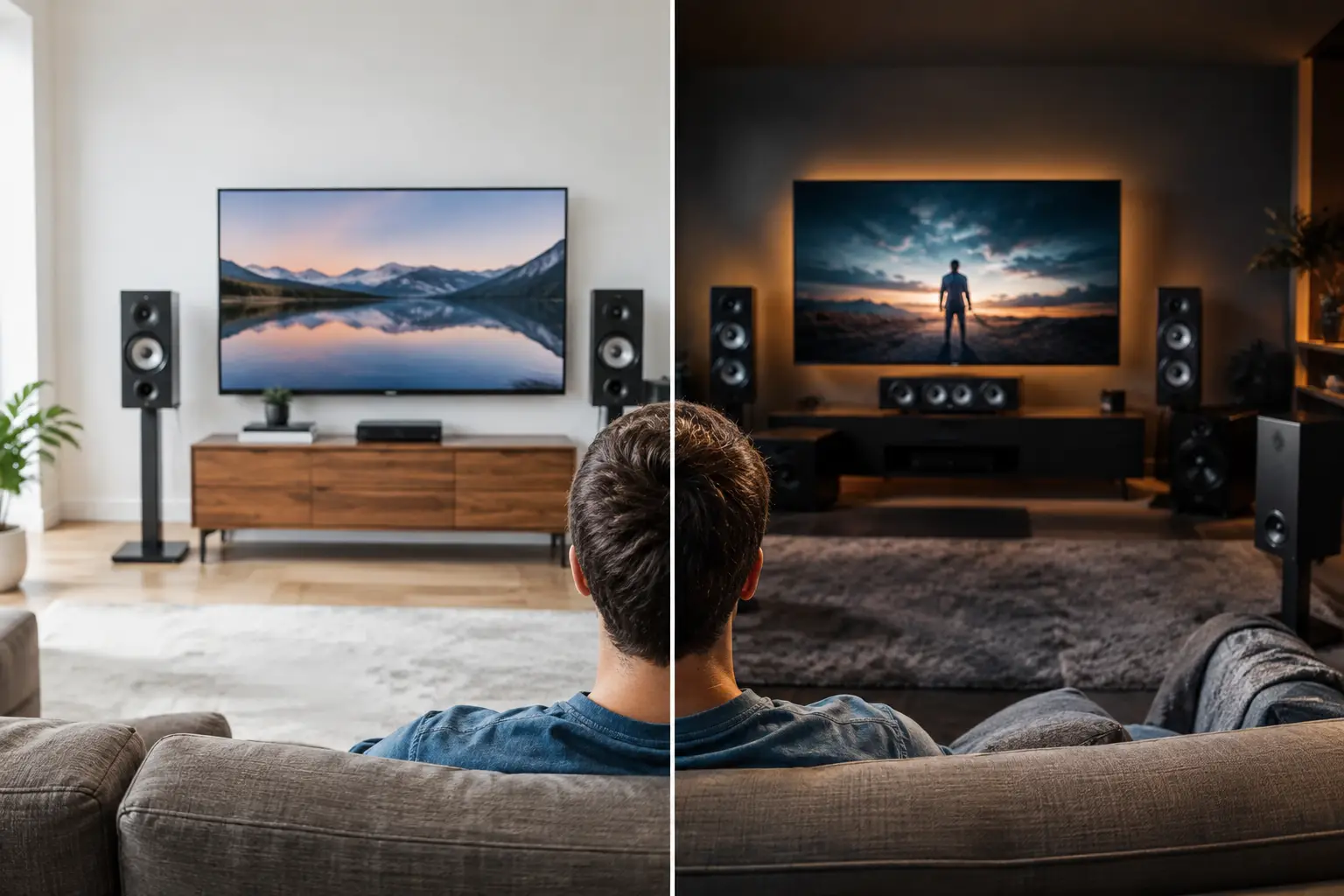
The room is part of the instrument. Even an exceptional loudspeaker will sound compromised if it is placed carelessly, forced into corners, or heard from an unsuitable listening position. Before forming an opinion, ask the dealer to explain the setup and to make reasonable adjustments to placement if necessary.
Listen first from the primary seat, with the speakers and listener forming a sensible triangle. Then move slightly forward, backward, and side to side. A well-designed loudspeaker should preserve a coherent musical picture over a usable listening area, although the most precise imaging will usually occur near the intended position. If the tonal balance changes radically with a small movement, room interaction may be dominating the result.
Pay particular attention to bass. Deep bass should have authority, but authority is not the same as excess. In a good room, a double bass has body, pitch, and the woody texture of strings. A kick drum has impact without becoming a lingering thump. If low frequencies bloom at certain notes or obscure the midrange, do not assume the loudspeaker is at fault. Ask whether the speakers can be repositioned, and consider honestly how the model will work in your own room.
This is why an in-home audition, when available, is so valuable. A showroom can establish a speaker’s potential. Your room determines how that potential becomes part of daily life.
Listen for a Convincing Musical Space
Soundstage is often discussed in terms of width and depth, but size alone is not the measure of realism. A loudspeaker should create a believable acoustic space in which performers and instruments have proportion, focus, and air around them. The center image should remain solid when a vocalist sings directly between the speakers, not drift or spread into a vague cloud.
On a fine recording, close your eyes and ask a simple question: can you sense where the performers are, and does that placement feel natural? A violin should not appear taller than a room. A singer should not seem trapped inside one cabinet. The acoustic of a concert hall should unfold behind the orchestra rather than hang like an artificial effect beyond the side walls.
Equally important is what happens when the recording is less than perfect. Some loudspeakers create immense spatial effects with exemplary recordings but make ordinary albums feel thin, etched, or exposed. Resolution should reveal musical information, not turn every imperfection into a distraction. The finest systems honor great recordings while still allowing you to enjoy the music library you actually own.
Assess Tone Before Detail
Treble detail can be immediately seductive. You may hear the brush of a cymbal, the intake of a breath, or the delicate shimmer of a triangle more distinctly than before. But detail without tonal balance becomes a spotlight: impressive for a few minutes, fatiguing over an evening.
Listen for the natural color of instruments. Does a cello have warmth and rosin without becoming thick? Does a trumpet carry its metallic brilliance without hardening at volume? Does a female vocal sound open and articulate without emphasizing every “s”? These are not abstract technical exercises. They are clues to whether the loudspeaker is preserving the tonal relationships that make music emotionally credible.
The midrange deserves special attention because it carries much of music’s human presence. If voices do not sound convincing, it is difficult for a system to feel genuinely involving, regardless of its extension at either frequency extreme. A refined loudspeaker presents a vocal not as an audio effect, but as a person performing in a defined space.
Test Dynamics at Realistic Levels
A speaker’s character often changes as volume rises. Begin at a moderate level, where you can assess balance and texture without being influenced by sheer loudness. Then increase the level gradually on music with natural dynamic contrasts.
The important question is not whether the speaker can play loudly. Many can. Listen instead for whether it remains composed when the music asks for more. A piano should retain its weight during a forceful passage. A large orchestra should expand without collapsing into brightness or congestion. A sudden drum strike should start and stop cleanly, with impact that feels physical but never blunt.
At lower levels, notice whether the music still has life. A loudspeaker of real refinement can preserve rhythmic intention, tonal color, and a sense of scale without demanding concert-level playback. This matters in a home where much listening happens late in the evening, with the room quiet and the volume restrained.
Give the System Time to Reveal Itself
Quick comparisons are useful, but they can favor the loudspeaker with more treble energy, elevated bass, or a more immediately forward presentation. If possible, spend at least 30 minutes with each candidate. Listen to complete tracks. Let your attention move away from the equipment and toward the performance.
When comparing speakers, keep the level consistent. A difference of even a small amount in volume can make one model appear more detailed, dynamic, or full-bodied than another. Ask the dealer to match levels as closely as possible, then return to the same musical passage. Your impressions will become more trustworthy when loudness is not making the decision for you.
It is also wise to hear a speaker with electronics of appropriate quality. Loudspeakers interact with amplification, source components, cables, and room acoustics. This does not mean every audition requires an extravagant system, but it does mean a premium loudspeaker deserves a partner capable of showing its full control, scale, and finesse.
Consider the Object as Well as the Performance
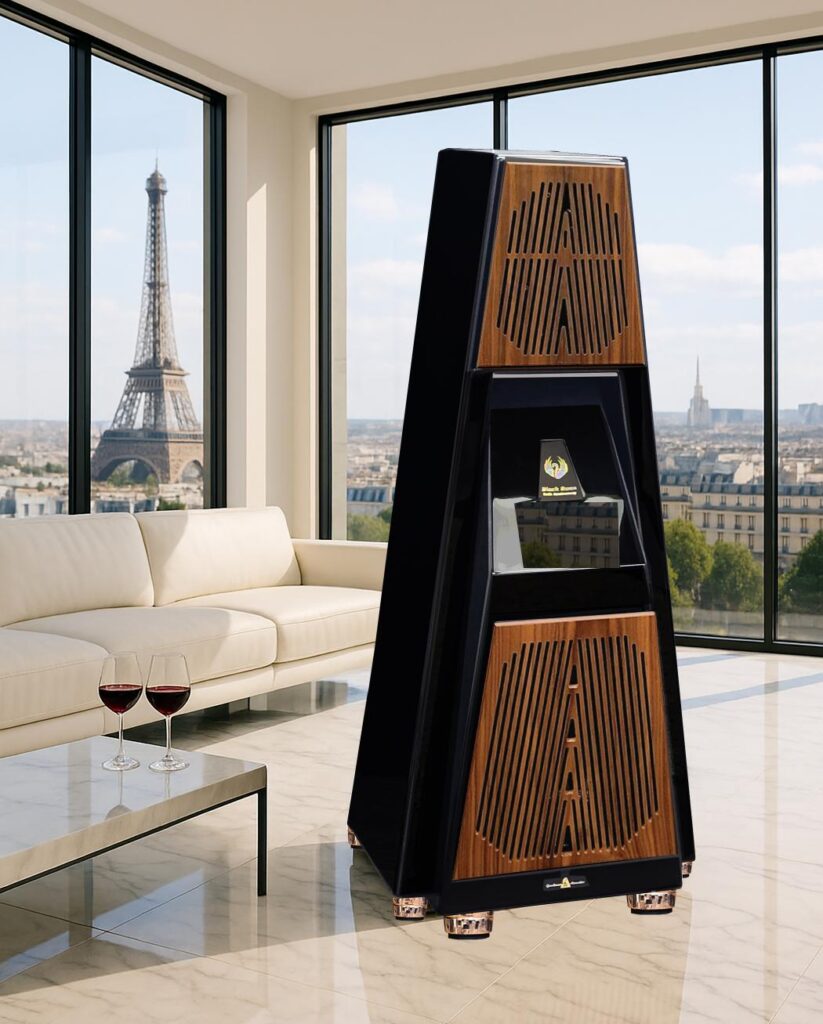
For a luxury loudspeaker, visual and physical craftsmanship are not secondary concerns. You will see these objects every day. Examine the cabinet finish, proportions, joinery, terminals, grille treatment, and the care evident in the smallest details. A beautifully resolved design can complement an interior with quiet confidence; an awkwardly scaled cabinet may become a compromise, regardless of its sonic virtues.
At Gershman Acoustics, this relationship between cabinet artistry and musical performance is fundamental. Cabinet construction, material choices, and acoustic design are inseparable from the speaker’s ability to disappear as a source and leave the listener with the performance itself.
Practical considerations deserve the same honesty. Consider room dimensions, placement flexibility, amplifier compatibility, and whether the loudspeaker’s finish and form belong naturally in your home. The best choice is rarely the speaker that wins on one isolated criterion. It is the one whose sound, craft, and presence continue to feel right after the novelty has disappeared.
Trust the Moment You Stop Evaluating
The most revealing part of an audition may arrive when you forget to listen critically. Perhaps a familiar singer suddenly seems to breathe in the room, or an old recording reveals the collective momentum of musicians playing together. That response is not sentimental or irrational. It is often the clearest evidence that timing, tone, dynamics, and scale have aligned.
Take notes after each session, then return another day if you can. Your ideal loudspeaker should reward discernment, but it should also make discernment unnecessary at times. Choose the one that leaves you wanting to hear one more record, because that is where a remarkable music system begins.