A serious music system is not defined by the number of components on the rack. It is defined by the moment a familiar recording reveals its breath, scale, and human presence. The following high end speaker setup examples show how room, loudspeaker placement, amplification, and personal listening habits can come together to create that experience.
For the discerning listener, the objective is not simply louder playback or more impressive specifications. It is a convincing musical event: a vocalist centered and dimensional, a piano carrying its natural weight, an orchestra expanding beyond the loudspeakers without losing its inner detail. The best setup is always personal, but certain principles consistently separate a merely expensive system from one that feels truly complete.
High End Speaker Setup Examples for Real Homes
1. The dedicated listening room
A dedicated listening room gives a full-range loudspeaker the freedom to perform at its most convincing. Picture a room roughly 18 to 24 feet long, with the system placed on the shorter wall. The loudspeakers stand well into the room, typically three to five feet from the front wall and at least two feet from side walls. This placement allows the soundstage to develop behind and beyond the cabinets rather than collecting at the wall.
In this kind of system, a pair of handcrafted floorstanding loudspeakers is partnered with high-current monoblock or dual-mono amplification, a refined preamplifier, and a high-resolution streaming source or disc player. The goal is control without sterility. Powerful amplification helps a demanding loudspeaker preserve bass authority and dynamic freedom, especially with large-scale classical music, jazz ensembles, and recordings that move quickly from whisper to crescendo.
Acoustic treatment should be intentional rather than overdone. Absorption at early reflection points can sharpen imaging, while diffusion behind the listening position helps retain the sense of air and musical energy. A thick rug, substantial curtains, and carefully chosen furnishings often contribute more than a room filled with generic foam panels. The room should feel like a place to live with music, not a laboratory.
The trade-off is space. A speaker positioned for its finest performance may not suit a room that must also serve as an office, gym, or family gathering area. Yet for collectors who reserve time for uninterrupted listening, a dedicated room remains one of the most rewarding investments in high-end audio.
2. The elegant living-room system
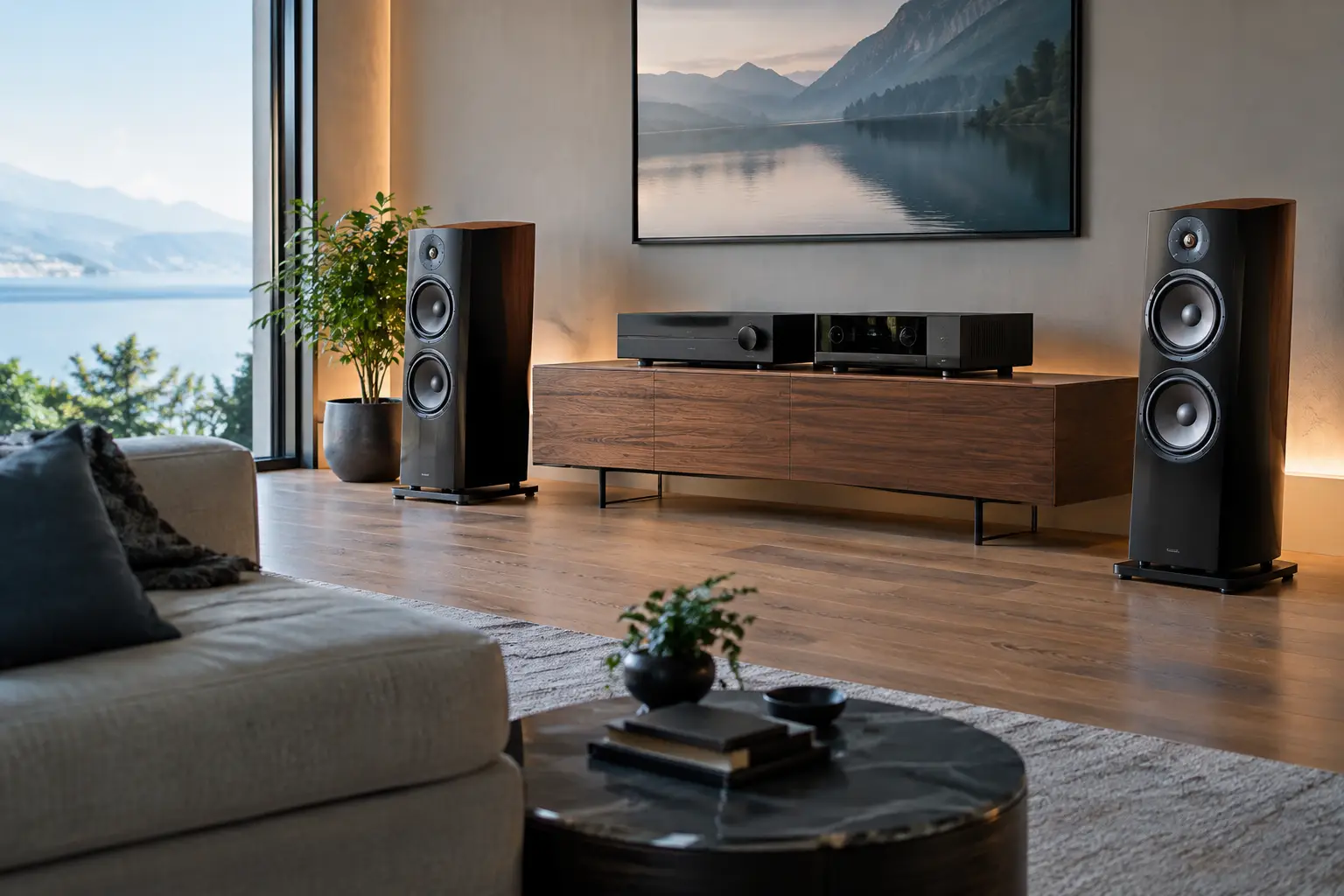
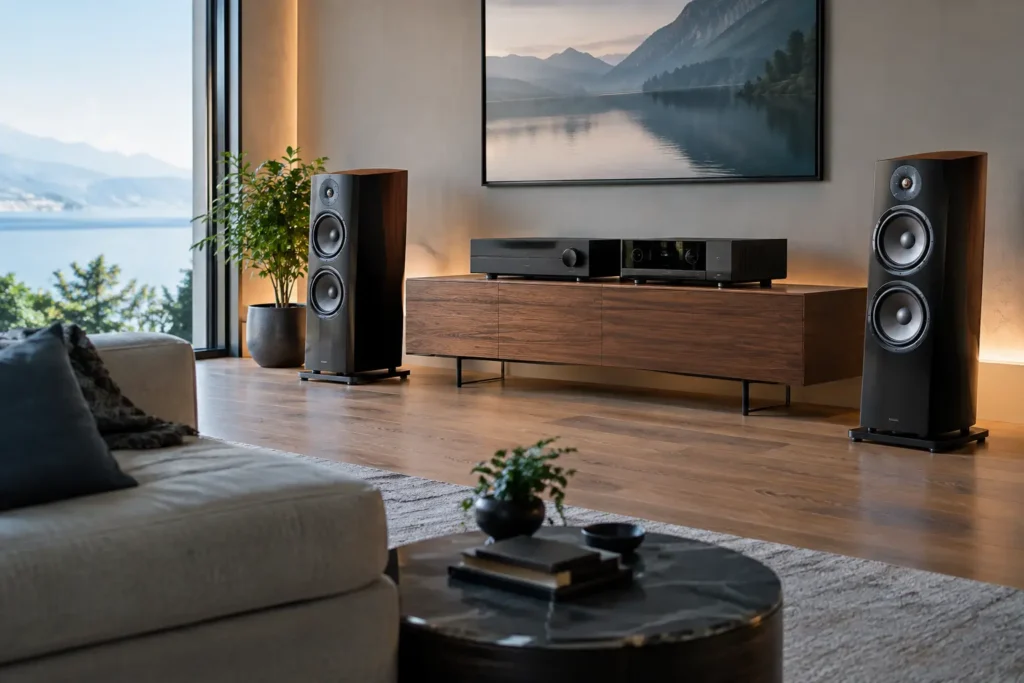
Not every exceptional system belongs behind a closed door. In a well-designed living room, loudspeakers can serve as both sculptural objects and the emotional center of the home. This setup works best when the speakers are selected for visual refinement as carefully as their sonic character.
A pair of elegant floorstanders might sit six to nine feet apart, with a listening position forming a near-equilateral triangle. They do not need to dominate the room. Even a modest move away from the wall, combined with a slight inward angle, can create more focused imaging and reduce excessive bass buildup. The exact amount of toe-in depends on the loudspeaker and the room. Some designs thrive when aimed directly at the listener; others produce a broader, more relaxed stage when crossed slightly behind the listening seat.
The electronics in this example may be a beautifully finished integrated amplifier paired with a premium streamer. This approach reduces visual clutter while preserving the musical authority expected from a serious system. It is particularly compelling for listeners whose collections move easily from vocal jazz and chamber music to soul, rock, and contemporary recordings.
Furniture matters here. A low, open equipment console is often preferable to a deep cabinet that traps heat and complicates cable routing. Avoid placing loudspeakers directly beside large reflective screens or inside built-in shelving. If a television shares the wall, thoughtful spacing and an acoustically sympathetic layout can keep the system visually composed without asking music to compromise.
3. The analog-centered music room
For the vinyl devotee, a high-end system often begins with ritual. Selecting a record, lowering the stylus, and allowing the first quiet seconds to settle can turn an ordinary evening into a dedicated listening session. In this setup, the turntable deserves a stable, low-resonance platform placed away from the loudspeakers whenever possible.
A refined moving-coil cartridge, phono stage, and integrated or separate amplification can feed loudspeakers known for tonal color, low-level resolution, and graceful dynamic expression. The finest analog systems do not soften every recording into nostalgia. They make the texture of a bowed cello, the decay of a cymbal, and the physical character of a bass line feel more immediate and more human.
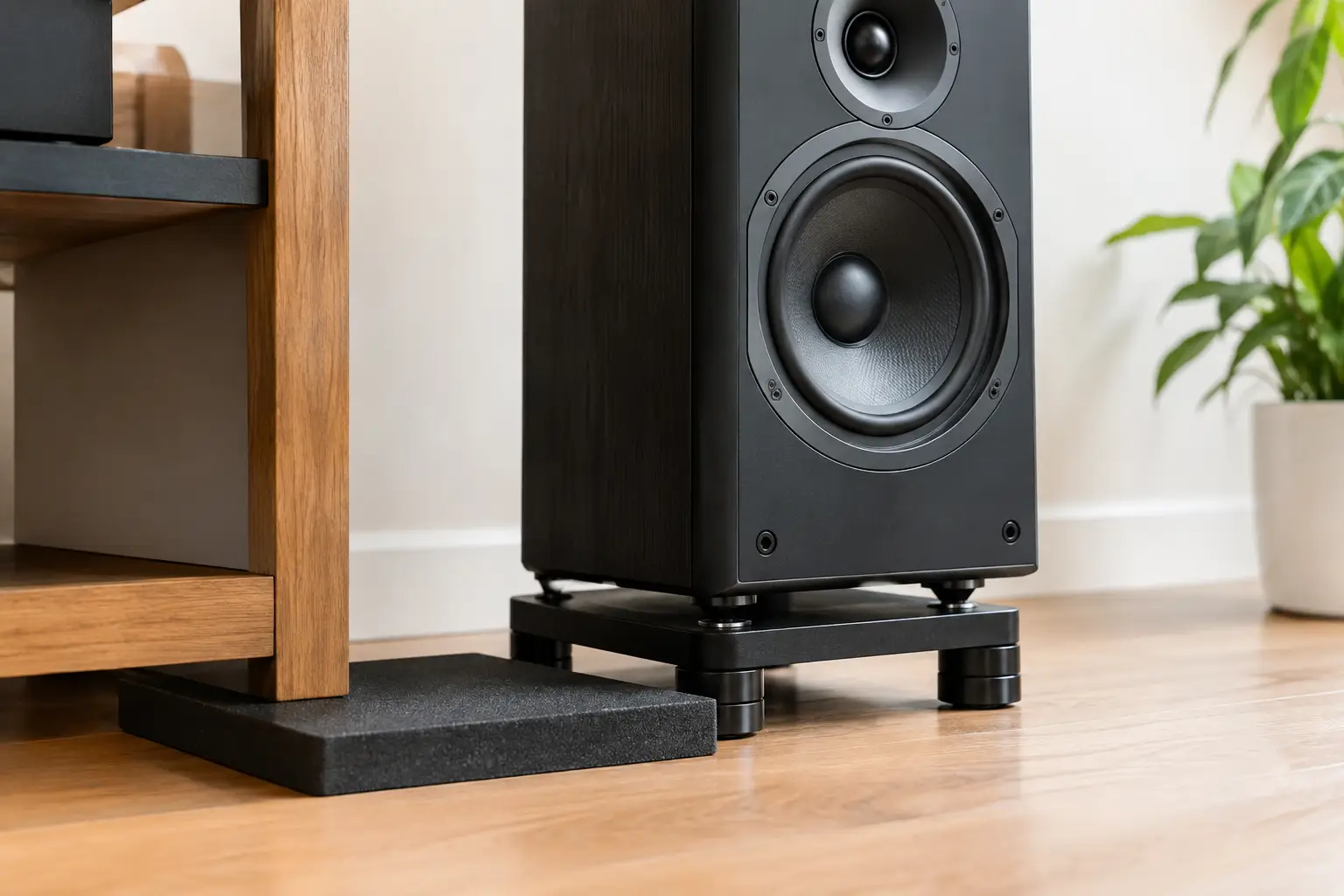
Speaker placement remains essential. Turntables are sensitive to vibration, especially at higher playback levels, so maintaining distance from the speakers and using a properly engineered stand or wall shelf is wise. In rooms with suspended wood floors, additional isolation may be necessary. This is one example where the visual romance of a system must be supported by practical discipline.
An analog-centered room also rewards restrained lighting, comfortable seating, and accessible record storage. The space should invite exploration of an entire album rather than encourage distracted sampling. Luxury, in this context, is not excess. It is the freedom to give music your full attention.
4. The open-plan entertaining system
Open-plan homes present a different challenge. They can offer dramatic scale and a beautiful architectural setting, but large connected spaces often make bass behavior less predictable. A loudspeaker that sounds balanced in a dedicated room can become lean or overly heavy when the listening area opens into a kitchen, hallway, or dining space.
For this environment, choose loudspeakers with genuine low-frequency authority and pair them with amplification that remains composed under changing loads. Placement should begin with symmetry where possible, but it may need to adapt to windows, fireplaces, and circulation paths. A few inches can make an audible difference, particularly when adjusting the distance from the front wall.
Rather than forcing a conventional centered layout, build the system around the primary seating area. The speakers may need to sit slightly forward of surrounding furniture, with carefully selected rugs and soft furnishings helping reduce excessive reflection. If deep bass remains uneven, one or two discreet subwoofers can be integrated thoughtfully. The purpose is not theatrical impact. It is to restore the foundation of a double bass, organ, kick drum, or concert hall without drawing attention to the subwoofers themselves.
This example favors versatile sources. A high-quality streamer makes it easy to move from a dinner playlist to a focused late-night session, while a dedicated music server can appeal to collectors who value a carefully organized digital library. The system should feel effortless for guests, yet revealing enough to reward the owner when the room is quiet.
The Elements That Matter More Than Price Alone
High-end loudspeakers deserve a system built around their strengths, but the most costly component is not automatically the most suitable one. Matching is about character, electrical compatibility, and the room itself. A loudspeaker with substantial bass extension may flourish with ample space around it, while a more compact design can be the wiser choice in an intimate room.
Amplifier power should also be considered in context. Wattage figures alone tell only part of the story. Current delivery, stability into difficult loads, and the amplifier’s ability to control a woofer all influence the sense of ease during complex musical passages. A system should retain tonal poise at realistic levels, not merely sound attractive during a brief demonstration.
Source quality is equally revealing. Whether music begins with vinyl, digital files, or a disc transport, timing, tonal integrity, and low-level detail influence the emotional credibility of the performance. Better components do not make poor recordings perfect, but they can make the difference between hearing a recording and feeling connected to the musicians who made it.
At Gershman Acoustics, this relationship between engineering and emotional realism is central to the listening experience. A finely made loudspeaker can reveal extraordinary depth, but it must be allowed to breathe within a system and room designed with care.
Begin With the Room, Then Listen Patiently
Before replacing equipment, experiment with placement. Start with equal distances to the side walls when possible, move the speakers farther from the front wall in small increments, and listen to recordings whose tonal balance you know intimately. Evaluate the center image, bass articulation, vocal naturalness, and the way instruments occupy space. Measurements can be valuable, but they should support listening rather than replace it.
The listening seat deserves the same attention. Sitting against the rear wall often exaggerates bass and blurs the stage. Pulling the chair forward, even by a foot or two, can bring surprising clarity. Once the essential geometry is right, small refinements in toe-in, cable routing, isolation, and room furnishings become far more meaningful.
Choose the setup that fits the way you actually live, then give it time to reveal itself. A well-composed system does more than reproduce recordings beautifully. It creates a place where music can become part of the architecture of daily life.