A full orchestra does not ask a loudspeaker to play loudly. It asks it to preserve relationships: the weight of double basses beneath the violins, the burnished entrance of the French horns, the sudden air around a triangle, and the immense quiet before a final cadence. The best speakers for orchestral music make those relationships feel inevitable rather than assembled from separate sounds.
That standard is demanding. A symphonic recording contains huge shifts in scale, dense instrumental colors, and spatial information that lesser systems flatten or blur. Choosing well is less about pursuing a single specification than finding a loudspeaker with the composure, tonal integrity, and physical presence to honor the performance.
Why orchestral music is the real loudspeaker test
Orchestral music occupies a remarkable range. At one moment, a solo oboe may hover delicately above a near-silent string section. Seconds later, brass, timpani, and full strings can arrive with overwhelming force. A loudspeaker must be able to travel between those extremes without changing its character.
This is where a system can sound impressive on a short demonstration yet prove unconvincing over an entire symphony. Some speakers spotlight detail but make violins thin and fatiguing. Others offer generous bass but lose the articulation of cellos and bassoons. Still others create a large soundstage without the dynamic reserve to convey the grandeur of Mahler, Bruckner, or Stravinsky.
The finest examples combine delicacy and authority. They reveal the texture of rosin on a bow without turning the upper strings into glare. They reproduce a bass drum’s initial impact and the resonant body that follows. Most importantly, they let the orchestra breathe as one living ensemble.
What the best speakers for orchestral music must do
Reproduce natural tonal color
Tonal balance is foundational. An orchestra is a study in timbre, and each family must retain its own identity. Violins should have sheen rather than hardness. Woodwinds need warmth, breath, and a clearly defined place within the ensemble. Brass should rise with golden force, not collapse into a bright, metallic wash.
Listen especially to the middle registers. This is where much of the orchestra lives, and where musical realism is won or lost. A speaker with a convincing midrange gives body to violas, cellos, clarinets, horns, and the human character of the hall. It avoids the artificial impression that instruments have been outlined for effect rather than allowed to exist naturally.
Deliver dynamics without strain
Dynamic range is more than volume. It is the ability to make a quiet passage feel suspended and a crescendo feel earned. When an orchestra moves from a whisper to a fortissimo, the sound should expand freely, with no sense that the loudspeaker is compressing, sharpening, or becoming congested.
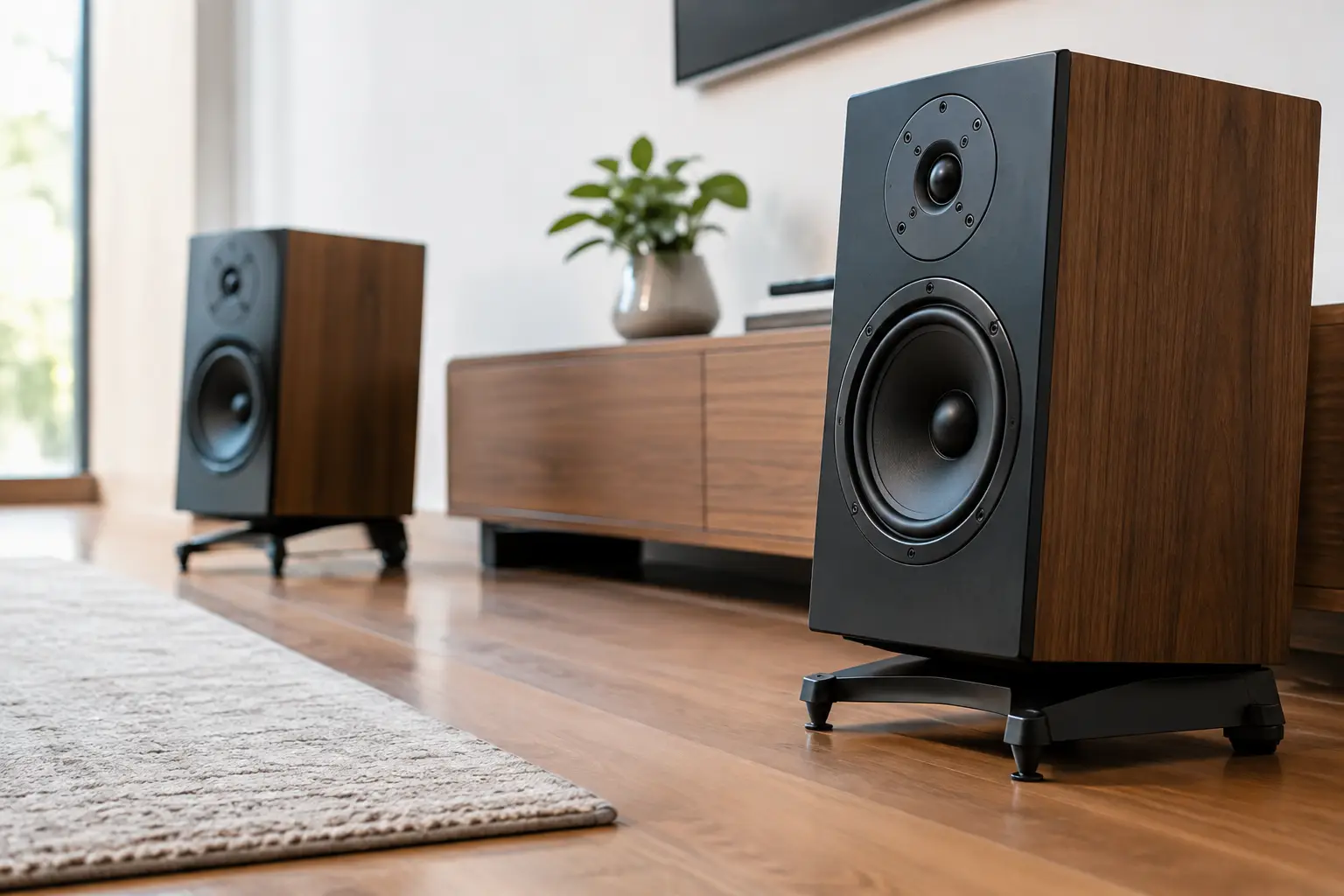
Large floorstanding speakers often hold an advantage here because cabinet volume, driver area, and carefully managed power handling can produce greater ease. That does not mean every large speaker is automatically more musical, or that a refined stand-mount cannot be deeply satisfying in a smaller room. It does mean that room size and listening distance should be part of the decision from the beginning.
Preserve the architecture of the soundstage
A great orchestral recording contains a physical map. First violins occupy one plane, cellos another; winds emerge from behind the strings; percussion may seem to extend well beyond the rear of the stage. A loudspeaker capable of precise imaging and broad, stable soundstage reproduction can reveal this architecture without making the presentation feel artificially etched.
Scale matters here. The orchestra should not sound miniaturized between the speakers. Yet exaggerated width is not the goal either. The presentation should feel proportionate to the recording and believable within the listening room, with instruments held in stable positions even as the arrangement grows more complex.
Reach low without losing control
The lowest octave is essential to orchestral realism. It supplies the foundation of timpani, double basses, organ, bass drum, and the ambient weight of a large hall. But bass that is overabundant or slow can obscure everything above it.
Look for low-frequency authority with control. The desired effect is not a swollen cinematic rumble, but the sensation of the orchestra standing on solid ground. In many rooms, speaker placement and acoustic treatment will matter as much as extension on paper. A loudspeaker that measures deeply but excites room resonances may sound less convincing than one with slightly less reach and superior integration.
Start with the room, not the specification sheet
A loudspeaker does not perform in a vacuum. It performs in a room with dimensions, reflective surfaces, furnishings, and aesthetic constraints. For an orchestral listener, this is especially significant because the room becomes part of the perceived concert hall.
In a generous dedicated listening room, a full-range floorstanding design can develop the scale and low-frequency foundation that symphonic music rewards. Give it sufficient distance from front and side walls, and let the soundstage unfold. In a refined living space, a more compact speaker may be the wiser choice, particularly when paired thoughtfully with the room rather than forced into an unsuitable position.
Avoid choosing solely by price, driver count, or a dramatic showroom demonstration. Ask whether the speaker can be positioned properly in your home. Consider whether your listening chair allows a balanced triangle with the speakers, and whether your preferred volume level calls for greater dynamic headroom. These practical details are not separate from luxury performance. They are how that performance becomes real.
Amplification is part of the musical result
A speaker may have extraordinary potential and still sound restrained with an unsuitable amplifier. Orchestral passages place demanding, rapidly changing loads on an audio system. An amplifier with genuine current delivery and control helps preserve the start and stop of timpani, the force of brass, and the calm organization of complex climaxes.
Matching is not simply about adding more watts. A beautifully voiced loudspeaker benefits from electronics that share its sense of tonal coherence, resolution, and rhythmic command. Audition the combination whenever possible. The question is not whether the system can play loudly, but whether it remains composed when the score becomes most demanding.
Source quality deserves the same care. A revealing speaker will make the differences among recordings apparent. A great performance in a fine recording can create an experience of startling presence; a compressed or harsh recording will remain what it is. This is not a flaw in a revealing system. It is an invitation to build a collection that rewards close listening.
How to audition speakers with orchestral music
Bring music you know intimately. Choose recordings that test different virtues: a chamber orchestra for tonal nuance, a large Romantic symphony for scale, a work with prominent percussion for transient control, and a familiar solo instrument against the ensemble.
During the audition, resist the urge to chase isolated details. Instead, listen to whether the musical line remains intelligible as the arrangement thickens. Notice whether massed strings become silky or glassy, whether horns retain their roundness, and whether the hall opens naturally behind the orchestra. At a realistic level, ask a simple question: does the system encourage you to stay for the next movement?
A speaker that is truly right for you does more than impress. It makes long-form listening feel effortless. You stop assessing hi-fi effects and begin following the conductor’s pacing, the tension between sections, and the emotional shape of the work.
Craftsmanship has an audible presence
For a loudspeaker intended to reproduce orchestral music, cabinet construction is not merely a visual consideration. A rigid, carefully engineered enclosure helps control unwanted resonances that can cloud tone and diminish low-level detail. Crossover execution, driver integration, and the discipline of final voicing likewise shape whether an orchestra arrives as a cohesive event.
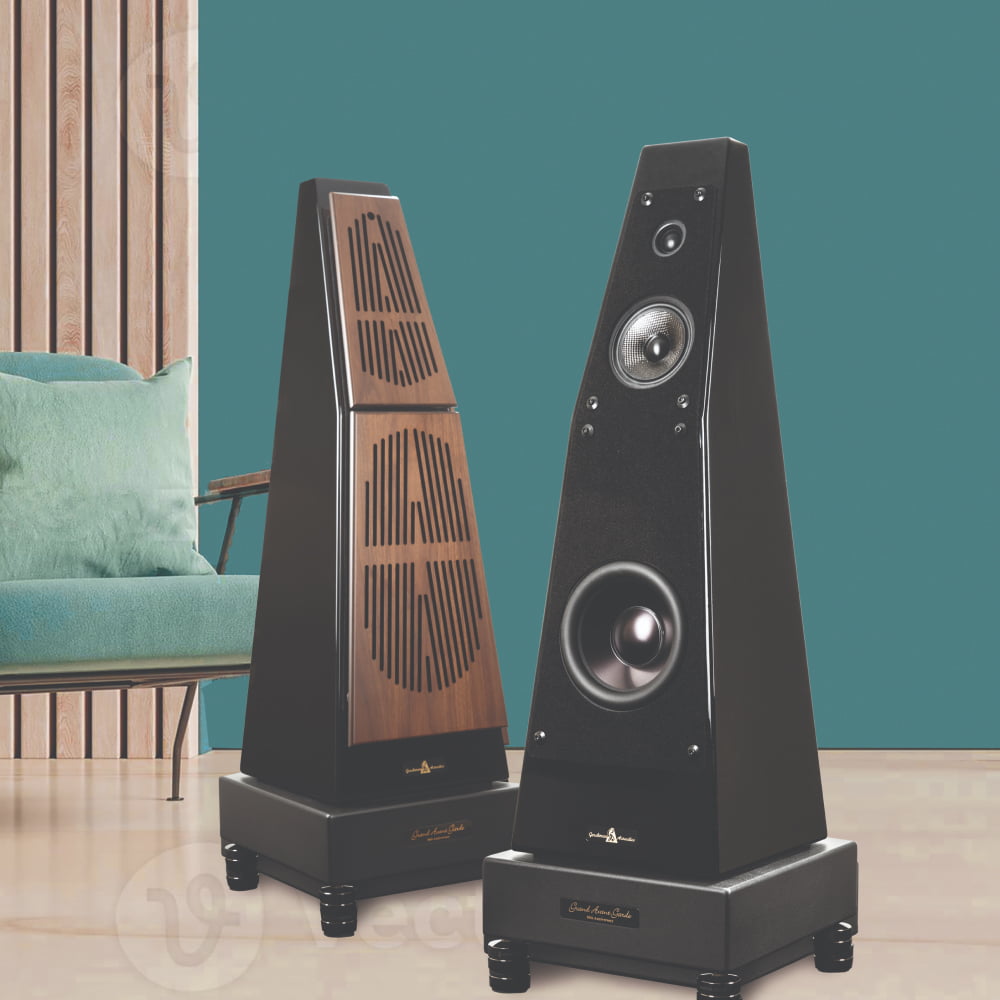
This is why handcrafted high-end loudspeakers remain compelling to listeners who value both sound and design. They are made as instruments of reproduction, with attention to materials, finish, proportion, and the quiet technical decisions that allow music to emerge without distraction. Gershman Acoustics has long approached this balance as a meeting of acoustic engineering and enduring artistry.
The visual presence of a speaker also belongs in the decision. A pair of loudspeakers may occupy a prominent place in a finely considered home. The right design should feel at ease there: sculptural, purposeful, and worthy of the music it is asked to reveal.
The most rewarding choice is the speaker that makes your favorite orchestra feel less like a recording and more like an occasion. Give it a room, electronics, and recordings equal to its abilities, then allow the first quiet bars to remind you why the search mattered.