The opening piano notes of a familiar recording should not sound like a file being played through equipment. They should feel present: the weight of the instrument, the air around its body, the pause before the next phrase. A guide to luxury audio systems begins there, with the realization that exceptional sound is not measured only in volume, detail, or price. It is measured by how convincingly a system brings the artistic intent of a performance into your room.
A true high-end system is a collection of decisions made in service of music. Loudspeakers, amplification, source components, room acoustics, placement, and craftsmanship all shape the final result. The goal is not to assemble the most complicated system possible. It is to create one that disappears, leaving only the scale, color, rhythm, and emotional force of the recording.
Start With the Listening Experience
Before comparing specifications or finishes, consider what you want to feel when you listen. A jazz trio demands intimacy, precise timing, and believable space between performers. A full orchestra asks for unrestricted dynamic range, stable imaging, and the ability to reproduce a hall’s vast acoustic envelope. Rock and electronic music require authority and control, particularly through the lower registers, without sacrificing speed or tonal texture.
Your musical life should guide the system, not a dealer demonstration playlist. Bring recordings you know deeply to every audition. Choose music with voices you recognize, bass lines whose pitch you can follow, and complex passages that lesser systems turn into congestion. The right system will not merely add more information. It will make musical relationships easier to understand and more rewarding to revisit.
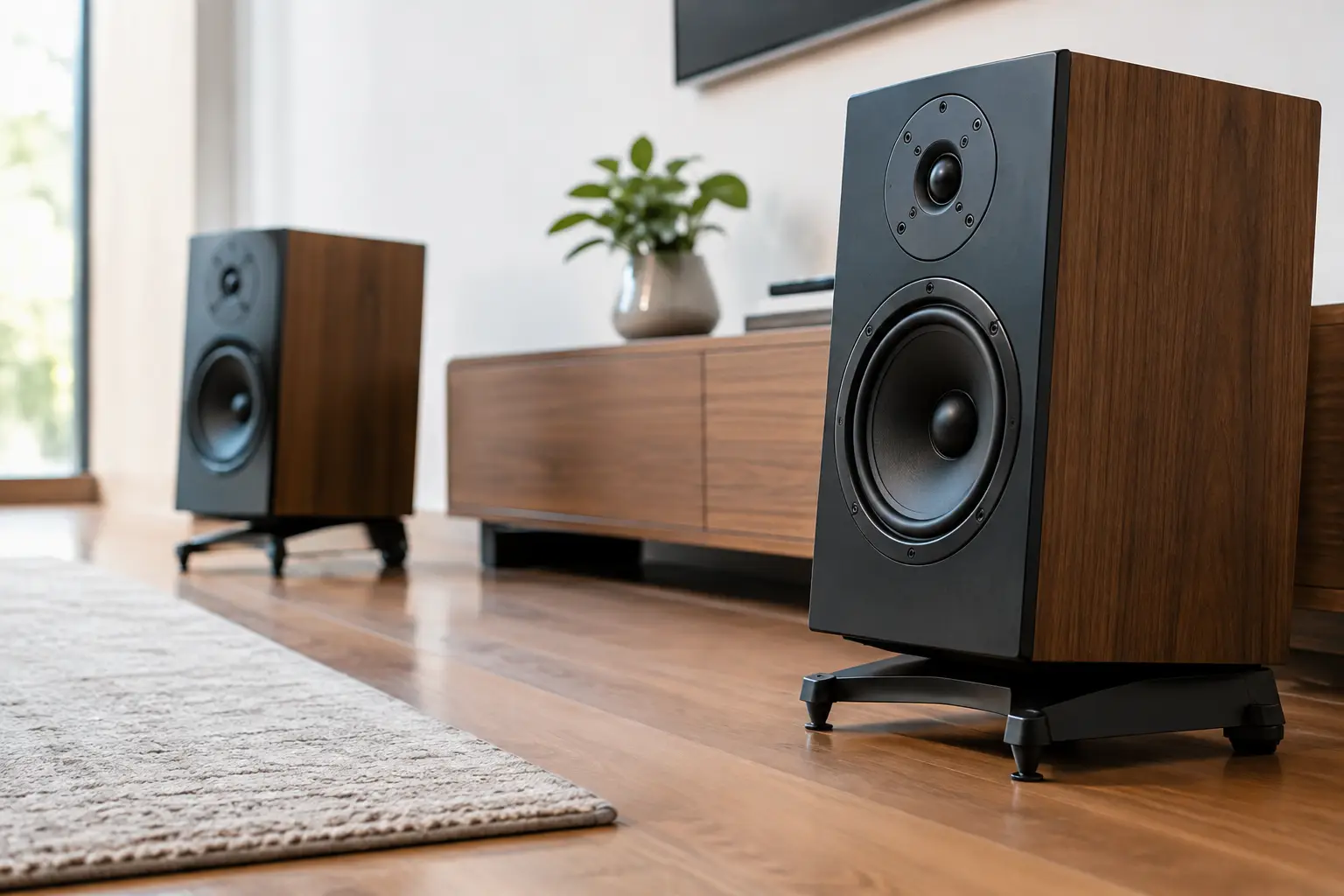
Luxury also has a visual and tactile dimension. These components will occupy a meaningful place in your home, often for decades. Cabinet proportions, veneers, finishes, metalwork, and the integrity of construction deserve the same consideration as sonic performance. The most successful systems feel designed for both the room and the listener’s life.
A Guide to Luxury Audio Systems: Put Speakers First
In most rooms, loudspeakers make the largest single contribution to the character of a system. They translate electrical signals into physical sound, interact directly with the room, and establish the system’s sense of scale. An outstanding pair can make a modestly recorded album compelling; an ill-matched pair can make an expensive front end feel uninvolving.
Listen for tonal truth rather than a dramatic first impression. An exaggerated treble can sound exciting for a few minutes but become fatiguing over a long evening. Overripe bass may initially suggest power while obscuring the pitch, attack, and decay of acoustic instruments. The better loudspeaker tends to reveal detail without announcing it, presenting voices with body and instruments with their natural density.
Imaging matters, but it is often misunderstood. Pinpoint placement of performers can be impressive, yet it should not come at the expense of a coherent musical picture. The finest speakers create a soundstage that is wide, deep, and proportionate, with images that remain stable as the music grows louder. A singer should sound embodied between the speakers, not reduced to a small, disembodied point of light.
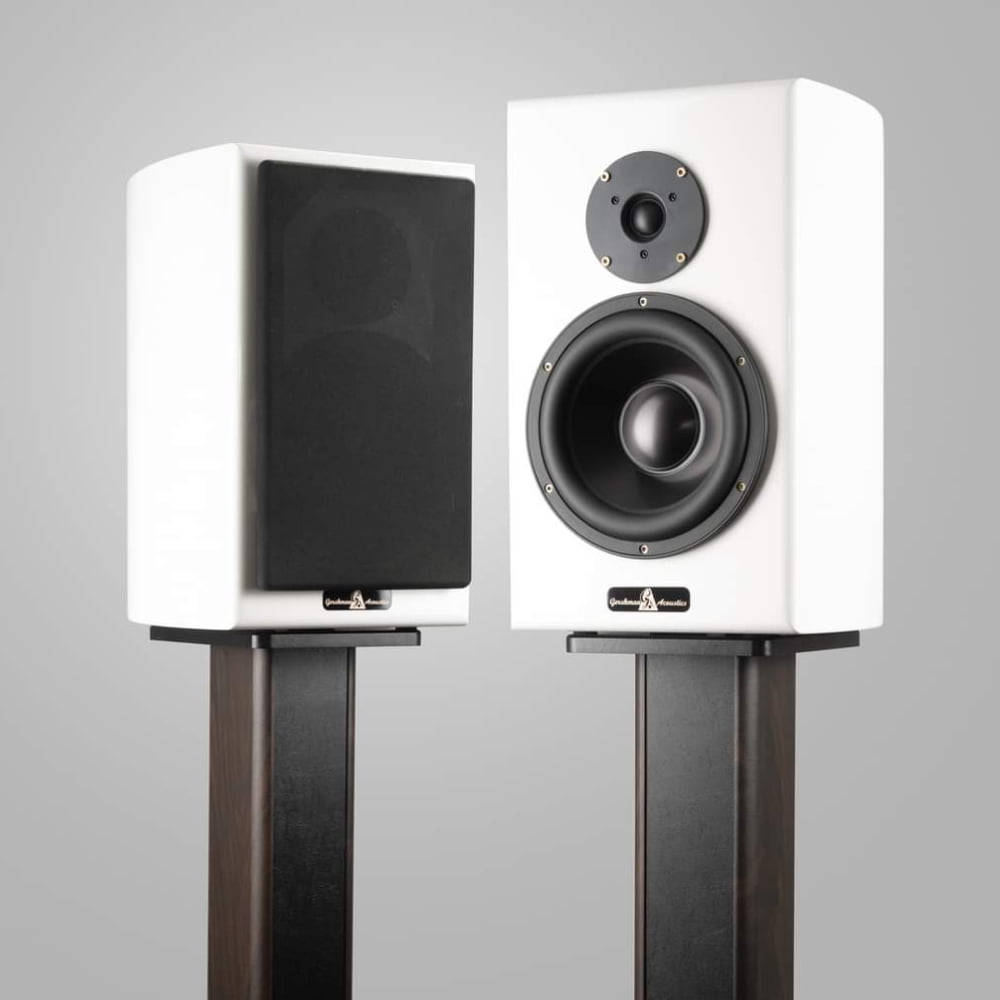
Cabinet design is central to this performance. Resonance, diffraction, internal bracing, driver integration, and bass loading all influence what reaches the listener. Handcrafted loudspeakers earn their place in a luxury system not simply because they are exclusive, but because meticulous construction can preserve low-level nuance and dynamic clarity that mass production often compromises.
Gershman Acoustics has built its reputation around this principle, pairing sophisticated acoustic engineering with cabinetry intended to be heard as much as admired. Models such as the Symphoria and 30th Anniversary Black Swan reflect an approach centered on natural tonal balance, expansive staging, and emotionally direct musical reproduction.
Match Amplification to the Loudspeaker
A loudspeaker’s published sensitivity and impedance offer useful clues, but they do not fully describe how demanding it will be for an amplifier. Some speakers benefit from generous current delivery and substantial power reserves. Others flourish with lower-powered, carefully voiced amplification. The question is less about a headline wattage figure than the amplifier’s ability to maintain composure when music becomes complex.
A convincing system preserves microdynamics – the small shifts in emphasis that give a vocalist phrasing and a drummer touch – while also handling large dynamic swings without strain. When an amplifier loses control, bass can soften, the soundstage can collapse, and bright passages can become hard or glassy. Those effects may be subtle at first, but they shape whether listening remains inviting over time.
Audition components together whenever possible. An amplifier that is exceptional with one loudspeaker may sound reserved, overly warm, or overly forward with another. This is not a flaw in either product. It is the nature of system matching. Trust extended listening over assumptions about brand reputation, topology, or price tier.
Integrated amplifiers deserve serious consideration, particularly in refined living spaces. A well-executed integrated design can reduce component count and cable complexity while delivering superb control and musical authority. Separate preamplifiers and power amplifiers may offer greater flexibility and scale, especially in larger rooms, but the better choice depends on the loudspeaker, the room, and how you prefer to live with the system.
Choose a Source That Honors the Recording
Streaming has made an extraordinary catalog available, but convenience should not dictate sonic priorities. A carefully selected network player and digital-to-analog converter can present digital music with dimensionality, tonal richness, and rhythmic conviction. Pay attention to the quality of the playback platform, its control experience, and its ability to handle the formats you actually use.
For many collectors, vinyl remains an essential part of the ritual. A turntable system rewards patience with a tactile connection to recorded music, but it demands careful setup. Cartridge alignment, tonearm compatibility, isolation, and phono stage gain are not minor details. When properly optimized, analog playback can offer remarkable flow and texture. When poorly set up, it can sound vague, noisy, or overly romanticized.
Neither format is inherently more authentic in every circumstance. The best digital and analog systems each preserve musical truth in their own way. Choose the source that invites you to listen more often, then give it the quality of support it deserves.
Treat the Room as Part of the System
Even exceptional equipment cannot fully overcome an indifferent setup. Hard floors, bare glass, asymmetrical walls, and large open spaces can produce reflections and bass irregularities that alter tonal balance. The solution is rarely to cover every surface with visible acoustic treatment. A thoughtfully furnished room often provides a strong foundation.
Begin with speaker placement. Allow space behind and beside the speakers where possible, then adjust gradually while listening to familiar music. Small movements can change bass weight, image focus, and depth dramatically. The listening chair should form a considered relationship with the speaker positions rather than being placed wherever the room happens to allow.
Rugs, curtains, bookshelves, upholstered furniture, and art can all contribute to a more balanced acoustic environment. Purpose-built treatment may be appropriate in a dedicated listening room, particularly for controlling bass and early reflections. In a living room, however, the aim is usually refinement, not sterility. Music should retain life, energy, and a sense of air.
Give the System Time to Become One
New components require break-in, but so does the listener. Your ears need time to recognize a system’s balance and resolve its character beyond the immediate thrill of a demonstration. Live with the system across different times of day and many musical styles. Notice whether you turn the volume down from fatigue, or stay up later because one more album feels necessary.
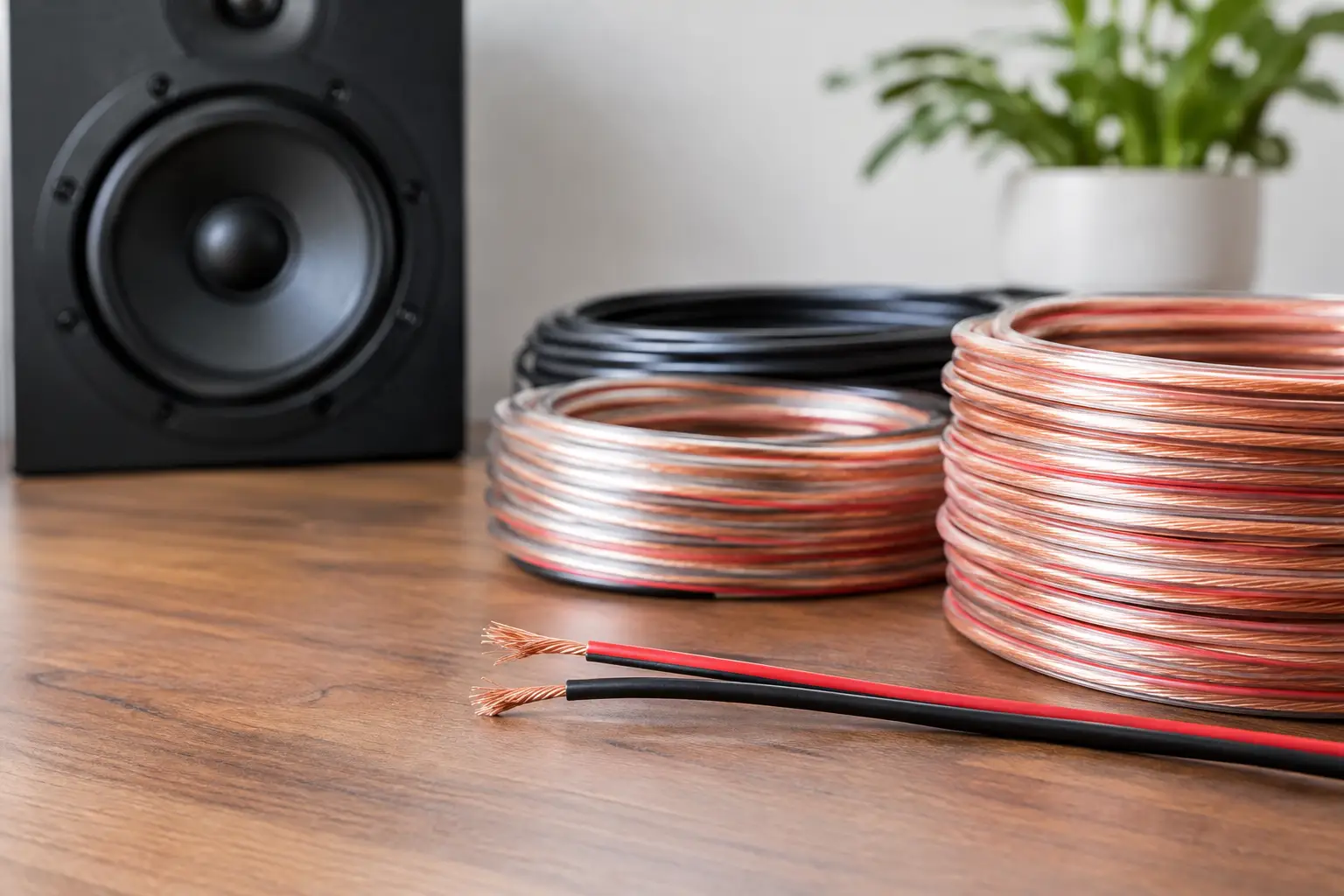
Avoid changing several variables at once. If you replace speakers, cables, amplification, and source components together, you may hear a difference without understanding why. A deliberate approach makes it easier to build a system with a clear voice rather than an accidental collection of expensive parts.
Invest in Craftsmanship You Can Live With
Luxury audio should reward ownership long after the installation is complete. Look beyond finish samples and examine the quality of the cabinet, terminals, controls, fit, and service support. Consider whether the manufacturer has a meaningful design philosophy and a history of standing behind its work. In this category, heritage is valuable when it reflects continued listening, refinement, and accountability.
Budgeting should also be thoughtful. It is tempting to allocate heavily to visible electronics while underestimating speakers, setup, and room preparation. In many systems, a more balanced distribution produces a more profound result. Reserve funds for proper installation and adjustment. Those final decisions may reveal more of your investment than another incremental feature on a component’s specification sheet.
The right luxury audio system will not demand your attention as a collection of objects. It will make room for a late-night cello suite, a cherished vocal recording, or the sudden impact of an orchestra entering at full force. Choose patiently, listen honestly, and let the music tell you when the system has become something more than equipment.