A double bass should have wood, string texture, and a clearly defined beginning to each note. A kick drum should arrive with weight, then leave space for the next beat. When the low end lingers as a thick, indistinct cloud, listeners naturally ask: what causes muddy bass speakers? The answer is rarely just the loudspeaker. More often, it is the relationship between the speaker, the room, the electronics, and the listening position.
Muddy bass is not simply “too much bass.” A system can play very deeply and still sound disciplined, articulate, and emotionally convincing. Mud arrives when several bass frequencies are exaggerated, delayed, or poorly integrated with the midrange. The result can make a fine recording feel heavy-handed, obscure a vocalist’s chest tones, and flatten the rhythmic life of a performance.
What Causes Muddy Bass Speakers?
The most common cause is the listening room itself. Low frequencies are long waves, and they do not behave like treble. Rather than traveling cleanly from speaker to listener, bass energy reflects from walls, floors, ceilings, windows, and large furniture. In certain parts of the room, these reflections reinforce one another. In other places, they cancel. This creates room modes: peaks and dips that can make a bass line seem bloated in one chair and anemic a few feet away.
A rectangular room is especially prone to this behavior because opposing surfaces create predictable standing waves. You may hear a particular note on an acoustic bass bloom far beyond its natural level, while adjacent notes nearly disappear. The speaker is reproducing the signal, but the room is rewriting it.
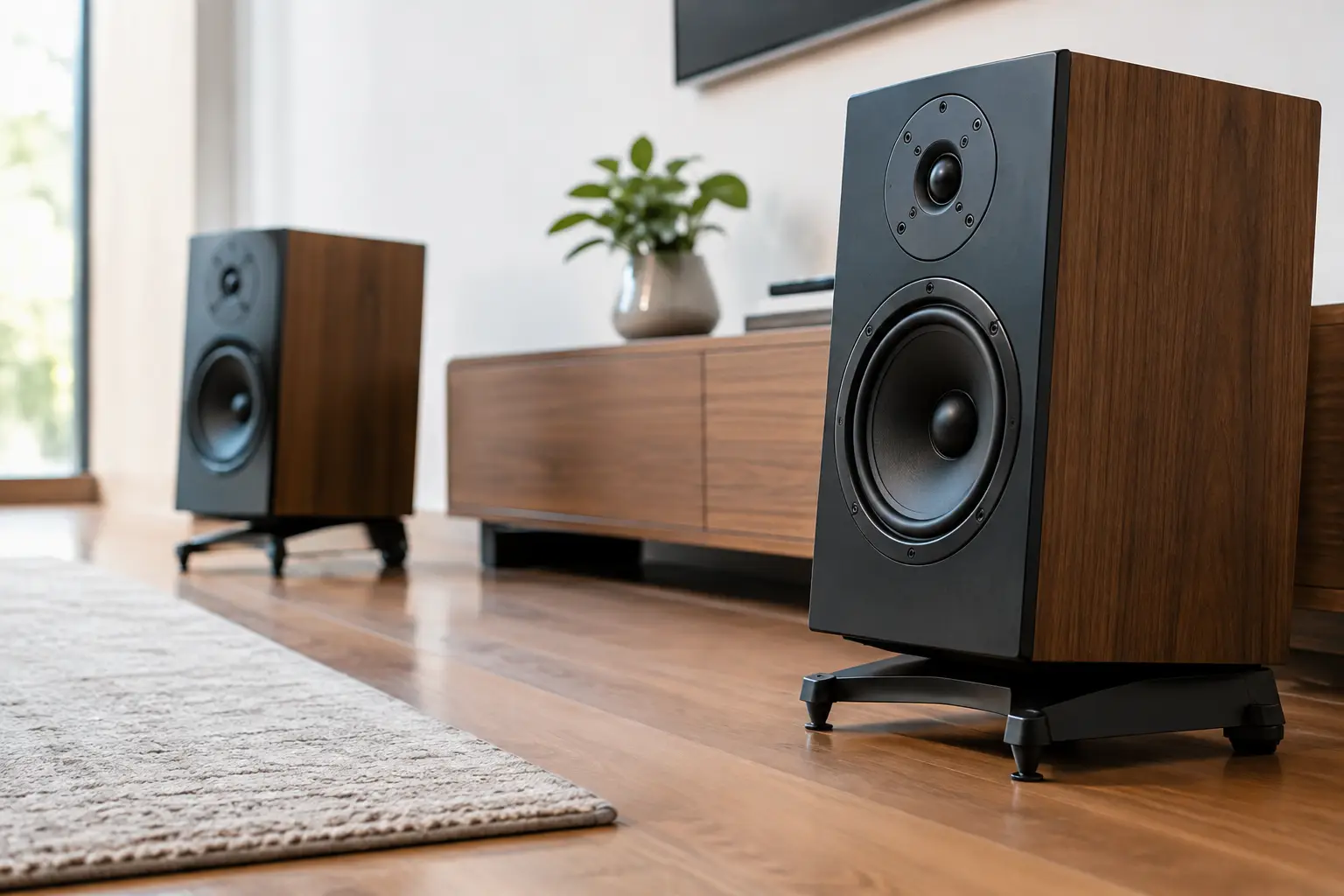
The location of the loudspeakers magnifies this effect. Speakers placed very close to a front wall receive boundary reinforcement, increasing bass output. Positioning them near a corner increases that reinforcement further. This can be welcome in a large, open room or with a compact monitor that needs more foundation. In a smaller or more enclosed room, however, it can turn bass definition into excess warmth and blur.
The listening seat matters just as much. Sitting against the rear wall often places the listener where bass pressure is strongest. Moving the chair forward even a foot or two can bring surprising improvement. Before replacing components, it is worth discovering whether the problem is actually where you sit.
Speaker Placement and Room Proportions
Fine loudspeakers deserve a considered placement, not a convenient one. Begin by allowing some space behind the speakers and from the side walls. There is no universal measurement because room dimensions, speaker design, and furnishings all matter, but small changes can produce large audible results. Move both speakers in modest, equal increments, then listen to familiar music with acoustic bass, piano, kick drum, and male voice.
The goal is not to eliminate bass energy. It is to hear pitch, timing, and tonal color. On a well-recorded cello, the instrument should sound resonant without becoming a generalized rumble. On a jazz trio, the bass player’s notes should have shape and placement within the soundstage rather than collecting around the loudspeakers.
Toe-in can also affect perceived bass clarity. Although it is often discussed as a tool for imaging and treble balance, it changes the overall energy arriving at the listening position. Likewise, the distance between speakers influences how the room is energized. A wider stance may open the soundstage in one space but create uneven low-frequency behavior in another.
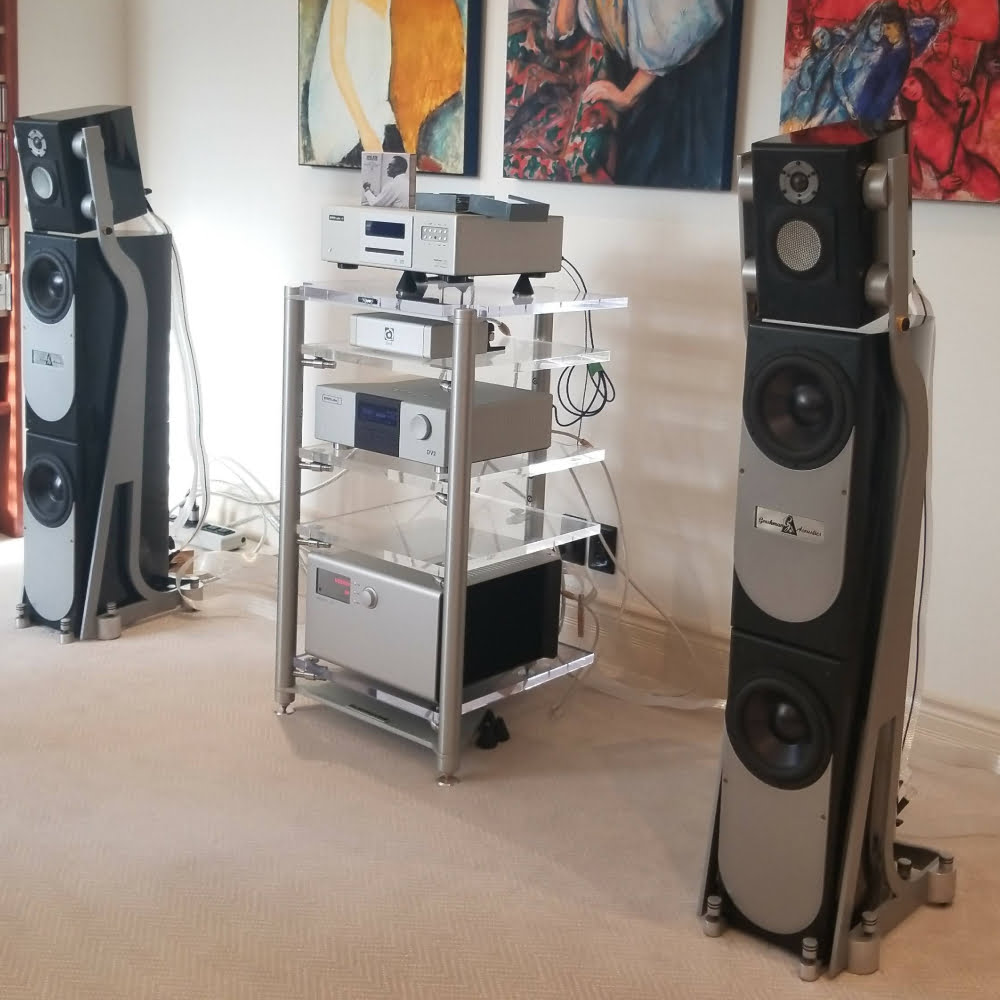
Do not assume that larger speakers are automatically the wrong choice for a modest room. A carefully engineered floorstanding loudspeaker with controlled bass can be more satisfying than a smaller design forced to work too hard. Still, a powerful speaker placed carelessly can overwhelm even an elegant room. Scale, placement, and control must work together.
Furnishings Can Help, Within Limits
A nearly empty room with hard floors, bare walls, and broad glass surfaces can sound both bright and bass-heavy. Rugs, upholstered seating, curtains, and bookcases help moderate reflections in the upper bass and midrange, improving the sense of separation. They are not a complete cure for deep room modes, but they make the room less acoustically severe.
Purpose-built bass treatment can be highly effective when it is thoughtfully selected and positioned. The trade-off is aesthetic and practical: large low-frequency absorbers require physical volume, and a luxury listening room should not feel like a control room unless that is the owner’s intention. The best solutions respect both acoustic performance and the character of the home.
Setup Errors That Blur the Low End
Not every muddy presentation begins with the room. Incorrect polarity is a classic setup problem. If one speaker is wired out of phase, the stereo image becomes vague and bass can lose focus, particularly around the crossover region. Check that positive amplifier terminals connect to positive speaker terminals on both channels, and that the same is true for negative terminals.
If a subwoofer is part of the system, integration deserves particular care. An overly high crossover point can make bass seem detached or thickened. Excess subwoofer level may impress briefly, yet it often masks the natural body of instruments. Phase alignment is equally critical. A subwoofer that arrives slightly out of time with the main speakers can create a slow, swollen quality even when its volume seems reasonable.
Amplifier control also matters. Loudspeakers present changing electrical demands across the frequency range. An amplifier that struggles to maintain control of the woofer can make bass feel loose, especially at realistic listening levels. This is not merely a question of rated watts. Current delivery, stability into difficult loads, and the quality of the amplifier’s power supply all influence the sense of grip and authority.
Source material should not be overlooked. Some recordings are deliberately bass-forward, while others have been compressed, equalized, or mixed in a way that exaggerates the lower octaves. Compare several familiar recordings before judging the system. If every album sounds thick, investigate the setup. If only a few do, the recording may be the limiting factor.
When the Loudspeaker Itself Is the Issue
A loudspeaker can contribute to muddy bass when its cabinet is insufficiently rigid, its drivers are poorly controlled, or its crossover does not blend the woofer cleanly into the midrange. Cabinet vibration stores energy and releases it after the musical signal has changed, softening transients. A well-executed enclosure is therefore not just a visual expression of craftsmanship. It is fundamental to bass precision.
Port tuning can also shape the character of the low end. A bass-reflex design may offer impressive extension and scale, but poor placement or a poorly matched room can make its tuning region too prominent. Sealed designs often trade some ultimate output for a different sense of speed and control. Neither approach is universally superior. The right choice depends on the speaker’s engineering, the room, and the listener’s priorities.
At Gershman Acoustics, the pursuit of musical realism begins with the understanding that bass must serve the performance. Weight without definition is spectacle, not fidelity. A convincing low end lets the listener follow the musician’s phrasing, feel the physical presence of an orchestra, and hear the silence between notes.
A Sensible Way to Diagnose Muddy Bass
Resist the urge to change several things at once. Start by playing a small selection of recordings you know intimately at a moderate volume. Move your listening chair forward from the rear wall, then listen again. Next, adjust speaker distance from the front wall in small increments. These two changes alone often reveal whether room interaction is the primary issue.
Afterward, verify wiring polarity and, if applicable, reduce subwoofer level slightly before experimenting with crossover and phase settings. A bass balance that sounds less dramatic for the first minute may prove far more natural over an entire album. Finally, assess whether the amplifier and loudspeakers are appropriately matched for the room and the listening levels you enjoy.
Measurements can help confirm what your ears suggest, particularly in difficult rooms. Yet they should guide listening rather than replace it. The final standard is musical: can you distinguish the pitch of each bass note, sense the attack of a drum, and remain connected to the vocal line without fatigue?
A room will always have a voice of its own. The art is not to silence it completely, but to let the loudspeakers disappear enough that the music can speak with clarity, scale, and feeling.