You can hear the question in two very different rooms. In one, it is asked by someone standing in front of a luxury pair of loudspeakers, wondering whether the price reflects genuine performance or polished marketing. In the other, it comes after a listening session that suddenly made a familiar recording feel vivid, dimensional, and emotionally direct. Do expensive speakers sound better? Sometimes unmistakably. But the honest answer is more refined than a simple yes or no.
A well-made loudspeaker is not expensive because it is decorative, heavy, or exclusive. It becomes expensive when design choices, materials, engineering, cabinet construction, crossover quality, driver behavior, and voicing are all pursued without the usual compromises of mass-market manufacturing. That level of ambition can produce extraordinary sound. It can also raise the price substantially. The key is understanding what you are actually paying for, and when that investment becomes audible.
Why do expensive speakers sound better in many systems?
At their best, expensive loudspeakers do not simply sound bigger or louder. They sound more believable. Voices carry human texture rather than a glossy edge. Bass has shape and authority instead of boom. Instruments occupy space with convincing image focus, and the soundstage opens into something less mechanical and more natural.
That improvement usually begins with engineering discipline. Premium loudspeakers often use better drivers with tighter tolerances, more carefully designed crossovers, and cabinets built to control resonance rather than merely contain the components. These choices reduce distortion, improve tonal balance, and preserve low-level detail that gives recordings their sense of life.
Cabinet design, in particular, is often underestimated. A speaker cabinet is part of the instrument. If it stores and releases energy unpredictably, music becomes blurred. Better cabinets tend to be more inert, more thoughtfully shaped, and more expensive to build. You hear that effort in cleaner midrange, deeper image stability, and bass that starts and stops with greater precision.
There is also the matter of refinement over time. In the upper tier of loudspeaker design, manufacturers are often chasing not just measurement targets but musical realism. That means listening, adjusting, and voicing for coherence, tonal naturalness, and emotional communication. Those final increments are difficult to achieve. They require experience, patience, and a willingness to build without shortcuts.
What higher price can actually buy
Price alone is not a guarantee of excellence. Still, in serious audio, a higher budget often buys access to things that are genuinely costly to execute well.
The first is component quality. Superior capacitors, resistors, internal wiring, damping materials, and custom drivers are not glamorous talking points, yet they shape the final performance. Better parts tend to preserve nuance, improve integration, and hold their behavior more consistently over time.
The second is craftsmanship. Hand-assembled loudspeakers with meticulous quality control often perform more consistently than speakers built to hit aggressive volume targets. Precision matters. Small variances in assembly can affect stereo imaging, tonal match between channels, and long-term reliability.
The third is acoustic sophistication. Premium loudspeakers are more likely to feature advanced cabinet geometries, proprietary loading approaches, carefully tuned ports, or crossover networks designed for graceful driver integration rather than showroom brightness. These are not details for a brochure. They are part of why some speakers remain satisfying for years instead of impressing only in the first five minutes.
For listeners who value a deeper connection to music, these qualities matter. A great loudspeaker does not force detail at you. It reveals detail while preserving flow, dynamics, and emotional ease.
When expensive speakers do not sound better
There are also moments when a costly speaker underwhelms, and they are more common than enthusiasts like to admit.
A speaker can be beautifully built yet poorly matched to the room. Place a large, full-range design in a compact, reflective space and you may hear swollen bass, confused imaging, and fatigue. Put a highly revealing speaker with an underpowered or thin-sounding amplifier and the result may feel analytical instead of inviting.
Room acoustics matter so much that they can either elevate or erase the advantages of premium loudspeakers. Hard surfaces, poor placement, asymmetrical boundaries, and untreated reflections can flatten the soundstage and disturb tonal balance. In those conditions, a more expensive speaker may simply expose more of the room’s problems.
There is also the issue of voicing preference. Some listeners love a forward, hyper-detailed presentation. Others prefer warmth, body, and scale. A higher-priced speaker may be technically superior yet less pleasing to your ear. Better is not always the same as more enjoyable.
And yes, luxury marketing exists. Some products command high prices because of finish, scarcity, or brand positioning more than acoustic achievement. That does not make them unworthy, but it does mean the smart listener should separate prestige from performance.
Do expensive speakers sound better for every listener?
Not necessarily. Context matters.
If most listening happens in the background while cooking, working, or entertaining, a carefully chosen mid-priced speaker may be more than enough. If the source material is compressed, the room is untreated, and the electronics are entry-level, there may be limited benefit in moving dramatically upmarket.
But for the listener who sits down with intention, who knows the texture of a favorite vocal recording, who wants to hear the decay of a piano note, the dimensionality of a quartet, or the force of an orchestra without strain, the difference can become profound. This is where expensive speakers often justify themselves. They do not just reproduce sound. They recreate event, scale, and emotional tension in a way lesser systems rarely manage.
That is especially true at lower listening levels. One of the quiet virtues of a truly accomplished loudspeaker is that it remains complete and expressive without needing to be pushed. The tonal structure stays intact. Microdynamics remain alive. The performance still feels inhabited.
How to tell whether the improvement is real
The best way to evaluate a loudspeaker is not by asking whether it sounds impressive, but whether it sounds convincing over time.
Listen for tonal naturalness first. Human voice is an excellent reference because we all know instinctively when it sounds wrong. Then pay attention to spatial coherence. A fine speaker should not throw details around theatrically. It should place musicians with stability and scale.
Dynamics are another revealing clue. Music breathes through contrast, from the lightest touch to sudden impact. Expensive speakers that are genuinely better tend to handle those changes with control and ease, not with hardness or blur.
Finally, notice your own response. Do you analyze the system, or do you stay with the performance? That shift matters. The finest loudspeakers make technology feel less present. They remove barriers between listener and music.
The difference between luxury and excess
High-end audio is at its most compelling when luxury serves performance. Beautiful finishes, sculptural form, and artisanal construction absolutely have value, especially in homes where aesthetics matter. But those qualities should support acoustic integrity, not distract from its absence.
This is where heritage and design philosophy matter. A serious loudspeaker maker earns trust not simply by charging more, but by demonstrating why the product exists in its current form – why the cabinet is built a certain way, why the crossover is voiced with restraint, why the final presentation favors realism over spectacle. That kind of confidence is felt in the listening chair.
In this world, some of the most rewarding loudspeakers are expensive because they are uncompromising, not because they are extravagant. There is a difference.
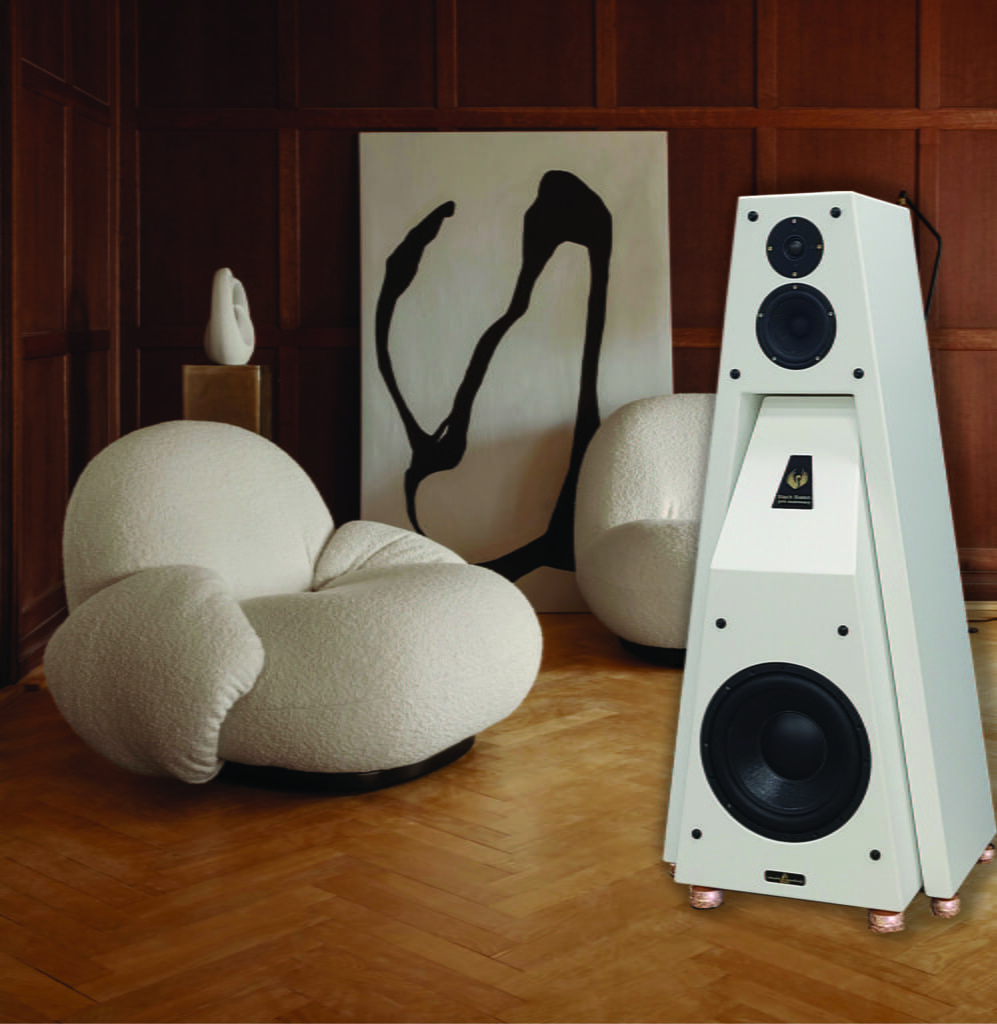
For those pursuing a more emotionally complete listening experience, brands such as Gershman Acoustics have long approached loudspeaker design as both engineering and art – where cabinet construction, musical coherence, and handcrafted execution are all in service of lifelike reproduction.
So, do expensive speakers sound better?
Very often, yes. They can deliver lower distortion, better imaging, deeper bass control, greater tonal sophistication, and a more immersive connection to music. But they do so only when the design is truly accomplished, the room is sympathetic, and the rest of the system allows them to perform at their level.
The more useful question may be this: better for what kind of listening life? If you want background sound, price climbs quickly past practical value. If you want to feel the body of a cello, the air around a singer, or the full architecture of a recording unfold in your room, better loudspeakers can become not a luxury in the superficial sense, but a meaningful one.
A great speaker does not justify itself on a spec sheet or a price tag. It just keeps you in the chair for one more track.