Some speakers impress in the first 30 seconds. They throw out oversized bass, sharpen the treble, and create a showroom effect that feels dramatic until the second or third track. A true high end floorstanding speakers review asks a different question: not what sounds exciting at first, but what continues to sound convincing, emotionally engaging, and musically right after hours, months, and years of listening.
That distinction matters more than most buyers expect. In the premium loudspeaker world, price alone does not guarantee realism. A beautifully finished cabinet can still sound mechanical. An analytically detailed speaker can still leave voices feeling pale and instruments oddly separated from one another. The best floorstanding designs do something rarer. They preserve scale, tonal honesty, and spatial coherence while making music feel alive rather than merely exposed.
What a high end floorstanding speakers review should really examine
The most useful reviews go beyond treble sparkle and bass weight. Those qualities matter, of course, but they are only fragments of the experience. Serious listening begins with how a speaker handles relationships: the relationship between driver integration and image focus, between bass extension and room control, between detail retrieval and tonal naturalness.
A great floorstanding speaker should make a piano sound like one instrument, not a collection of frequencies spread across separate drivers. It should let a vocalist occupy a stable, believable position in space. It should reproduce dynamic contrast without turning force into harshness. When these elements are in balance, the system stops sounding like hardware and starts sounding like performance.
This is also where high-end loudspeakers separate themselves from mass-market alternatives. Boutique builders tend to spend more time refining cabinet behavior, crossover voicing, and resonance control because those subtleties determine whether a speaker remains compelling long after the novelty of a listening demo fades.
Bass, imaging, and tonal truth
Floorstanding speakers are often purchased for scale, and rightly so. A well-executed floorstander can deliver deeper bass, greater dynamic authority, and a larger soundstage than most stand-mounted models. But bigger bass is not the same as better bass.
The finest designs produce low frequencies with shape and pitch definition. You should hear the texture of an upright bass, the pressure of a kick drum, and the resonance of a concert hall without the room turning thick or slow. If bass dominates the midrange, the entire presentation loses credibility. Weight matters, but control matters more.
Imaging is another area where expensive speakers are often misunderstood. Pinpoint placement can be impressive, yet if the image feels miniaturized or overly carved, the result may sound artificial. Realistic imaging has body and dimensionality. Instruments should occupy space naturally, with air around them and a sense of acoustic continuity.
Then there is tonal balance, perhaps the hardest quality to judge quickly. Many speakers are voiced to appear highly detailed by pushing the upper frequencies forward. That can illuminate recordings, but it can also flatten instrumental color and make long listening sessions fatiguing. A more refined speaker reveals nuance without glare. Strings should shimmer, not sting. Brass should have bite, not edge. Human voices should sound human.
Why cabinet design still matters more than marketing claims
In luxury audio, cabinet construction is often treated as an aesthetic talking point. It is far more than that. The enclosure is an active participant in the sound, whether the manufacturer acknowledges it or not.
Poorly controlled cabinets store energy and release it back into the music as haze, smear, or excess warmth. That can make a speaker seem full-bodied at first, but it usually reduces separation, weakens transient precision, and blurs low-level detail. By contrast, a meticulously built cabinet supports quieter backgrounds, stronger image specificity, and cleaner bass articulation.
This is one reason handcrafted loudspeakers continue to command respect among experienced audiophiles. Precision in cabinet geometry, bracing, damping, and material selection does not always show up on a quick specification sheet, yet it profoundly affects musical realism. Elegant industrial design has value, but in the best speakers, visual refinement and acoustic intent are inseparable.
The trade-offs every buyer should understand
Any honest high end floorstanding speakers review has to acknowledge that no speaker is perfect in every room or for every listener. There are always trade-offs, and the right choice depends on priorities.
Some floorstanders prioritize absolute transparency and transient speed. They can be thrilling with small ensemble jazz, acoustic recordings, and well-produced vocals, but in a bright room or with a lean amplifier they may feel too exposed. Others aim for richer tonal density and larger-scale presentation. These can be deeply satisfying with orchestral works and classic rock, though they may not sound quite as surgically explicit on every detail.
Room interaction is another major variable. A speaker with generous low-frequency extension may sound magnificent in a properly sized, treated listening room, yet become overpowering in a smaller living space with reflective surfaces. Placement flexibility matters. So does amplifier matching. High-end speakers are revealing enough to expose weaknesses upstream, which means the loudspeaker should never be judged in isolation.
For many listeners, the sweet spot lies in balance. The ideal floorstanding speaker offers authority without heaviness, detail without aggression, and refinement without sterility. It invites long sessions and broad musical exploration rather than rewarding only a narrow slice of audiophile recordings.
How to listen beyond the demo
A polished dealer demonstration can be memorable, but it can also be misleading. Reviewing premium floorstanders properly means listening for consistency across different recordings, volumes, and moods.
Start with familiar music, especially recordings whose tonal character you know intimately. Listen to vocal phrasing, the decay of cymbals, and the way bass lines move through a mix. Then change genres. A speaker that flatters sparse acoustic material but loses composure on complex orchestral passages or dense electronic productions may not be as complete as it first appears.
Volume behavior is equally revealing. Some speakers sound balanced only when pushed hard, while others lose energy at lower levels. A truly accomplished floorstander preserves musical communication across a broad dynamic range. Late-night listening should still feel textured and emotionally intact.
It is also worth paying attention to fatigue. The wrong speaker can impress and exhaust in the same evening. The right one draws you deeper into album after album, not because it shouts for attention, but because it removes barriers between the listener and the performance.
Where luxury earns its place
At this level, buyers are not simply purchasing output and extension. They are investing in a relationship with sound and with the object itself. That includes finish quality, craftsmanship, longevity, and the sense that the speaker belongs in a refined interior as naturally as it belongs in a serious listening room.
This is where established high-end makers earn distinction. When a loudspeaker is voiced with musical integrity and built with unusual care, ownership becomes more rewarding over time, not less. The product feels considered. The design language remains elegant. The sound keeps revealing fresh layers in recordings you thought you already knew.
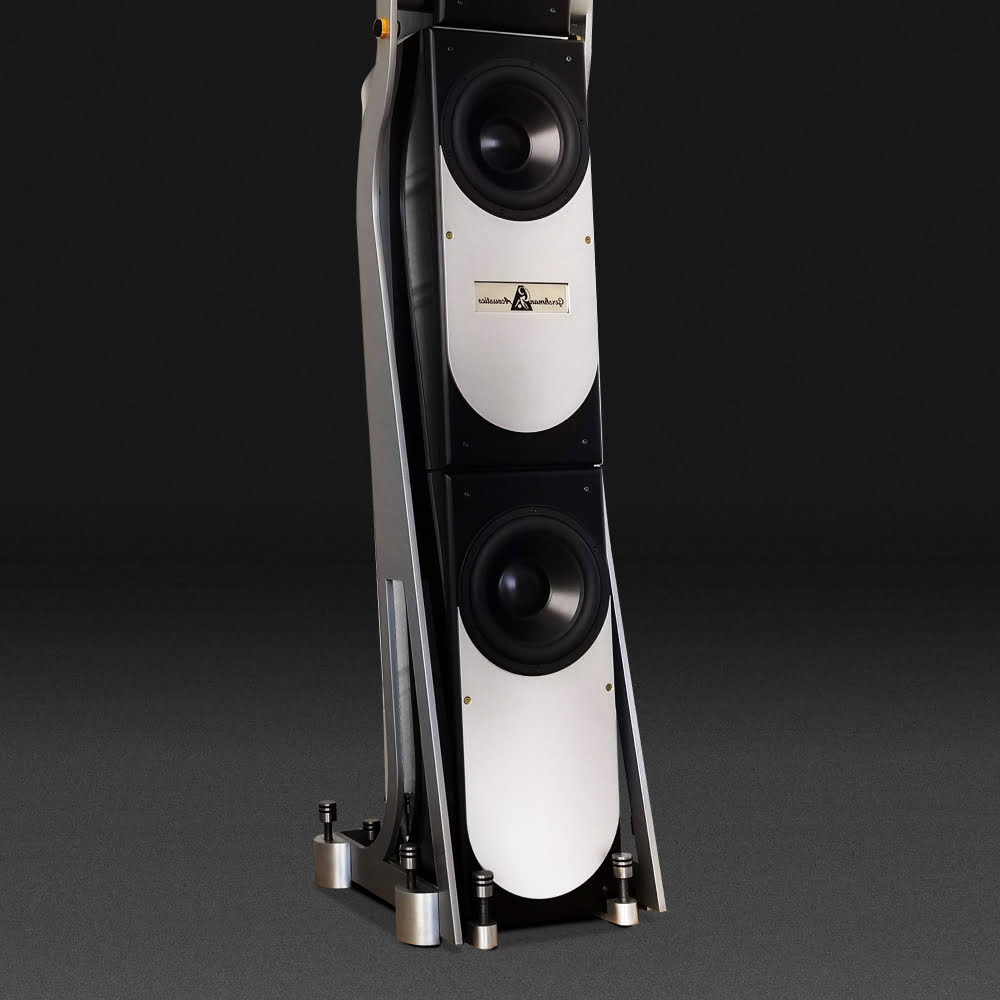
That philosophy has long shaped companies such as Gershman Acoustics, where handcrafted construction, acoustic engineering, and emotional realism are treated as one conversation rather than separate disciplines. For the right listener, that union of musical truth and visual sophistication is the entire point of luxury audio.
A more meaningful standard for review
The best floorstanding speakers do not try to impress by exaggerating one part of the spectrum or by turning every recording into a hi-fi spectacle. They persuade through coherence. They allow music to breathe at full scale while preserving intimacy, texture, and tonal honesty.
If you are evaluating speakers in this category, look past quick fireworks. Ask whether the sound feels believable. Ask whether instruments have body, whether the bass has discipline, whether the speaker communicates emotion without artifice. And ask whether you would still want to listen after the reviewing mindset fades and the evening becomes about music alone.
That is the standard that matters. Not a moment of display, but the rare sense that a loudspeaker has stepped aside and left you in the presence of the performance.