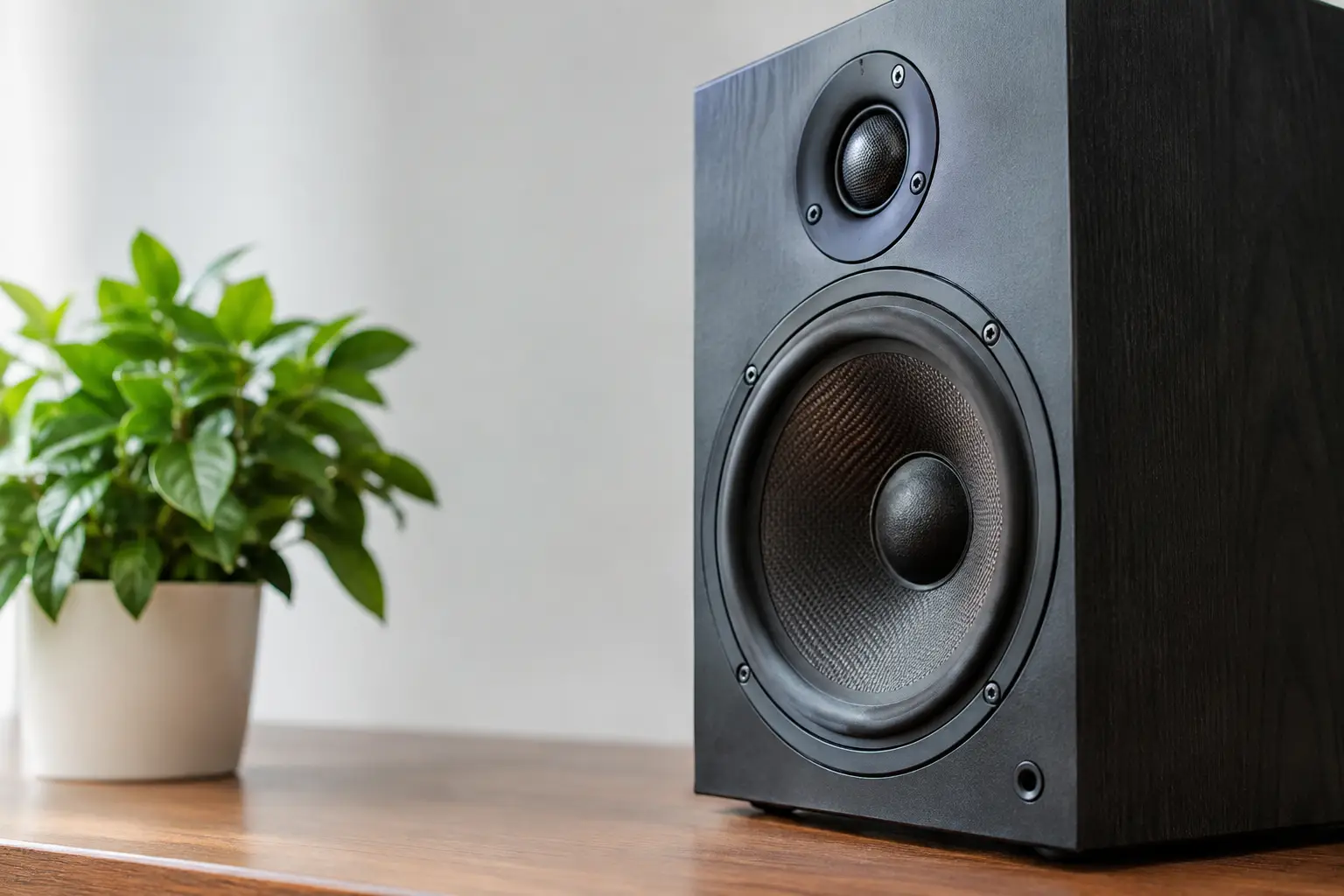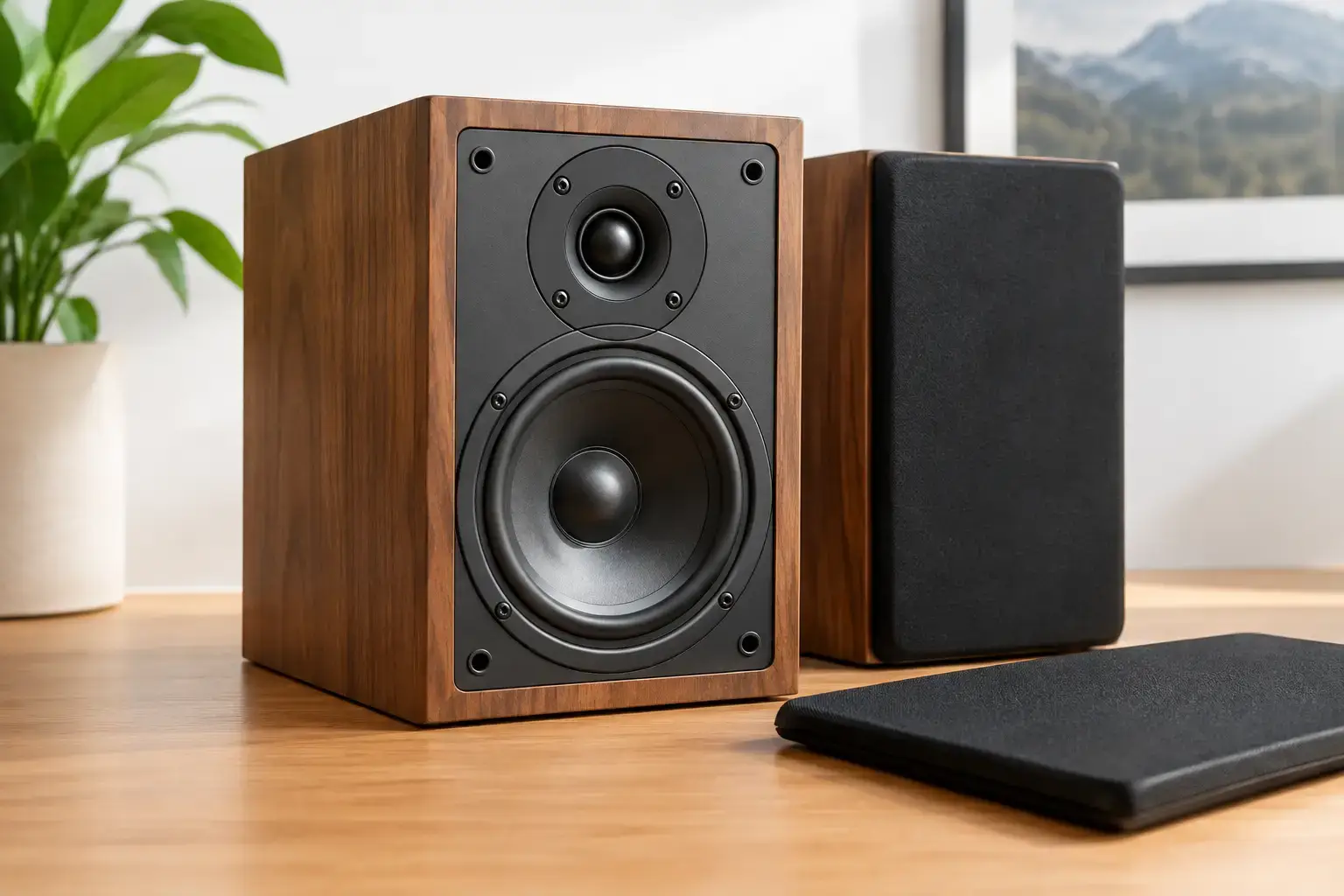
A familiar recording can lose its authority in an instant: a vocal hardens on a sustained note, a piano turns glassy at higher volume, or a bass line begins to sound loose rather than powerful. So, what causes speaker distortion? The answer is rarely one isolated flaw. Distortion can begin in the recording, source component, amplifier, loudspeaker, setup, or listening room. The art is identifying where musical information stops being reproduced faithfully and starts being altered.
For listeners who have invested in a fine music system, this distinction matters. A little distortion does more than make sound less pleasant. It reduces tonal color, blurs the space around performers, compresses dynamics, and weakens the emotional connection that makes a performance feel present in the room.
What Causes Speaker Distortion in a Home System?
At its simplest, distortion occurs when the audio signal leaving a system is not an accurate enlargement of the signal that entered it. Ideally, a loudspeaker moves in exact sympathy with the changing electrical waveform sent by the amplifier. In practice, every component has limits. When those limits are exceeded, or when a component is poorly matched, the result may be audible as harshness, congestion, buzzing, compression, or a loss of control.
Not every form of distortion is equally obvious. Severe clipping can sound immediately abrasive. More subtle nonlinear behavior may reveal itself only over time, as a sense that music feels flattened, fatiguing, or less believable than it should. The most revealing systems do not create these problems, but they can make flaws elsewhere in the chain easier to hear.
Amplifier clipping and insufficient power
One of the most common causes is amplifier clipping. An amplifier needs voltage and current reserves to reproduce musical peaks without strain. When the listener asks for more level than the amplifier can deliver, the smooth tops and bottoms of the waveform are effectively cut off. That creates high-frequency energy that was not in the original music.
Clipping is often mistaken for a loudspeaker problem because the symptoms emerge at higher volume: vocals become sharp, cymbals turn brittle, and the presentation grows aggressive. Yet the speaker may simply be receiving a damaged signal. More concerning still, a modest amplifier driven hard can pose greater risk to tweeters than a more powerful, well-controlled amplifier used responsibly.
Power ratings alone do not tell the whole story. A loudspeaker’s impedance behavior, sensitivity, room size, listening distance, and preferred listening level all shape the amplifier’s real-world demands. A beautifully specified amplifier that lacks sufficient current delivery for a complex load may sound constrained long before its published wattage suggests it should.
Loudspeaker overload and mechanical limits
Loudspeaker drivers are physical instruments. Woofers, midrange units, and tweeters each have a range in which they operate with control and linearity. Push a driver beyond that range and it can no longer trace the signal accurately.
Low frequencies are especially demanding. Deep bass requires substantial driver excursion, and a speaker asked to reproduce bass-heavy material at elevated levels may reach its mechanical limits. The sound can become thick, strained, or percussively blurred. In extreme cases, the driver may produce a noticeable clicking or knocking sound as it approaches the end of its travel.
Thermal compression is another, less dramatic form of overload. As a voice coil heats during extended loud playback, its electrical resistance rises. The speaker may play less loudly and dynamically than expected, even though the volume setting has not changed. Music loses its sense of ease. This is one reason high-quality driver design, crossover engineering, cabinet construction, and thoughtful system matching matter so deeply to long-term listening satisfaction.
Damaged or aging components
A buzz or rattle that appears consistently on certain notes may point to a mechanical issue rather than an amplifier limitation. A loose grille, cabinet fitting, binding post, or nearby object can vibrate sympathetically. Before assuming a driver has failed, remove or secure anything that might be resonating around the speaker.
Driver damage is also possible. A torn surround, shifted voice coil, weakened suspension, or damaged tweeter can introduce audible distortion, often in only one channel. Aging crossover components may affect tonal balance or behavior over many years, particularly in speakers exposed to heat, humidity, or heavy use.
The useful test is consistency. If the distortion occurs at the same frequency and same level regardless of source material, swap the left and right speaker connections. When the problem follows the speaker, the speaker or its immediate environment deserves attention. When it remains in the same channel, investigate the amplifier, source, cable connection, or signal path.
The Distortion That Begins Before the Speakers
The loudspeaker is the final voice of the system, but it cannot restore information lost earlier. A poor recording, a low-quality digital file, an overdriven phono stage, or a source component operating incorrectly can all send compromised sound downstream.
Modern recordings sometimes contain intentional dynamic compression, saturation, or clipping as part of their production aesthetic. If a particular album sounds harsh through every system, the recording itself may be the limiting factor. By contrast, if many well-recorded albums suddenly sound edgy or congested, the cause is more likely within the playback chain.
Vinyl playback offers its own possibilities. A worn stylus, improper cartridge alignment, incorrect tracking force, or accumulated debris in the groove can create mistracking distortion, especially on loud inner-groove passages. Digital systems are not immune either. Incorrect gain settings, poorly implemented volume control, or overloaded inputs can harden transients before the signal ever reaches the amplifier.
Why the Room Can Sound Like Distortion
A room does not distort a signal electronically, but it can dramatically alter what reaches the listener. Hard, reflective surfaces can exaggerate upper-frequency energy and make a system seem brighter or more aggressive than it truly is. Bass modes can cause some notes to swell while others disappear, giving the impression of a woofer that is slow, boomy, or uncontrolled.
Speaker placement is often the most overlooked variable. A speaker positioned too close to a rear wall or corner may produce excessive boundary reinforcement in the bass. The resulting weight can be impressive at first, yet it often obscures pitch definition and masks the lower midrange. Move the speakers incrementally, listen with familiar acoustic music, and allow time for each adjustment to reveal its character.
The listening position matters as much as the speaker position. Sitting in a deep bass null can make one reach for more volume or more low-frequency boost, only to overload the system elsewhere in the room. A small change in chair placement can restore balance more effectively than any electronic correction.
Distortion, Resonance, and the Role of Cabinet Craftsmanship
Not all unwanted sound comes from the driver itself. Cabinet panels, internal air pressure, ports, and imperfectly controlled resonances can add energy after the musical signal has passed. This muddies timing and masks fine detail, particularly through the critical midrange where voices and acoustic instruments carry much of their identity.
A carefully engineered cabinet is not merely an elegant enclosure. It is a structural foundation for the drivers. Its mass, geometry, damping, bracing, and interface with the floor influence how much stored energy is released into the music. At the highest level of loudspeaker design, the goal is not to make a cabinet disappear by magic. It is to control its behavior so that the listener hears the recording, not the enclosure.
This is part of the philosophy behind handcrafted loudspeakers such as those from Gershman Acoustics: musical realism depends on a complete design, where driver behavior, crossover voicing, cabinet integrity, and room interaction are considered as one system.
How to Identify the Source of the Problem
Begin with one recording you know intimately, preferably an uncompressed acoustic vocal, solo piano, small jazz ensemble, or orchestral passage with natural dynamic range. Listen at a modest level first, then increase volume gradually. If distortion appears only as the level rises, amplifier headroom or driver overload becomes more likely.
Next, isolate variables. Try another source, inspect all cable terminations, and remove nearby items that could rattle. If possible, exchange the channels at the amplifier end. This simple process distinguishes a speaker-specific issue from a channel-specific issue without relying on guesswork.
Pay attention to the character of the sound. A harsh, brittle edge on peaks often suggests clipping or source overload. A fuzzy buzz on specific bass notes may indicate a loose object, cabinet resonance, or damaged driver. A softening of dynamics during prolonged loud listening can point toward thermal compression. Broad, uneven bass that changes as you move around the room is usually acoustic behavior rather than a defective speaker.
Avoid trying to solve every problem with equalization. Thoughtful equalization can help address certain room-related issues, particularly at low frequencies, but it cannot repair clipping, a damaged driver, or a speaker placed in an acoustically punishing location. First establish sound mechanical condition, appropriate amplification, and sensible placement. Then use adjustment with restraint.
The finest systems invite volume because they retain composure, color, and scale rather than demanding attention through sheer force. If music begins to lose its grace, treat that change as useful information. A careful adjustment today can return the breath of a voice, the weight of a cello, and the living scale of a performance to the room.
Explore Gershman Acoustics Reference Loudspeakers
Experience the lifelike soundstage, deep controlled bass, and artisanal cabinetry discussed in our guides.

Symphoria
Flagship 3-Way Sealed Reference Loudspeaker with Dual Patented Bass Traps (BCT) & SSAS Isolation
Explore Model →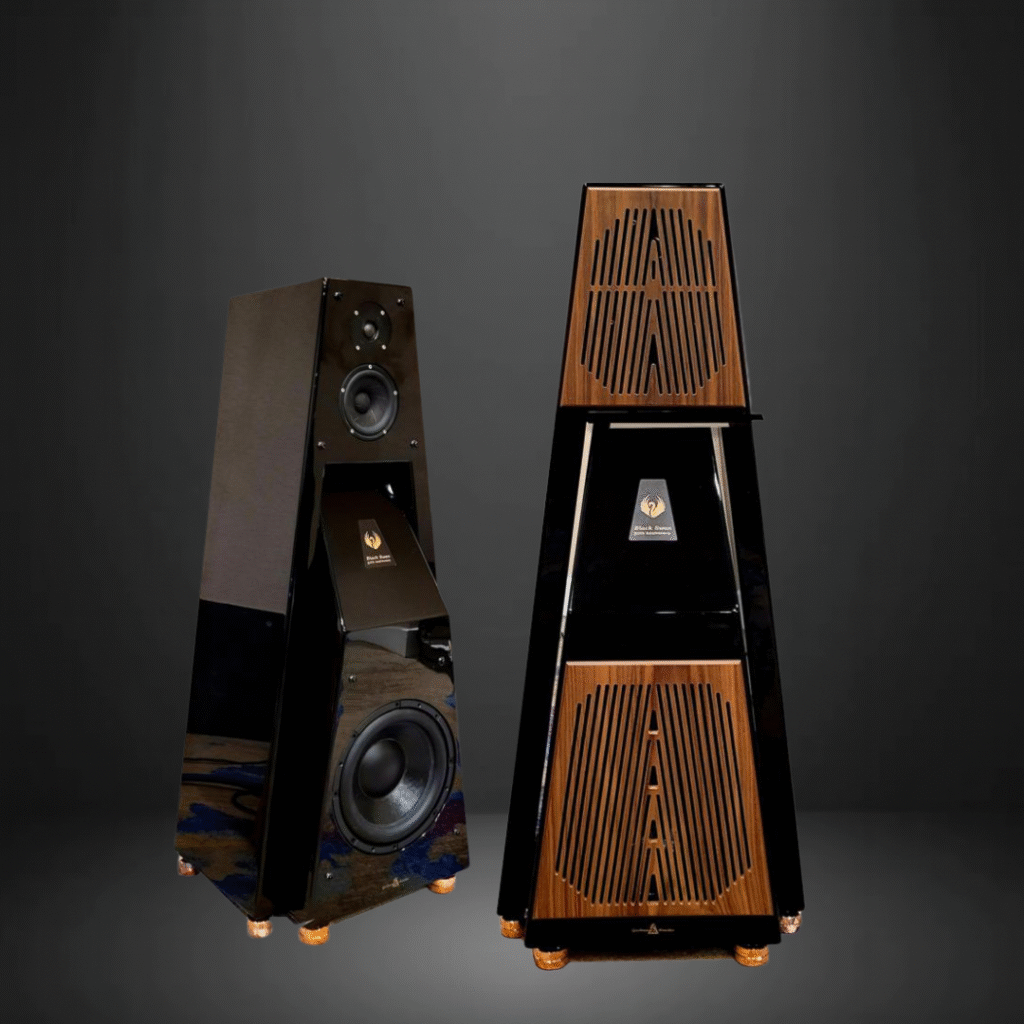
30th Anniversary Black Swan
No-Holds-Barred Reference Loudspeaker with SSAS A-Frame Enclosure (18Hz–24kHz)
Explore Model →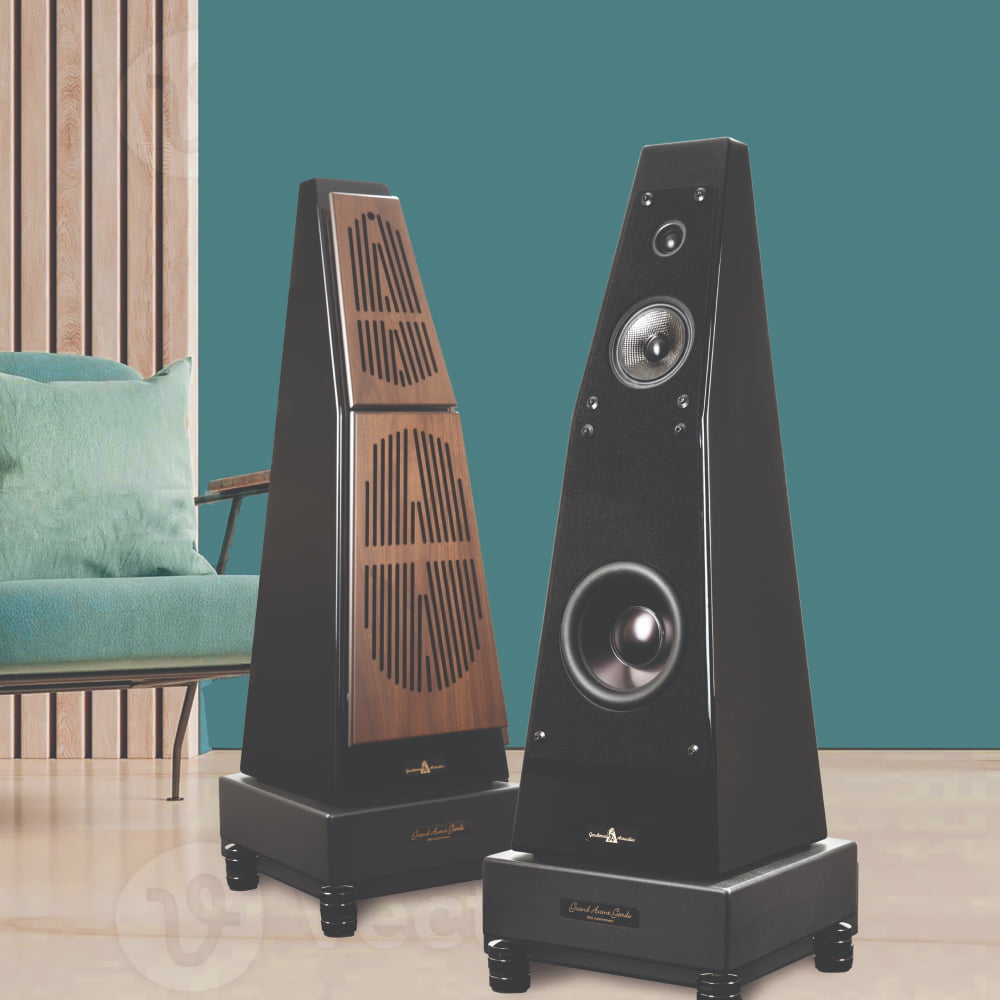
30th Anniversary Grand Avant Garde
Award-Winning Tapered Floorstanding Loudspeaker with Patented Back-Wave Control Technology (BCT)
Explore Model →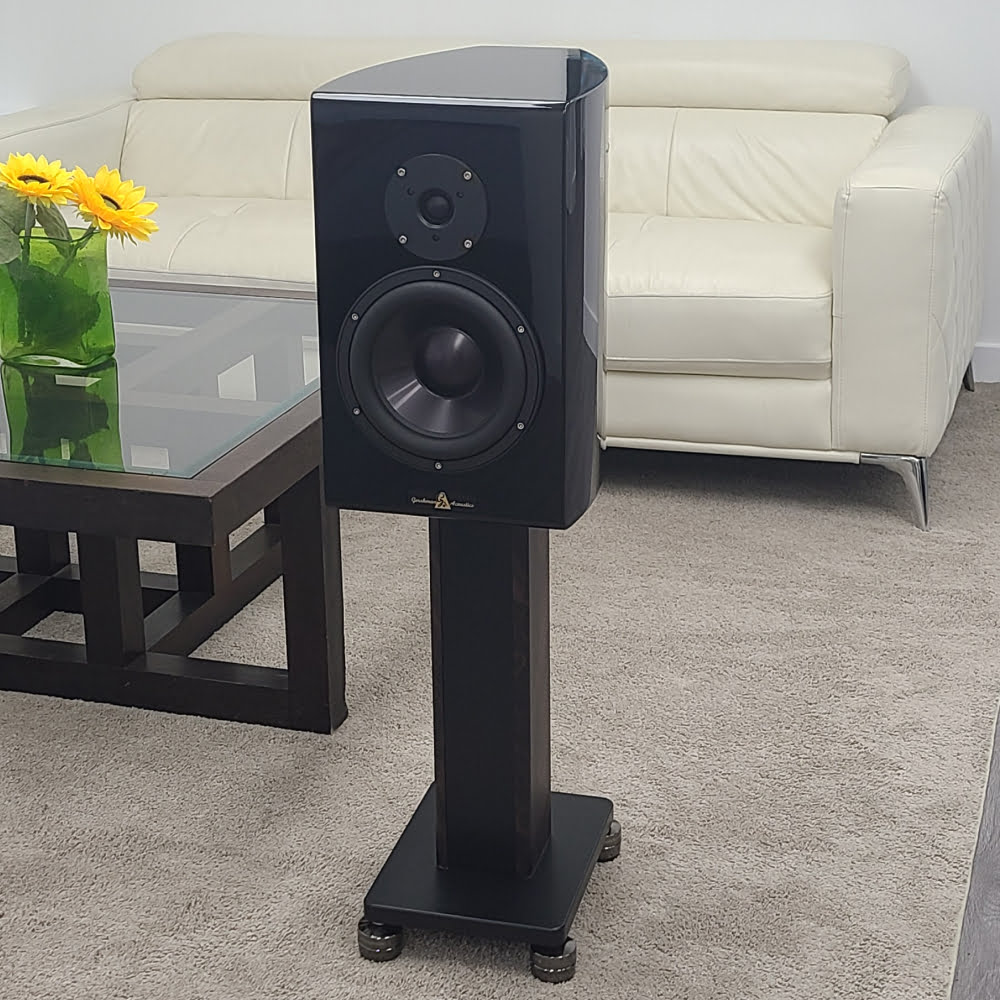
Studio II
Award-Winning Sealed Two-Way Reference Stand-Mount Loudspeaker (28Hz–24kHz)
Explore Model →