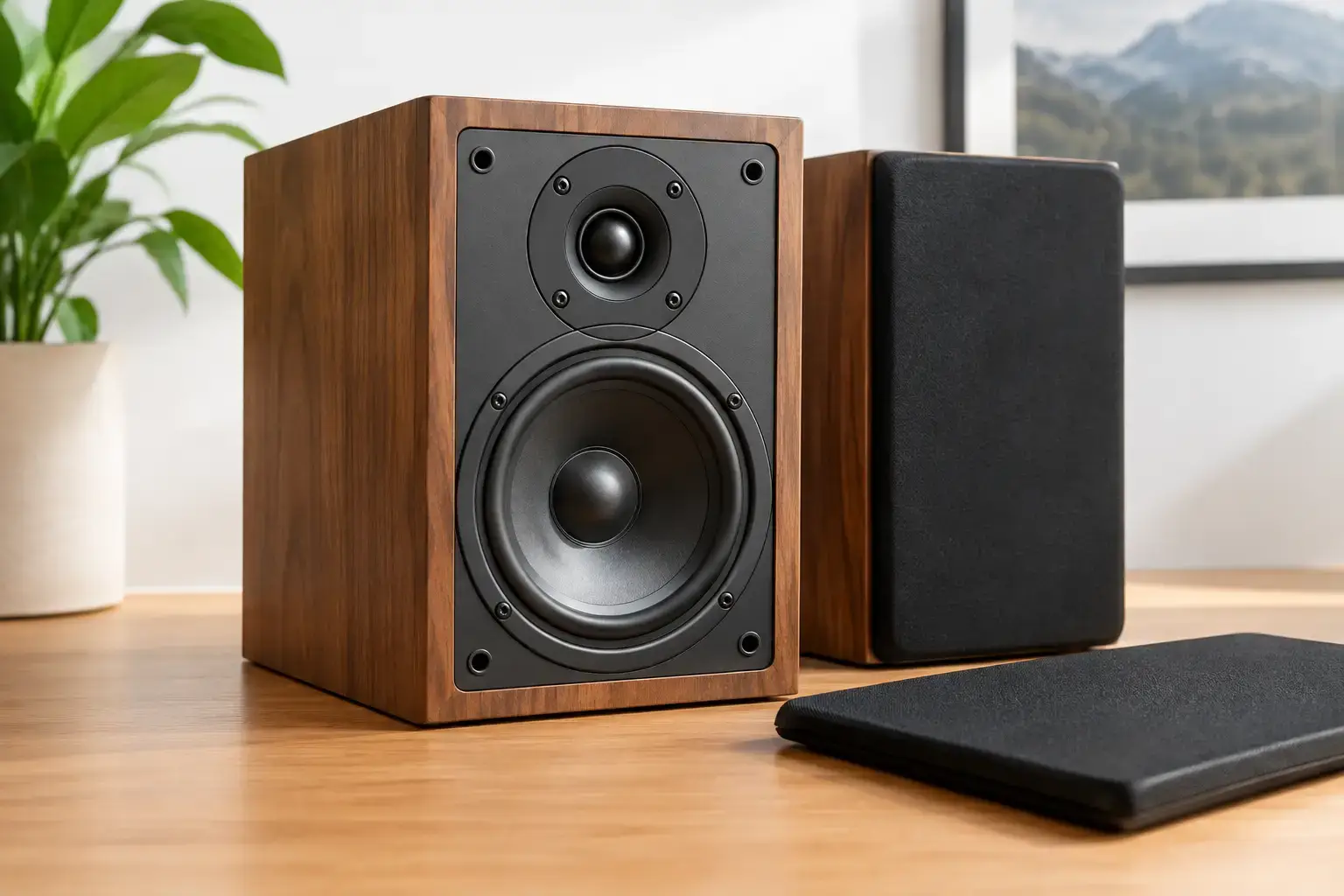
A beautifully finished loudspeaker can invite a familiar question: do speakers need grilles, or are they better left off? The honest answer is neither absolute nor merely cosmetic. A grille protects the most delicate elements of a speaker, while removing it can reveal both the cabinet’s design and, in certain systems, a small degree of additional openness. The right choice depends on your room, your household, and the care with which the loudspeaker was engineered.
For a serious music system, the decision should begin with respect for the loudspeaker as an instrument. Its drivers, crossover, cabinet, and exterior finish were created to work together. A grille is not an afterthought when it has been thoughtfully designed, but neither should it be treated as a permanent barrier when conditions allow for unencumbered listening.
What Speaker Grilles Actually Do
The most immediate purpose of a speaker grille is physical protection. Beneath it sit components that are far more vulnerable than they appear: soft-dome tweeters, midrange cones, bass drivers, surrounds, and sometimes exposed phase plugs. A single curious finger, an enthusiastic child, a pet’s paw, a vacuum attachment, or an accidental brush while moving furniture can cause damage that is difficult, expensive, or impossible to reverse perfectly.
Tweeter domes deserve particular caution. A dented dome may not always create an obvious sonic failure, but it can alter dispersion and compromise the precision that gives a fine loudspeaker its sense of air, image focus, and dimensionality. Driver cones and surrounds are similarly susceptible to punctures, tears, and contamination from dust, smoke, or household residue.
Grilles also provide a measure of protection from sunlight and everyday environmental exposure. They are not a substitute for sensible placement away from direct sun, heat sources, or persistent humidity, but they can reduce the wear that comes with a lived-in home.
There is an aesthetic role as well. A grille can make a loudspeaker feel more discreet within a formal living room, media space, or carefully considered interior. It softens the visual presence of the drivers and lets the cabinet’s silhouette carry the design. In other rooms, removing the grille turns the loudspeaker into a more expressive object – an honest display of craftsmanship and acoustic purpose.
Do Speakers Need Grilles for Sound Quality?
Not necessarily. A well-designed grille should have a minimal audible effect, particularly when it uses acoustically transparent cloth, a carefully shaped frame, and appropriate spacing from the drivers. Premium loudspeaker manufacturers account for grille behavior during development, often voicing the finished system so it remains musically convincing in its intended configuration.
Still, no physical material is completely invisible to sound. A grille frame can create small reflections and diffraction effects, especially around the treble driver. Grille cloth can introduce a subtle degree of attenuation at the highest frequencies. In a revealing system, and with recordings rich in natural ambience, some listeners may hear a slight difference with the grilles removed: a touch more openness, air, or image specificity.
That difference is usually modest, not transformative. Removing grilles will not correct poor setup, inadequate amplification, a hard and reflective room, or an uninvolving recording. The fundamental musical character of a loudspeaker comes from its engineering, cabinet construction, crossover design, driver integration, and placement. Grilles are a refinement, not a remedy.
The most sensible approach is to listen for yourself. Choose a familiar recording with acoustic instruments, vocals, and well-captured spatial information. Listen with the grilles on for several minutes, then remove them carefully and repeat the passage at the same volume. Avoid making a judgment in the first few seconds. Pay attention to vocal presence, cymbal decay, the boundaries of the soundstage, and how naturally instruments occupy space.
If you hear no meaningful difference, keep the grilles on whenever protection or visual restraint matters. If you consistently prefer the presentation without them, there is no reason to leave them in place during a dedicated listening session, provided the room is safe.
The Grille Is Part of the Designer’s Intent
Some loudspeakers are conceived to perform at their best with grilles attached. Others are optimized primarily for grille-off listening, with the grille supplied for protection and flexibility. The owner’s manual or the guidance of an experienced dealer should take precedence over general advice, because the acoustic behavior of a grille depends on its exact material, geometry, and relation to the driver array.
This is one reason generic assumptions can be misleading. A thin magnetic grille with no large perimeter frame behaves differently from a deep wooden frame covered in dense fabric. A grille that appears elegant can still influence high-frequency dispersion if it was not engineered with sufficient care. Conversely, a grille made specifically for a loudspeaker may be far more acoustically benign than an enthusiast expects.
At Gershman Acoustics, the pursuit is not simply for more detail, but for musical truth: tonal color, scale, timing, and the emotional continuity of a performance. Any change to the loudspeaker’s presentation, however slight, should be evaluated by whether it deepens that connection to the recording rather than by whether it initially sounds more vivid.
When It Makes Sense to Leave Grilles On
For many owners, grilles on is the best everyday choice. This is especially true in active homes, shared spaces, and rooms where the system is enjoyed as part of daily life rather than reserved exclusively for focused listening. The protection they offer is practical and often invaluable.
Keep the grilles installed if young children or pets can reach the speakers. Do the same when speakers sit near traffic paths, doors, exercise areas, or furniture that is frequently moved. If you have household help, host gatherings, or simply do not want to monitor every activity around a cherished pair of loudspeakers, grilles bring welcome peace of mind.
Grilles are also wise during routine cleaning, renovations, or any period when dust is likely to be airborne. Before painting, sanding, or major cleaning, however, the better practice is to cover or relocate the loudspeakers entirely. A grille can stop an accidental touch, but it cannot reliably protect delicate drivers from fine construction dust or overspray.
When Grille-Off Listening Is Worth Trying
A dedicated listening room offers the most persuasive case for removing grilles. In a controlled space, where the loudspeakers are safely positioned and visitors understand their value, grille-off listening lets you experience the cabinet and driver array exactly as presented. It can also be visually rewarding. The drivers, baffle, and finish reveal the material decisions and artistry behind the object.
Many audiophiles remove grilles before an evening of careful listening, then replace them afterward. This is a balanced ritual rather than a rigid rule. It preserves access to the last measure of perceived transparency while maintaining protection when the room returns to everyday use.
If you remove them, handle them by the frame rather than pressing against the cloth. Store them flat or upright in a clean, dry location where they will not warp, collect dust, or be accidentally bent. Magnetic grilles should be pulled away evenly, without twisting or forcing an edge. A careless removal can mark a cabinet finish or damage the grille itself.
Placement Matters More Than Grilles
Before worrying about whether a grille changes the final degree of treble delicacy, make sure the fundamentals are in place. Loudspeakers need room to breathe. Their distance from walls, toe-in angle, relationship to the listening position, and symmetry within the room have a far greater influence on tonal balance, bass control, imaging, and soundstage scale.
A speaker placed too close to a corner may produce bass that feels heavy or indistinct. A system with poor left-right symmetry can pull the image off center. Excessive toe-in may narrow the stage, while too little can weaken focus. These are not minor adjustments. They are central to hearing the artistry built into a fine loudspeaker.
Likewise, the room itself shapes what you hear. Rugs, curtains, bookshelves, upholstered furnishings, and purpose-designed acoustic treatments can influence reflections and bass behavior more substantially than grille choice. The goal is not to create a lifeless room, but one that allows music to bloom with clarity and believable scale.
Care for the Speaker You Chose
Whether your grilles remain on or come off, avoid touching drivers unnecessarily. Never use liquids, sprays, or compressed air directly on cones or tweeters. Dust grille cloth gently with a soft brush attachment at low suction, or use a clean microfiber cloth on the frame. For cabinet finishes, follow the manufacturer’s care guidance and avoid household products that may leave residue or harm the finish.
A luxury loudspeaker belongs to the daily life of a home, but it is also a precision instrument. Treating it with considered care protects not only its appearance and resale value, but the delicate alignment of details that allow a recording to feel present, alive, and emotionally complete.
The best answer is therefore personal: leave the grilles on when the room calls for protection and composure; take them off when you can listen attentively in a safe environment and prefer what you hear. Let the music, not convention, make the final decision.
Explore Gershman Acoustics Reference Loudspeakers
Experience the lifelike soundstage, deep controlled bass, and artisanal cabinetry discussed in our guides.
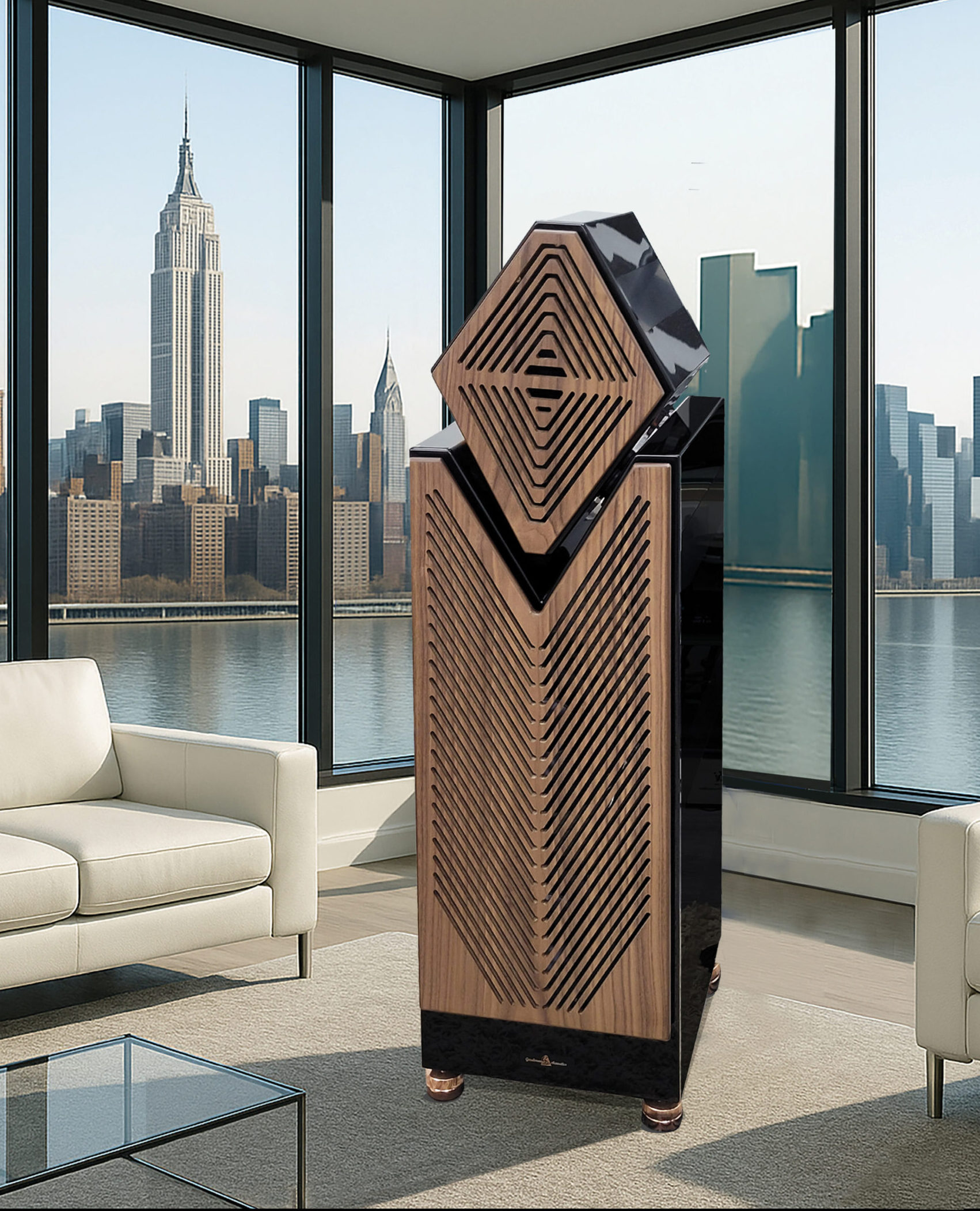
Symphoria
Flagship 3-Way Sealed Reference Loudspeaker with Dual Patented Bass Traps (BCT) & SSAS Isolation
Explore Model →
30th Anniversary Black Swan
No-Holds-Barred Reference Loudspeaker with SSAS A-Frame Enclosure (18Hz–24kHz)
Explore Model →
30th Anniversary Grand Avant Garde
Award-Winning Tapered Floorstanding Loudspeaker with Patented Back-Wave Control Technology (BCT)
Explore Model →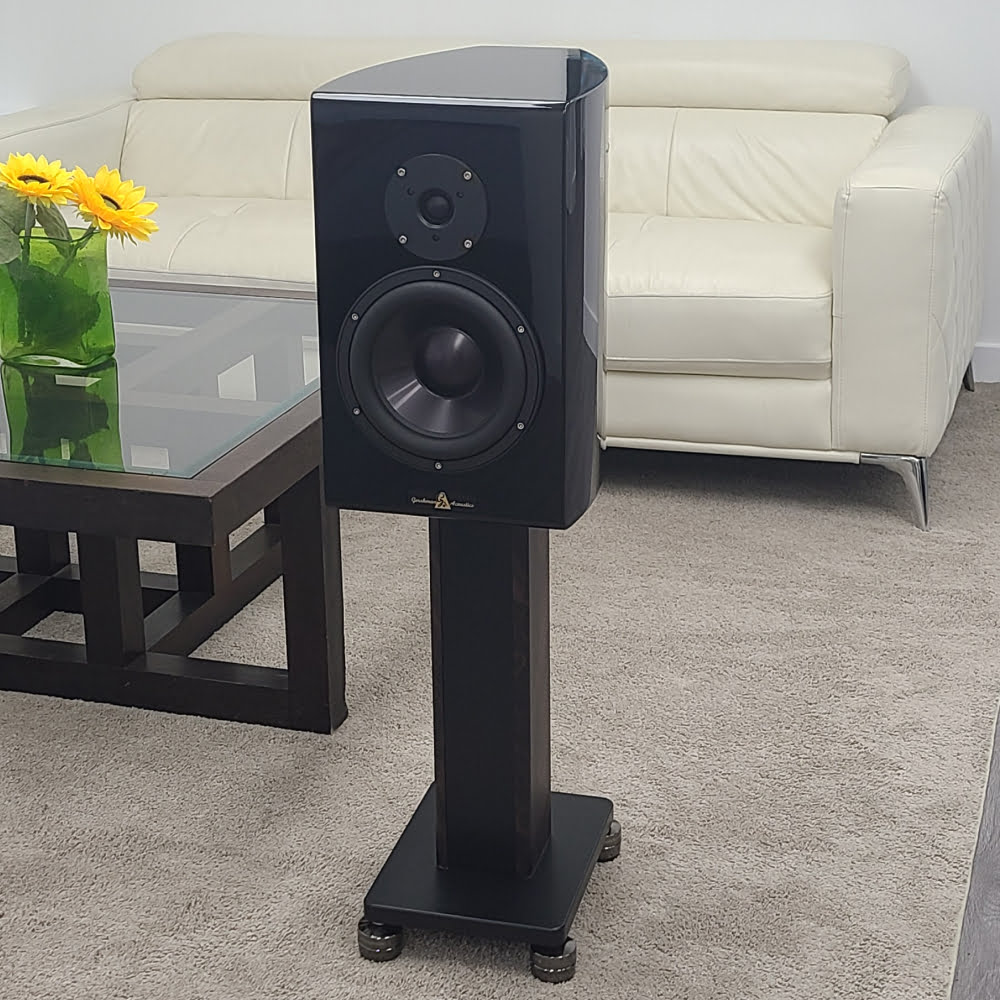
Studio II
Award-Winning Sealed Two-Way Reference Stand-Mount Loudspeaker (28Hz–24kHz)
Explore Model →