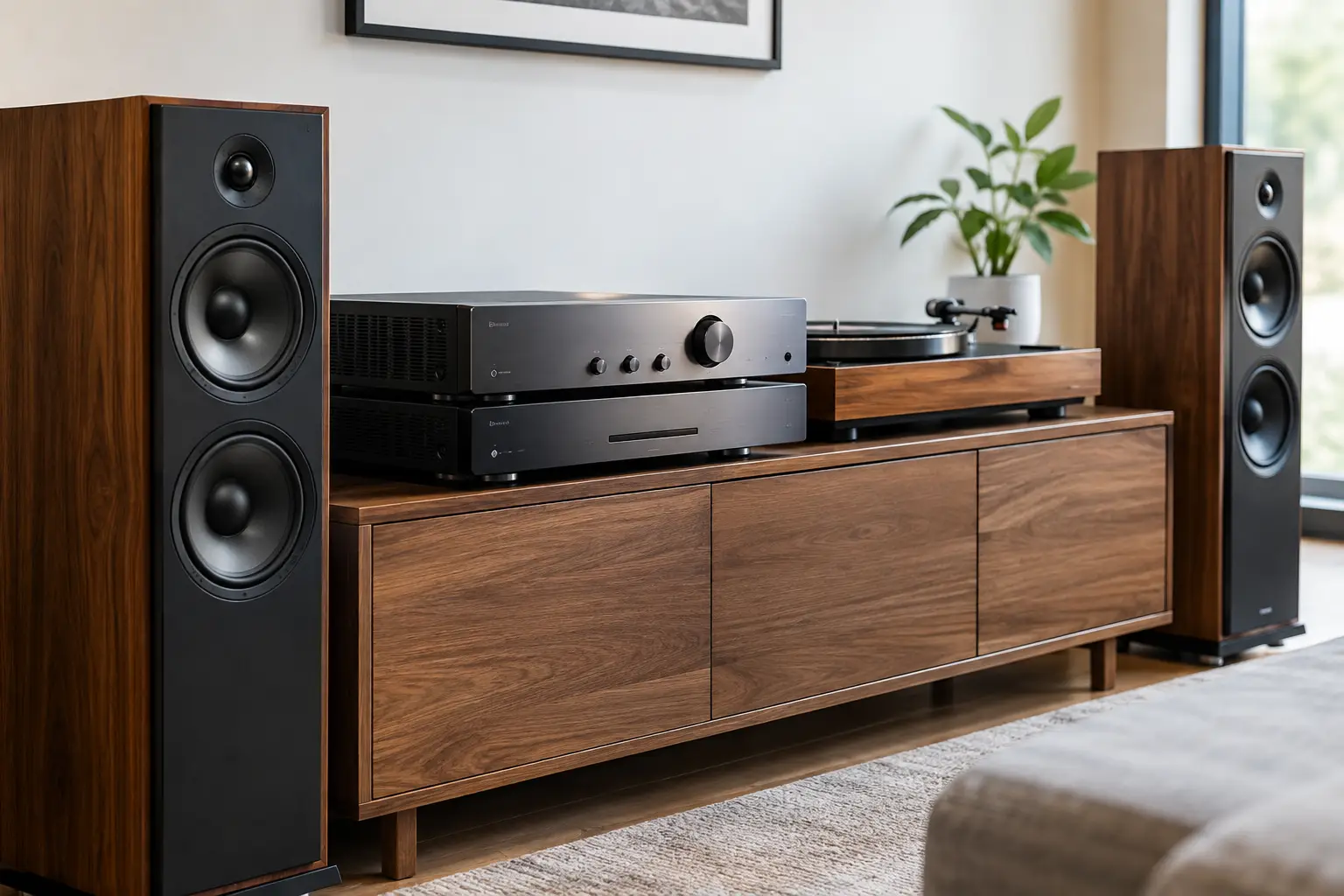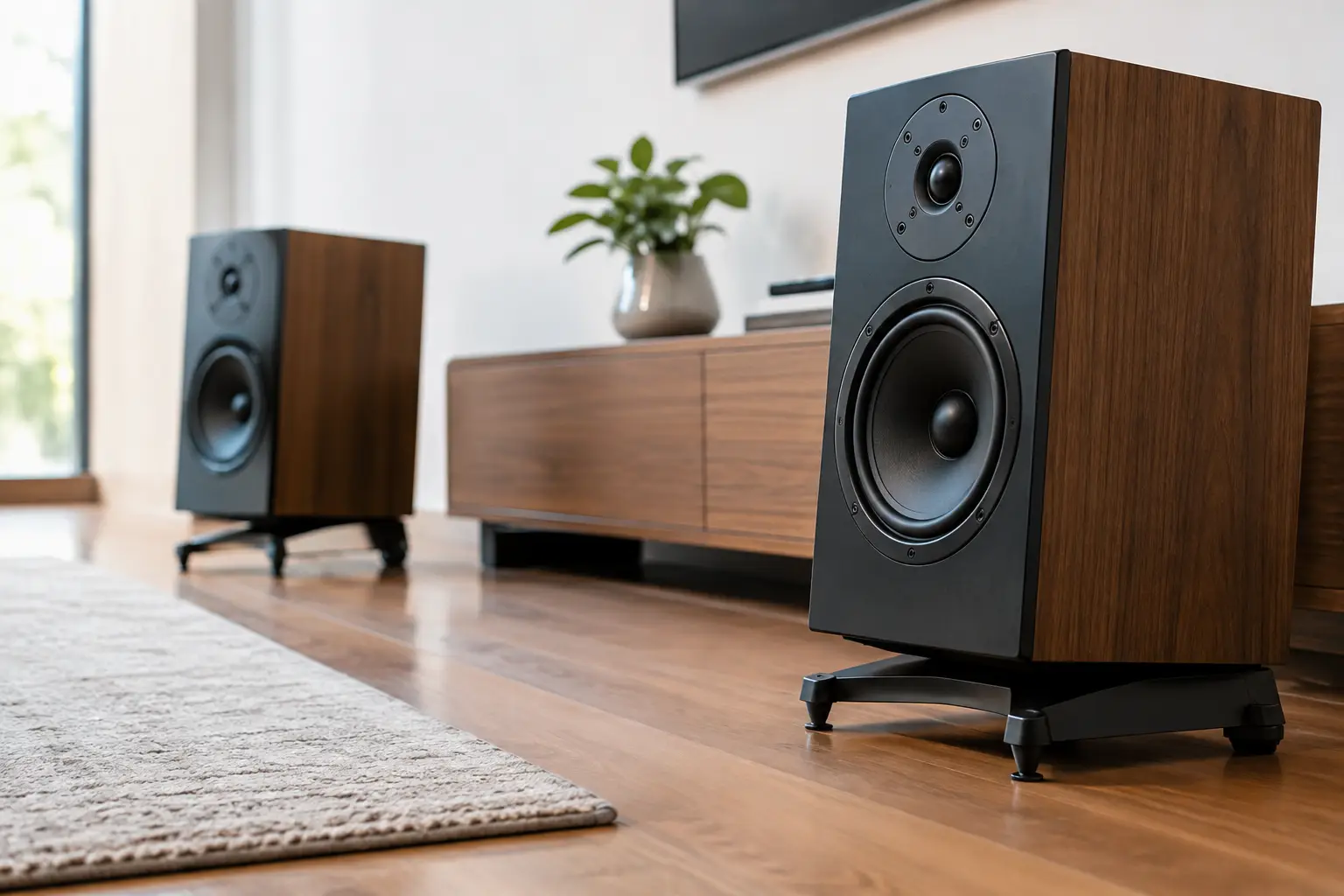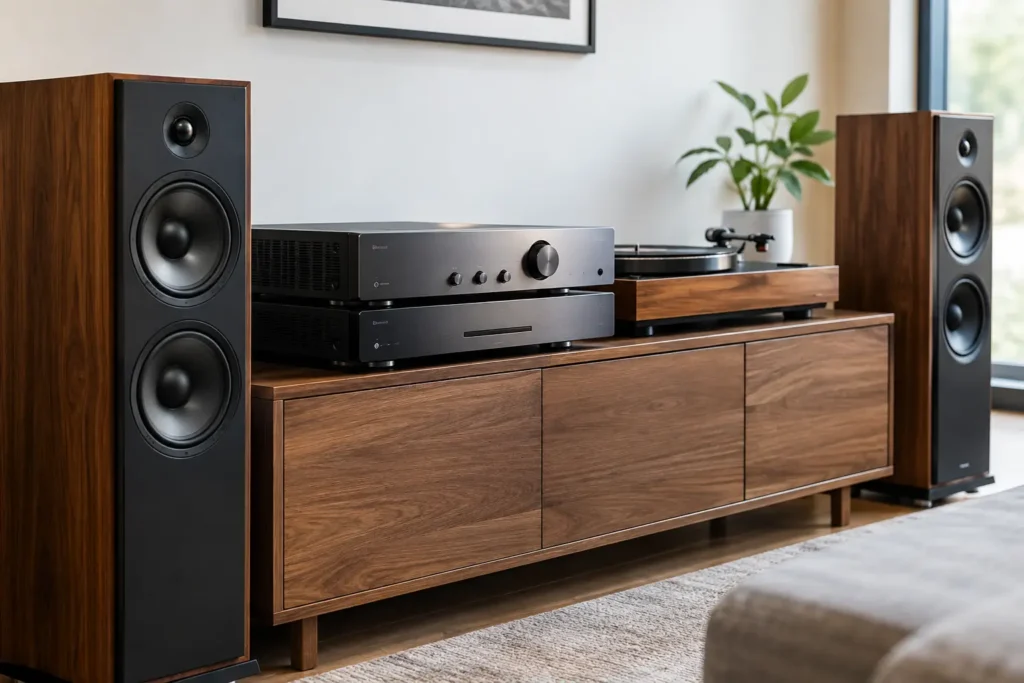
A favorite recording can reveal the limitations of a system in an instant: the pianist seems reduced in scale, a singer loses the breath before a phrase, or the bass has force but no shape. The most rewarding audiophile system upgrade examples do not simply add more detail or volume. They restore proportion, space, tonal color, and the emotional presence that make music feel alive in the room.
For the discerning listener, an upgrade is not a race to accumulate prestigious components. It is a considered act of system building. The finest result comes from recognizing the present system’s true constraint, then choosing the change that lets every other component perform with greater freedom.
Start With the Listening Room, Not the Catalog
A loudspeaker does not perform in isolation. It interacts continuously with room dimensions, furnishings, surfaces, and placement. This is why a carefully adjusted system can often sound more convincing than a more expensive one placed without attention.
Begin by moving the loudspeakers farther from the front wall and, where possible, away from side walls. Small increments matter. A change of a few inches can clarify image focus, reduce bass heaviness, and reveal depth behind the performers. Experiment with toe-in as well. Too little can soften central image definition; too much can narrow the soundstage or make upper frequencies feel overly insistent.
The listening seat deserves equal consideration. Sitting against the rear wall commonly exaggerates low frequencies and obscures subtle musical lines. Moving forward into the room may produce a more articulate, even presentation without changing a single component. Before investing in electronics, spend a few evenings with familiar acoustic recordings and make notes about what changes. This is an upgrade measured in attention rather than acquisition.
Audiophile System Upgrade Examples for Greater Musical Realism
Replace the system’s limiting loudspeaker
When a system sounds compressed, spatially flat, or emotionally restrained across many recordings, the loudspeaker is often the most meaningful place to invest. It is the component that converts electrical signal into the physical event of music, and its character shapes everything that follows.
A serious loudspeaker upgrade should not be chosen solely by driver count, cabinet size, or a dramatic showroom demonstration. Listen for the continuity between bass, midrange, and treble. Does a cello retain its wooden resonance as it moves through its range? Can a vocal remain centered and human at both intimate and realistic listening levels? Is a large orchestra organized in layers rather than presented as a bright wall of sound?
For a design-conscious home, the cabinet is also part of the decision. A handcrafted loudspeaker can serve as a lasting object of beauty while delivering the scale and control needed for convincing reproduction. Gershman Acoustics loudspeakers are created with this union in mind: refined cabinet craftsmanship, authoritative bass, and a soundstage designed to convey the recorded performance as a coherent whole.
Give demanding speakers the amplification they deserve
A beautiful loudspeaker can only reveal its full authority when the amplifier has sufficient current delivery and control. The issue is not merely rated watts. An amplifier that remains composed during dynamic peaks can make percussion start and stop with precision, preserve the body of piano notes, and hold an image stable as the music becomes more complex.
Consider the listener whose elegant floorstanding speakers sound impressive at modest levels but become congested during large-scale symphonic music. Replacing an underpowered integrated amplifier with a more substantial integrated design or a preamplifier and power-amplifier combination may bring a notable sense of ease. The orchestra does not become artificially louder. It becomes more believable because instruments retain their individual scale and location.
There are trade-offs. Separate components create greater flexibility and can offer exceptional performance, but they require more space, cabling, and thoughtful matching. A superb integrated amplifier can be the more graceful choice for a living room system, particularly when it offers the control and refinement the loudspeakers require.
Improve the source before chasing accessories
Digital playback has made extraordinary access to music possible, yet source quality remains audible. If the system feels etched, rhythmically vague, or short on tonal density, a better digital-to-analog converter, network streamer, or turntable setup may be the appropriate next step.
A source upgrade is especially persuasive when the rest of the system already produces convincing scale and imaging. The improvement may arrive as finer low-level resolution: the decaying shimmer of a cymbal, the resonance of a recording venue, the subtle pressure of a vocalist’s consonants. These details matter not because they are hi-fi effects, but because they make phrasing and atmosphere more intelligible.
For vinyl listeners, cartridge alignment, loading, and phono-stage compatibility can be as consequential as changing the cartridge itself. An expensive cartridge incorrectly set up can sound less natural than a more modest model installed with care. This is a recurring principle in high-end audio: execution is part of the component.
Add bass control rather than simply more bass
Many systems possess ample low-frequency energy but lack definition. The distinction becomes clear with double bass, kick drum, pipe organ, and the lowest notes of a grand piano. Good bass does not announce itself as a separate event. It supports rhythm, harmonic structure, and the perceived size of the acoustic space.
One path is improving loudspeaker placement and room treatment. Another is adding carefully integrated subwoofers, ideally in a stereo pair or with placement chosen through measurement and listening. The goal is not cinematic excess. It is extension and composure, with the main loudspeakers relieved of some low-frequency burden.
Integration requires patience. Crossover point, phase, level, and placement all influence the result. A subwoofer set too high or too loudly can make the system sound impressive for minutes and tiring for hours. Set correctly, it can make a small ensemble feel grounded and a full orchestra occupy the room with effortless scale.
When the Smaller Upgrades Are Worthwhile
Cables, equipment supports, power conditioning, and isolation can be valuable, but they are best considered after speaker placement, room behavior, loudspeaker quality, amplification, and source performance have been addressed. In a finely resolved system, these choices may lower the sense of glare, improve image stability, or reduce mechanical noise. In an unresolved system, they can become costly distractions.
That does not mean they are trivial. A turntable placed on an unstable surface, for example, is vulnerable to vibration that no premium cartridge can overcome. Similarly, a poorly made power strip may be a practical weak point in an otherwise carefully assembled system. The appropriate question is not whether an accessory is universally transformative. It is whether it solves an identifiable problem in this particular system.
Build Around the Music You Actually Love
The best upgrade path depends on listening habits. A devotee of chamber music may prioritize tonal nuance, low-level retrieval, and image specificity. Someone who lives with jazz, electronic music, or large orchestral works may place greater value on dynamic range, bass authority, and effortless scale. Neither preference is more correct, but each suggests different priorities.
Use a small group of familiar recordings when auditioning changes. Include a naturally recorded voice, an acoustic instrument with which you are familiar, a rhythmically complex track, and a recording that becomes demanding at realistic levels. Listen beyond the first impression. The most valuable upgrade often reveals itself over time by making you less aware of the equipment and more reluctant to stop listening.
A system worthy of a beautiful home should not ask music to sound spectacular at the expense of truth. Choose the next change that gives a beloved recording more room to breathe, and let that renewed connection guide every decision after it.