A string quartet can sound uncannily present on a compact pair of speakers, while a full orchestra often asks for more physical scale and authority. That is the heart of the floorstanding vs bookshelf speakers question. It is not simply about size or price. It is about how a loudspeaker interacts with your room, your listening habits, and your expectations for musical realism.
For serious listeners, the choice deserves more than the usual shorthand of big speakers for big rooms and small speakers for small rooms. That advice is not wrong, but it is incomplete. The better answer lies in understanding what each design tends to do well, where each asks for compromise, and how those trade-offs shape the emotional experience of listening.
Floorstanding vs bookshelf speakers: what really changes?
At a glance, the distinction seems obvious. Floorstanding speakers are taller, larger enclosures designed to stand directly on the floor. Bookshelf speakers are more compact and typically placed on stands, consoles, or shelves, though a proper stand is often the better option for serious performance.
The more meaningful difference is acoustic volume. A floorstanding speaker usually has greater cabinet capacity, more driver surface area, and a design that allows for deeper bass extension and higher output with less strain. A bookshelf speaker, by contrast, often prioritizes compact elegance, placement flexibility, and a kind of focused coherence that can be deeply engaging in the right room.
Neither category is automatically superior. A beautifully engineered bookshelf speaker can outperform a mediocre floorstander in every way that matters. At the high end, design integrity matters more than simple form factor.
Why floorstanding speakers appeal to serious music lovers
A well-executed floorstanding speaker has an ease about it. It can fill a room with less effort, preserve dynamic contrasts at realistic volumes, and reproduce the foundational weight of music with greater authority. Piano has more body. Double bass feels less suggested and more fully realized. Large-scale recordings breathe more naturally.
That sense of scale is one of the most compelling reasons listeners choose a floorstander. Music is not only tone and detail. It is physical presence, spatial dimension, and momentum. A larger cabinet and more ambitious driver complement can deliver those qualities in a way that feels less constrained.
Bass performance is another obvious advantage, though it should be understood carefully. More bass is not automatically better bass. The finest floorstanding speakers offer not just extension, but control, texture, and pitch definition. You do not want low frequencies that bloom into the room and obscure the midrange. You want bass that anchors the performance without blurring it.
There is also the matter of listening distance. In medium to larger rooms, a floorstander often develops more convincingly as you sit farther back. The presentation can feel more complete and more effortless at a distance where smaller speakers may begin to sound dynamically limited.
Still, floorstanding speakers ask more of the room. They can energize low frequencies more strongly, which means room dimensions, placement, and acoustic treatment become more important. In a poorly matched space, a larger speaker can sound heavier, slower, or more dominant than intended.
Where bookshelf speakers can be the better choice
Bookshelf speakers are often underestimated because they are smaller. In reality, a truly refined stand-mount design can offer exceptional imaging, tonal purity, and intimacy. In many rooms, especially urban living spaces, dedicated studies, and carefully curated listening rooms of modest size, that can be exactly the right path.
One of the great strengths of bookshelf speakers is their ability to disappear. When properly positioned, they can create a soundstage with remarkable focus and precision, placing voices and instruments in space with beautiful clarity. For listeners who prize holographic imaging and nearfield listening, that quality can be irresistible.
They also integrate more easily into design-conscious interiors. A compact loudspeaker on an elegant stand can feel visually lighter and less imposing, which matters in multipurpose rooms where aesthetics are part of the ownership experience. Luxury audio lives not only in sound, but in how gracefully it inhabits a space.
There is also a practical advantage. A bookshelf speaker often gives you more flexibility with placement and, at a given budget, may concentrate more of the investment into drivers, crossover execution, and cabinet quality rather than sheer scale. That can produce extraordinary refinement.
The trade-off is bass extension and overall headroom. Even excellent bookshelf speakers usually cannot move air with the same authority as a comparably ambitious floorstander. For chamber music, vocals, jazz ensembles, and smaller acoustic recordings, that may not matter much. For large symphonic works, electronic music, or rock played at realistic levels, it often does.
Room size matters, but not in a simplistic way
The usual advice says floorstanders for large rooms, bookshelf speakers for small rooms. There is truth in that, yet room behavior is more nuanced. A small room can actually make deep bass harder to manage, because low frequencies build up quickly and create uneven response. In that situation, a large floorstander may deliver more low-end energy than the room can gracefully absorb.
On the other hand, a bigger room can swallow the output of a small speaker, making it sound less substantial than it would in a more intimate setting. The result is not always distortion. More often, it is a subtle sense that the music lacks physical presence.
Ceiling height, wall construction, furnishings, and listening distance all matter. So does placement freedom. If your speakers must sit close to the rear wall, a compact model with careful tuning may behave more elegantly than a larger speaker that needs generous breathing room.
The best approach is not to ask which category is better in the abstract. Ask which category complements the acoustic personality of your room.
The lifestyle factor is real
High-end audio is a performance decision, but it is also a lifestyle decision. A loudspeaker becomes part of the architecture of daily living. It occupies space, shapes visual balance, and reflects personal taste.
Floorstanding speakers make a statement. They communicate commitment, permanence, and a certain confidence. In the right interior, they can feel sculptural and deeply luxurious. For many owners, that presence is part of the appeal.
Bookshelf speakers are more discreet, though not necessarily less sophisticated. In a refined room where every object has been considered, their restraint can be an advantage. They can offer serious musical satisfaction without visually dominating the environment.
This is not a superficial concern. The system you love is the system you live with. If a speaker feels too large for the room or too compromised for your listening ambitions, that tension rarely disappears.
Performance priorities: what do you value most?
If your priority is scale, bass authority, and the ability to reproduce music with realistic dynamic swing, floorstanders usually hold the advantage. They are often better suited to listeners who want the full architectural weight of a performance.
If your priority is imaging precision, spatial focus, and elegance in a smaller or more design-sensitive environment, bookshelf speakers may be the more rewarding choice. They can offer a beautifully concentrated musical experience, especially when paired with high-quality stands and carefully matched electronics.
The key is honesty about your habits. Do you sit down for dedicated listening sessions, or does music animate the room throughout the day? Do you listen at intimate levels, or do you want the visceral charge of live performance? Are you building around a dedicated listening room, or integrating a system into a shared living space?
These questions matter more than category loyalty.
Floorstanding vs bookshelf speakers at the high end
As quality rises, the conversation becomes less about compromise and more about intention. Exceptional speaker makers voice their designs around a clear musical philosophy. Some bookshelf speakers are created to deliver astonishing coherence and emotional immediacy. Some floorstanders are designed to combine grandeur with delicacy, giving you scale without sacrificing nuance.
That is why serious auditioning matters. Specifications can suggest capability, but they cannot fully convey tonal character, transient finesse, or the way a speaker renders the emotional center of a recording. The finest loudspeakers do more than reproduce sound. They illuminate phrasing, space, tension, and release.
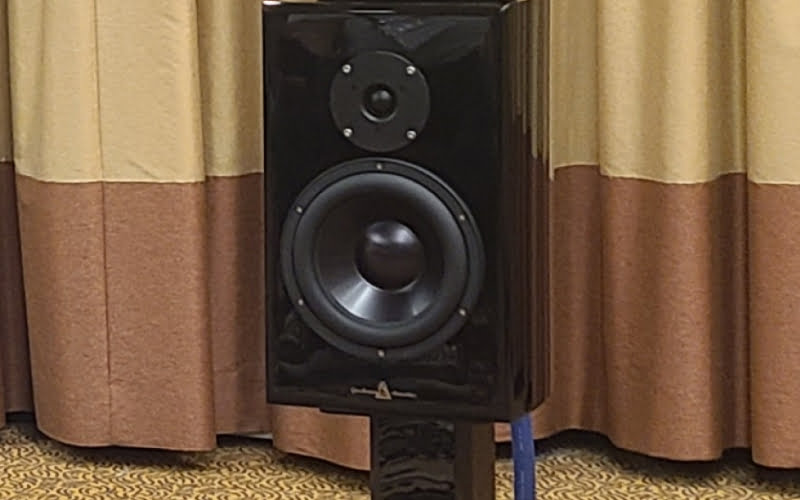
At this level, craftsmanship also enters the equation in a deeper way. Cabinet construction, resonance control, crossover execution, and driver integration all shape whether a speaker sounds merely impressive or genuinely convincing. Brands such as Gershman Acoustics have long understood that musical realism is built from countless decisions, many of them invisible until the music begins.
So which should you choose?
Choose floorstanding speakers if your room can support them, your listening leans toward full-scale performance, and you want the ease and authority that come from greater acoustic headroom. Choose bookshelf speakers if your room rewards intimacy over scale, your aesthetic calls for a lighter physical footprint, or your listening priorities center on imaging and finesse.
The wisest choice is rarely the one that promises the most. It is the one that brings you closer to the feeling of music in your own space, on your own terms. When a speaker suits the room and the listener, the equipment recedes. What remains is the performance, alive and emotionally intact.