A familiar moment separates casual listening from true listening: the instant a system stops sounding like equipment and starts sounding like musicians in the room. A vocal gains breath and body. A piano has weight, not just tone. Bass moves with control instead of blur. That is the real context behind the question, are high end speakers worth the money. For the right listener, the answer has less to do with status and more to do with how convincingly a loudspeaker can recreate the emotional force of a performance.
The short answer is yes, sometimes emphatically so. But not for everyone, and not in every room, and not at every price point. The value of a high-end speaker depends on what you listen for, how often you listen, and whether you care about musical realism enough to invest in it.
Are High End Speakers Worth the Money for Serious Listeners?
If music is background, premium loudspeakers may feel excessive. If music is central to your daily life, the equation changes quickly. High-end speakers are built for people who notice tonal color, spatial depth, microdynamics, and the difference between hearing a recording and being drawn into it.
A better loudspeaker does not simply play louder or deeper. It presents structure and nuance. It reveals the texture of a cello bow, the natural decay of cymbals, the dimensional placement of a singer between the speakers, and the rhythmic precision that makes a performance feel alive. Those qualities are difficult to explain to someone who has never experienced them, but immediately obvious once heard.
This is where premium audio separates itself from mass-market sound. Many ordinary speakers are voiced to impress in a showroom or on first listen, with exaggerated bass, forward treble, or an artificially hyped presentation. A true high-end loudspeaker aims for something more enduring: tonal balance, coherence, control, and a soundstage that opens naturally rather than shouting for attention.
What You Are Actually Paying For
The price of a high-end speaker is not just about branding, and the best designs justify their cost in ways that become more apparent over time. Engineering is a major part of the story. Cabinet geometry, driver integration, crossover design, resonance control, and bass loading all influence whether music sounds believable or mechanical.
Then there is craftsmanship. In boutique loudspeaker design, cabinet construction is not decorative trim layered over commodity parts. It is part of the acoustic instrument. The density of materials, the internal bracing, the precision of assembly, and the finish quality all affect performance as much as appearance. A beautifully built enclosure is not a luxury afterthought. It is a structural and sonic advantage.
Premium components also matter. Better drivers, more refined crossover parts, and carefully matched assemblies tend to produce lower distortion, smoother frequency integration, and greater transparency. These gains do not always announce themselves as fireworks. More often, they show up as ease. Music sounds less strained, more dimensional, more complete.
That is why exceptional loudspeakers often feel more compelling during long listening sessions. They do not fatigue the ear. They invite you deeper into the recording.
The Real Differences Between Midrange and High-End Speakers
The jump from entry-level to decent midrange speakers is often dramatic. The jump from good midrange to genuinely high-end can be subtler at first, but ultimately more meaningful. You begin hearing less of the speaker and more of the recording.
A midrange design may produce respectable bass, a clear midband, and acceptable imaging. A high-end speaker, when properly designed, aligns those strengths into a more natural whole. The bass is not just deep but articulate. The midrange is not just present but lifelike. The treble is extended without glare. Most important, the entire frequency range behaves as one coherent musical event.
That coherence is what gives premium systems their sense of realism. Instruments occupy stable space. Dynamic swings feel unconstrained. Quiet passages retain tension and intimacy. Complex recordings stay organized rather than collapsing into congestion.
Listeners who care deeply about acoustic jazz, orchestral works, vocal music, or finely produced studio recordings tend to notice these distinctions quickly. Those who mostly stream compressed playlists at low attention levels may not.
When High-End Speakers Are Not Worth It
Luxury audio should never be discussed as if price alone guarantees pleasure. There are times when a costly speaker is the wrong investment.
A poor room can limit even the finest loudspeaker. Hard surfaces, severe reflections, awkward placement, and untreated bass problems can flatten imaging and compromise tonal balance. If a room cannot support proper setup, the return on investment drops.
System matching also matters. A revealing speaker connected to underpowered or poorly matched electronics may sound underwhelming. High-end loudspeakers are often transparent enough to expose weaknesses upstream. That honesty is part of their value, but it can make careless system building expensive.
Personal taste matters too. Some listeners prefer a warmer, more forgiving presentation. Others want maximum detail and speed. The best premium speaker for one person may not be the best for another. This is why thoughtful listening matters more than chasing prestige.
And of course, budget matters. No loudspeaker, however brilliant, is worth financial strain. A well-chosen system at a comfortable price point will always bring more pleasure than an aspirational purchase that creates regret.
Are High End Speakers Worth the Money in the Long Run?
Often, this is where the answer becomes clearest. A quality loudspeaker can remain musically satisfying for many years, even decades. Unlike fast-moving consumer electronics, great loudspeaker design does not become irrelevant in a season. The principles of natural tonal balance, low coloration, dynamic expression, and spatial realism do not go out of style.
There is also a deeper kind of value that does not show up on a spreadsheet. Premium speakers tend to change listening habits. People spend more time with complete albums. They revisit familiar recordings and discover details they had missed for years. They create dedicated spaces for concentration, pleasure, and decompression. For many owners, the speaker becomes part of the home in the same way fine furniture, art, or a grand piano does – functional, beautiful, and emotionally resonant.
That long-term satisfaction is one reason handcrafted loudspeakers retain their appeal. Brands with genuine design philosophy, artisanal build quality, and a heritage of musical credibility offer something beyond short-term novelty. In the best cases, they deliver ownership pride alongside sonic excellence.
How to Judge Whether a Premium Speaker Is Worth It
The right question is not whether a high-end speaker is expensive. It is whether it gives you more of what matters. Listen for natural timbre first. Voices should sound human, not etched or veiled. Piano should have both attack and body. Strings should carry texture without turning sharp.
Next, pay attention to imaging and scale. Can you sense depth behind the speakers? Do instruments occupy believable positions? Does the soundstage expand effortlessly, or does it feel pinned to the cabinets?
Then notice dynamics. A great loudspeaker can move from whisper to crescendo without losing composure. It should preserve the energy of live performance while maintaining control.
Finally, ask yourself a simpler question: do you want to keep listening? The finest speakers engage the emotions as much as the intellect. They reduce the distance between the listener and the music.
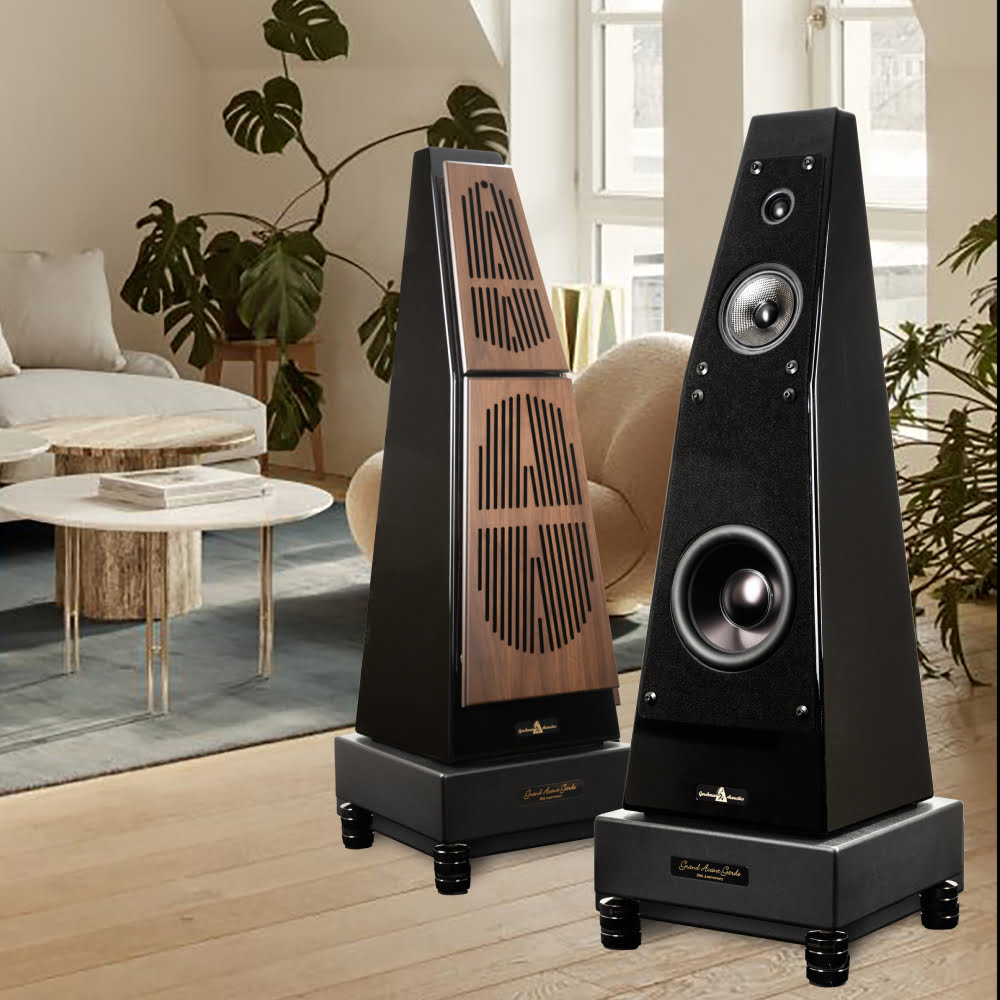
This is where a maker like Gershman Acoustics has built its reputation – not on spectacle alone, but on loudspeakers that combine advanced acoustic thinking, handcrafted cabinetry, and the ability to communicate the emotional center of a recording with grace and authority.
The Luxury Question Behind the Audio Question
For many buyers, premium speakers are also a lifestyle decision. They live in carefully designed spaces. They are seen as well as heard. In that sense, aesthetics are not superficial. A loudspeaker of this caliber should complement a refined interior while delivering performance worthy of its presence.
Still, beauty without substance fades quickly. What justifies the category is the union of design, engineering, and musical truth. When those elements come together, the speaker does more than play music well. It transforms the atmosphere of a room.
So, are high end speakers worth the money? If your goal is simply to have sound, no. If your goal is to hear music with realism, scale, intimacy, and emotional depth that ordinary systems rarely approach, the answer can be an unequivocal yes.
The wisest purchase is not the most expensive one. It is the speaker that makes you forget price for a moment, sit still, and listen to one more song than you planned.