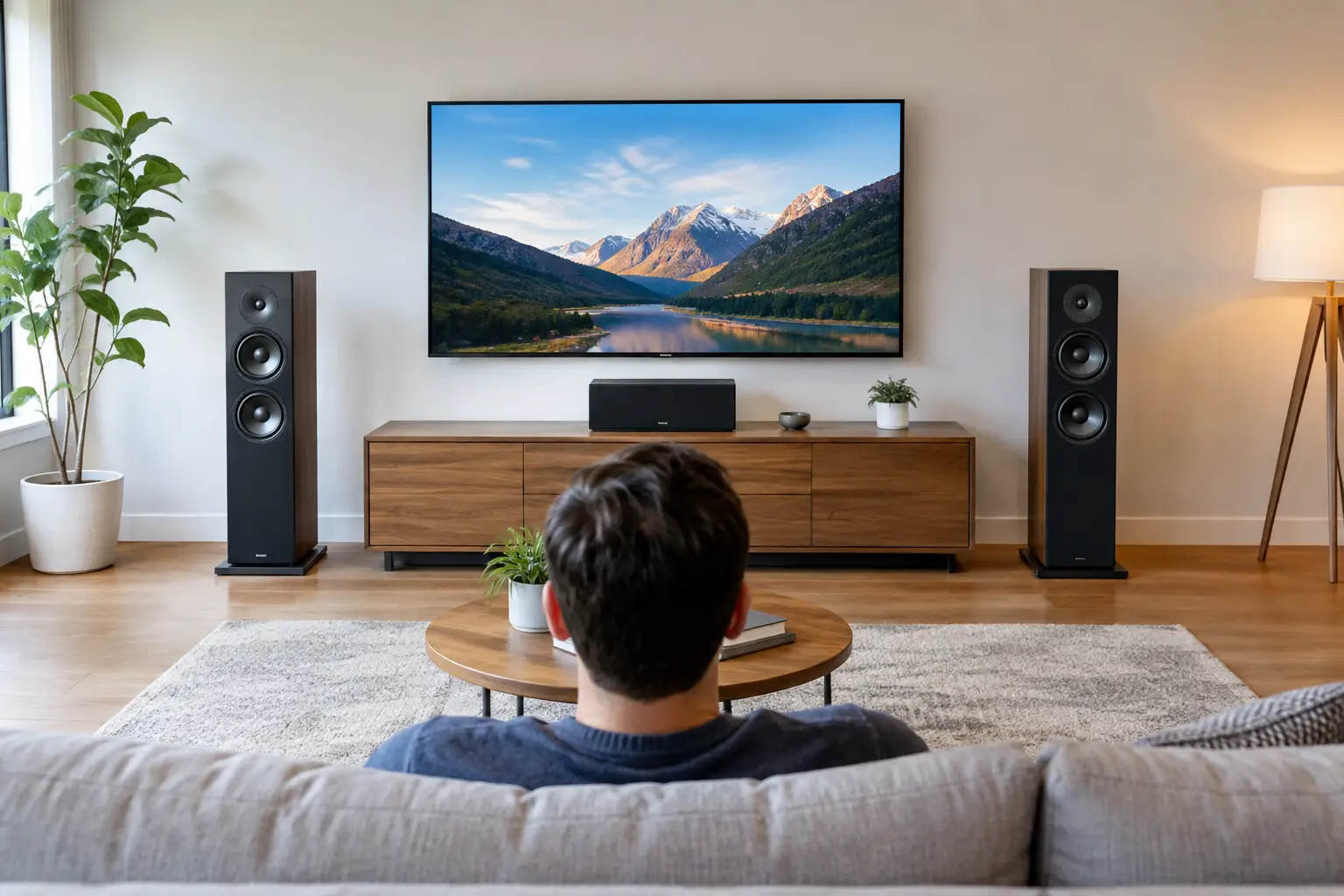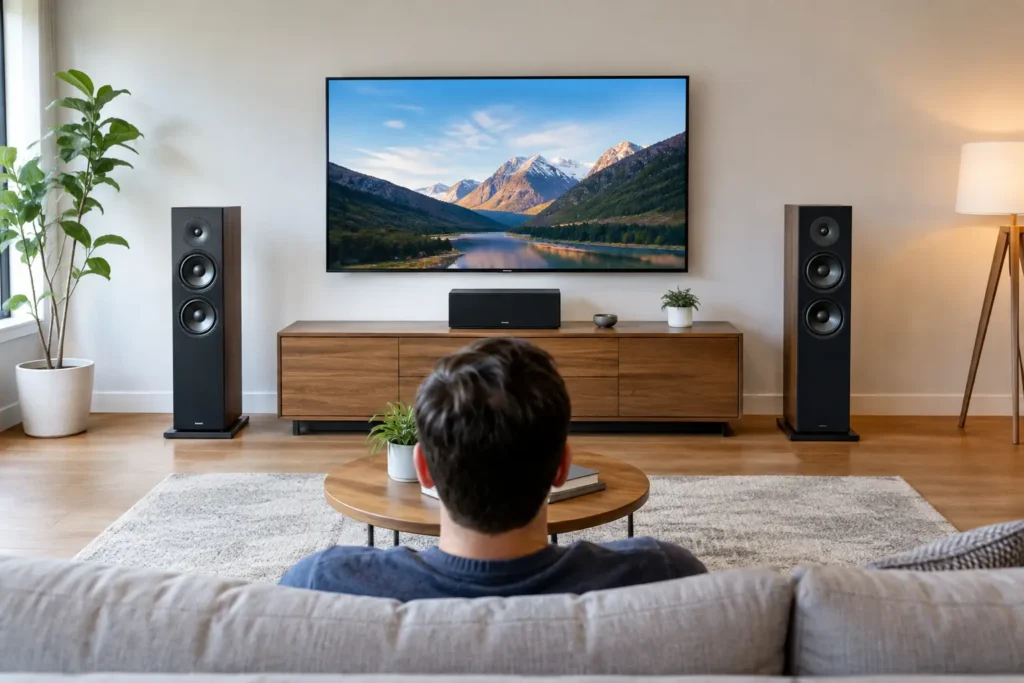
A fine loudspeaker can reveal the breath before a vocal phrase, the wood of a cello, and the vastness around a live ensemble. Yet even an exceptional pair can sound restrained when placed as furniture rather than as instruments. Learning how to position speakers properly is one of the most meaningful refinements you can make to a serious music system – and it requires no new component, only thoughtful listening.
Speaker placement is not about chasing a single diagram or measuring your room into submission. It is about allowing the loudspeakers, the room, and the listening seat to work as a coherent acoustic whole. When that relationship is right, the speakers themselves recede. What remains is the performance: dimensional, balanced, intimate, and alive.
Begin with the listening position
Before moving the speakers, establish where you will listen. The listening chair is not an afterthought. It is one point of the stereo triangle and has as much influence on tonal balance and imaging as the position of either loudspeaker.
Avoid placing the chair directly against the rear wall whenever the room allows. Bass energy naturally gathers near room boundaries, and a seat pressed against the wall can make low frequencies sound heavy, blurred, or overly dominant. Moving forward even two or three feet often brings greater clarity to bass lines and more convincing separation between instruments.
A useful starting point is to place the chair roughly 38 percent of the room length from the front wall, measured from the wall behind the speakers. This is not a fixed rule. Every room has its own dimensions, furnishings, and construction. Still, it is a more promising beginning than placing the chair in the exact center of the room, where room modes can sometimes create noticeable unevenness.
How to position speakers properly: the stereo triangle
Start with the two speakers and listening seat arranged as an equilateral triangle. If the speakers are eight feet apart, begin with your ears approximately eight feet from each speaker. This geometry gives a strong foundation for stable center imaging, believable scale, and a soundstage that extends naturally beyond the cabinet boundaries.
Measure from the center of each tweeter to your listening position, rather than from the front of the cabinet. Precision matters here, particularly with loudspeakers capable of exceptional image focus. A difference of even an inch or two can subtly shift a central vocal, soften its outline, or make the stage feel less settled.
The triangle is a starting point, not a verdict. In a larger room, you may prefer a slightly wider speaker spread for more expansive orchestral scale. In a more intimate space, bringing the speakers closer together can preserve center density and prevent a hole from forming between left and right. Trust familiar recordings over geometry alone.
Give the speakers room to breathe
Most high-performance loudspeakers benefit from breathing space around the cabinet. Begin by placing them at least two to three feet from the wall behind them and two feet or more from the side walls, where possible. This reduces early reflections and allows the soundstage to develop with greater depth and ease.
Bringing speakers closer to the front wall generally reinforces bass and can create a more immediate presentation. That can be welcome in a large, lightly furnished room or with recordings that need additional weight. The trade-off is often less depth, looser bass definition, and a greater sense that sound originates from the cabinets.
Moving the speakers farther into the room usually improves depth, image layering, and low-frequency articulation. The presentation may become more open and spacious, though bass can seem lighter if you go too far. This is why placement is a process of adjustment rather than a search for a universal distance.
Side-wall distance deserves equal attention. When speakers sit too close to side walls, early reflections can smear image placement and make treble feel more insistent. Greater symmetry is also valuable. If one speaker is close to a wall while the other opens into a large adjacent space, the stereo image may pull to one side. Do what the architecture permits, then use small adjustments to restore balance.
Set height, level, and orientation with care
For most conventional loudspeaker designs, the tweeter should be close to ear height when seated. This preserves the intended tonal balance through the critical upper midrange and treble, where the presence of a voice, the shimmer of cymbals, and the transient life of strings reside.
A stable, level foundation is essential. Floors that are uneven or springy can compromise bass clarity and image focus. Use the loudspeaker’s feet, spikes, or isolation system as intended, ensuring that both cabinets are secure and free from rocking. In a finely resolved system, this seemingly modest detail is audible.
Then consider toe-in, the angle at which the speakers face the listening position. Start with each speaker aimed just behind your head. This often creates a generous listening area while retaining a strong center image. From there, rotate the speakers inward in small, matching increments.
More toe-in can sharpen focus, reduce side-wall reflections, and bring greater presence to a vocal or solo instrument. Too much can make the soundstage narrow or the treble overly concentrated. Less toe-in can widen the presentation and soften the top end, but it may reduce image specificity. The most satisfying setting is often the one where a well-recorded singer appears precisely centered without sounding artificially small or forward.
Use music, not test tones, to make final decisions
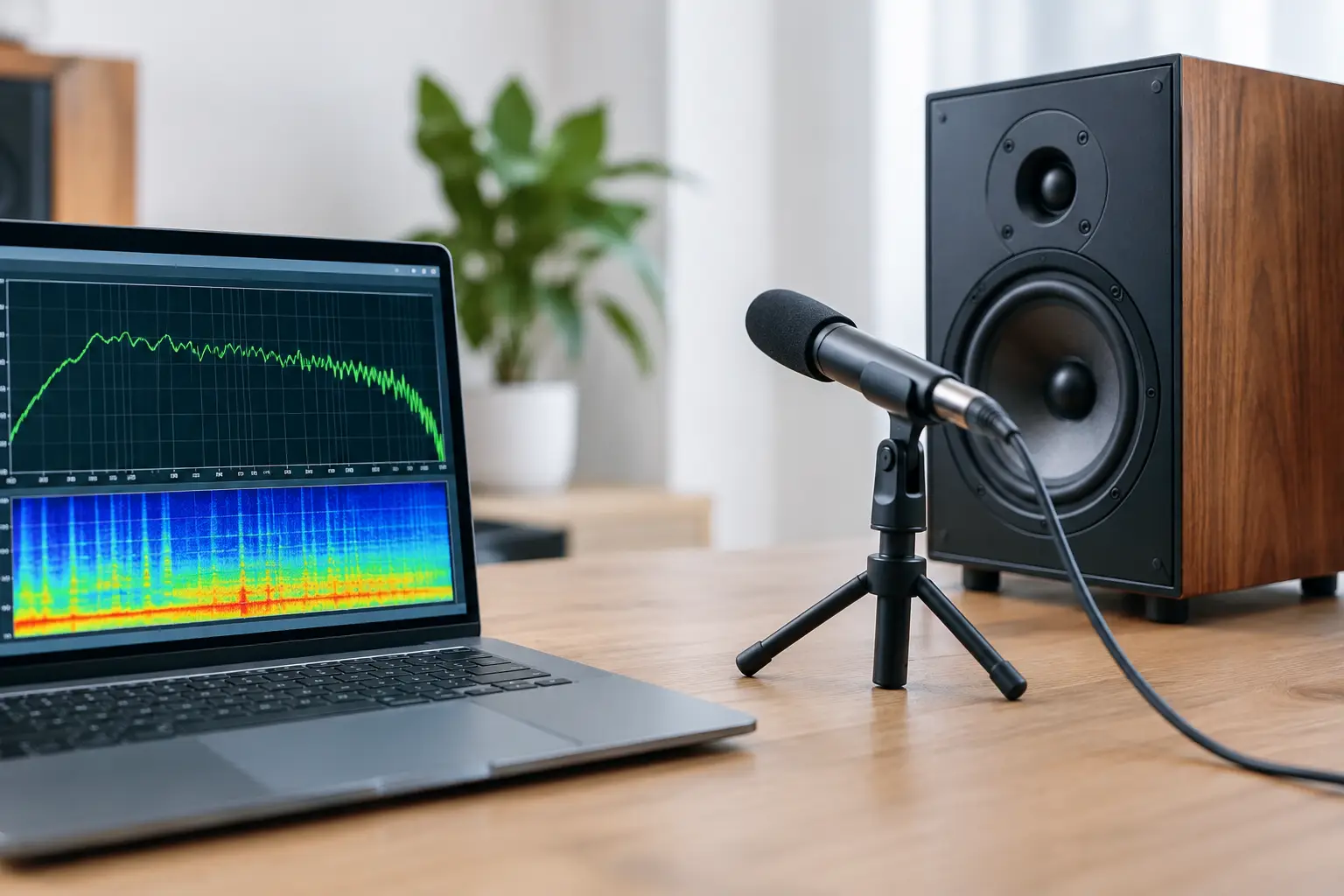
Measurements can identify obvious room issues, but music tells you whether the system communicates. Choose recordings you know deeply and that reveal different aspects of reproduction: an unaccompanied voice for center focus, a small jazz ensemble for instrumental placement, a piano for tonal consistency, and a full orchestral work for scale and bass control.
Listen for a vocal that remains locked between the speakers as you make small movements around the chair. Notice whether a double bass has pitch and texture rather than simply weight. On a well-made recording, the soundstage should have depth as well as width. Instruments should occupy distinct spaces without seeming isolated under a spotlight.
Change one variable at a time. Move both speakers forward by an inch or two, then listen. Return them and widen their spacing slightly, then listen again. If you adjust distance from the wall, toe-in, chair position, and level all at once, you will not know which change created the improvement or compromise.
Patience is part of the craft. The most revealing differences may not announce themselves as louder bass or brighter treble. They may appear as a quieter background, a more relaxed presentation, a wider sense of air around a quartet, or the sudden realization that you are no longer listening to speakers at all.
Respect the room without over-treating it
A living room is not a recording studio, nor should it look like one. Hard, bare surfaces can create excessive reflections, while an overly damped room can remove vitality and natural openness. The aim is balance.
A substantial rug between the speakers and listening position can soften a strong floor reflection. Curtains, upholstered furniture, bookshelves, and art can all contribute to a more natural acoustic environment without compromising a refined interior. If the room has severe bass buildup, purposeful bass treatment may help, but placement should always come first.
Do not assume symmetry means sterility. A room can be visually elegant and acoustically successful even if a doorway, window, or fireplace prevents perfect left-right matching. Work with what the space offers. Small differences in toe-in, distance from a side wall, or listening-seat position can compensate for architectural realities with surprising effectiveness.
Common placement mistakes that diminish great sound
The most frequent mistake is placing loudspeakers inside a cabinet, tight against a wall, or in room corners simply because it suits the décor. These positions can obscure the qualities for which a fine loudspeaker was chosen: controlled bass, open imaging, tonal nuance, and a sense of effortless scale.
Another is treating the speaker grilles, furniture, and decorative objects as acoustically invisible. Large reflective surfaces between the speakers can interfere with image focus. A television positioned between them is often unavoidable, but keeping the area as uncluttered as possible helps preserve the illusion of depth.
Finally, do not place speakers asymmetrically and assume electronics will correct the result. Digital room correction can be useful, particularly in challenging spaces, but it cannot fully replace considered physical placement. Begin with the best possible geometry, then use technology as a finishing tool rather than a substitute for fundamentals.
Let the room reveal the performance
Luxury loudspeakers are created to do more than reproduce frequency ranges. They are meant to preserve the intent, scale, color, and emotional force of a recording. At Gershman Acoustics, that philosophy begins with the loudspeaker itself, but its full expression continues in the listening room.
Once your speakers are positioned with care, resist the urge to keep adjusting them indefinitely. Live with the system for several days and return to music you love. The right placement will not merely impress on an audiophile recording. It will make a familiar song feel newly inhabited, as if the artist has stepped closer and the room has quietly fallen away.
Explore Gershman Acoustics Reference Loudspeakers
Experience the lifelike soundstage, deep controlled bass, and artisanal cabinetry discussed in our guides.
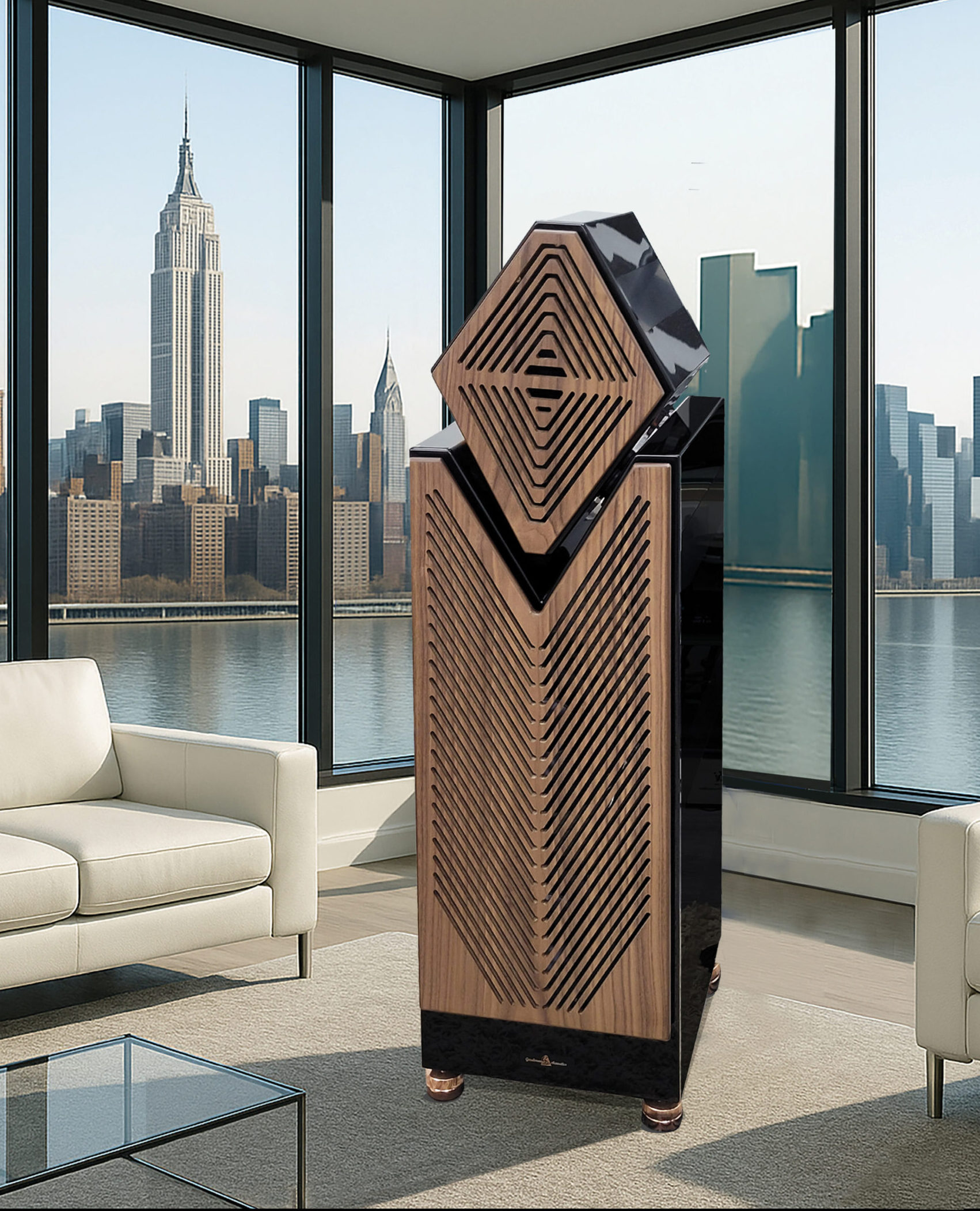
Symphoria
Flagship 3-Way Sealed Reference Loudspeaker with Dual Patented Bass Traps (BCT) & SSAS Isolation
Explore Model →
30th Anniversary Black Swan
No-Holds-Barred Reference Loudspeaker with SSAS A-Frame Enclosure (18Hz–24kHz)
Explore Model →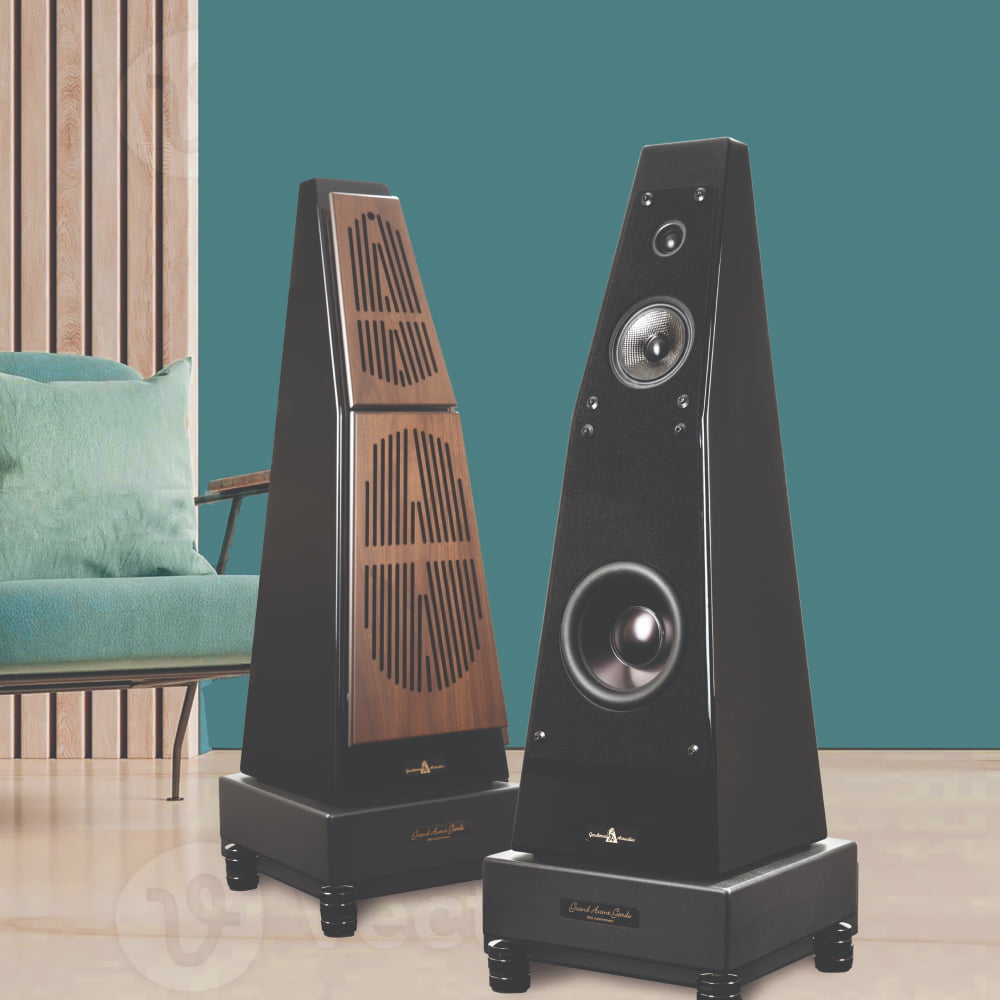
30th Anniversary Grand Avant Garde
Award-Winning Tapered Floorstanding Loudspeaker with Patented Back-Wave Control Technology (BCT)
Explore Model →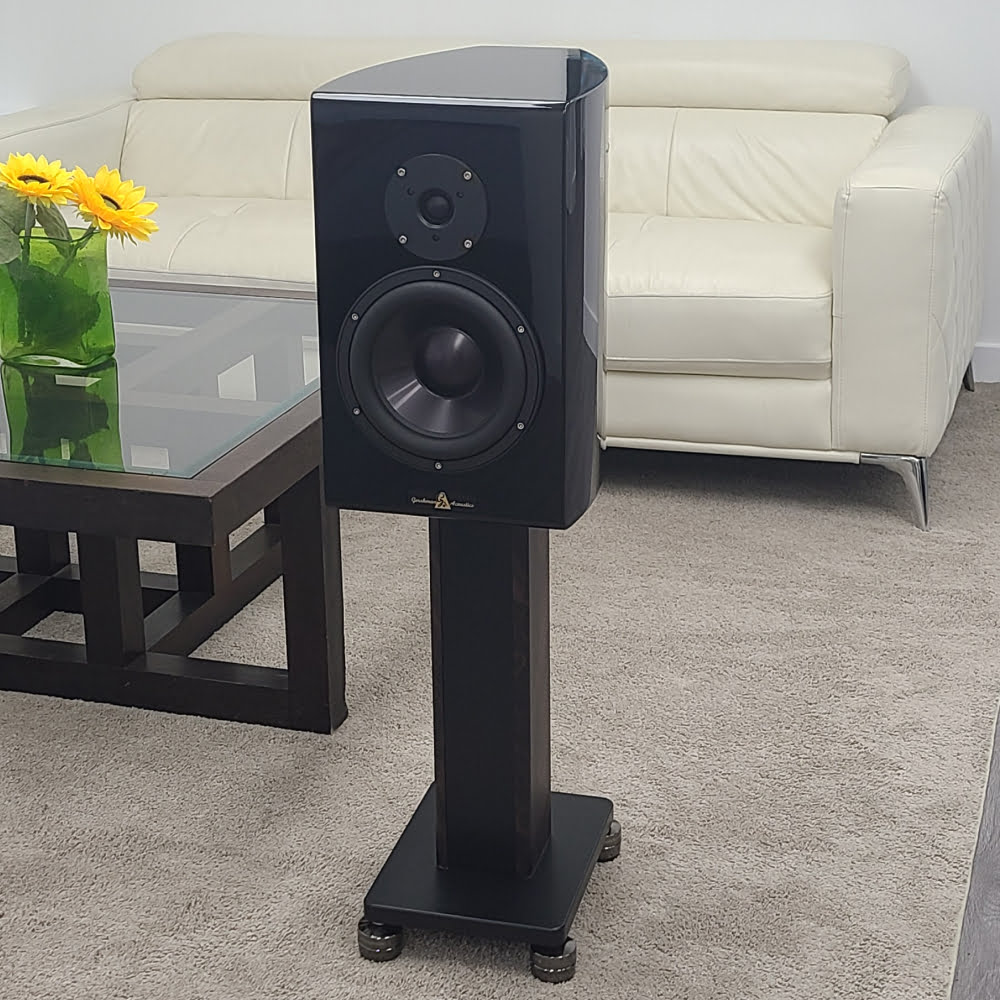
Studio II
Award-Winning Sealed Two-Way Reference Stand-Mount Loudspeaker (28Hz–24kHz)
Explore Model →