A vocalist should not seem to hover vaguely between two loudspeakers. A double bass should not lose its body when the music grows more complex. And when an orchestra reaches a crescendo, the room should expand with the performance rather than collapse into a bright, confused wall of sound. These are some of the reasons why speaker phase matters: it helps determine whether a stereo system presents music as a believable event or merely as sound coming from two cabinets.
Phase is often reduced to a quick installation reminder: connect positive to positive and negative to negative. That is certainly essential, but the subject reaches further. It touches bass authority, center image stability, soundstage depth, timing, and the ease with which a system communicates the emotional shape of a recording. In a finely resolved system, correct phase allows the work of the recording engineer, the performers, and the loudspeaker designer to arrive intact.
Why Speaker Phase Matters in a Stereo System
A loudspeaker creates sound by moving its drivers forward and backward. When two speakers receive the same musical signal, their drivers should move in coordinated fashion. If one speaker is wired with reversed polarity, one woofer may move outward while the other moves inward. Where the two speakers should reinforce one another, they can partially cancel.
The most obvious result is often a thinner, less convincing bass response. Low frequencies have long wavelengths and interact strongly across the listening room, so an out-of-polarity pair can make bass lines seem strangely lightweight or diffuse. Yet the loss is not confined to the bottom octaves. A central vocal may become unfocused, instruments may appear disconnected from one another, and the image can seem to spread beyond the loudspeakers without acquiring genuine scale.
This distinction matters. A large soundstage is not simply sound dispersed broadly across a wall. A great soundstage has boundaries, perspective, and dimensional stability. The singer occupies a clear position. A piano has width and weight. The rear of the hall, the decay of cymbals, and the air around a string section emerge naturally because the two channels are working together rather than competing.
Polarity and phase are related, but not identical
In everyday audio conversation, “phase” commonly refers to reversed speaker polarity. If the red terminal on one amplifier channel is connected to the black terminal on one speaker, that speaker is electrically inverted relative to the other. It is a simple fault with potentially dramatic sonic consequences.
Technically, phase is more nuanced. It describes the timing relationship of waveforms and can vary with frequency. A crossover network, driver placement, cabinet geometry, listening distance, and the acoustics of the room all influence how sound from different drivers and speakers arrives at the listener. A loudspeaker may have carefully engineered phase behavior even though its individual drivers are not all connected with the same electrical polarity.
That is why a listener should never assume that reversing a single driver connection inside a loudspeaker would improve performance. In a properly designed high-end loudspeaker, crossover topology and driver integration are deliberate parts of the voicing. The practical concern for the owner is ensuring that the left and right speakers are connected consistently to the amplifier.
What Incorrect Speaker Phase Sounds Like
A phase problem does not always announce itself with an obvious defect. Some systems still produce plenty of sound, and a casual listener may only sense that the performance feels less involving than expected. The signature is usually a loss of coherence.
With one channel reversed, bass may appear to retreat or lose impact, particularly on recordings with a strong central bass line or kick drum. A voice that should be locked between the speakers may become ghostly, oversized, or hard to locate. Instead of a continuous stage extending behind the loudspeakers, instruments may seem to cling to the speaker positions or float without convincing placement.
The effect can be especially revealing on intimate recordings. Play a well-recorded vocal with sparse accompaniment. In correct polarity, the performer should have a tangible presence and a stable center. Reverse the connections on one speaker and listen again. The voice may lose focus, while the surrounding ambience becomes exaggerated in a way that initially sounds spacious but soon feels unanchored.
Complex music makes the cost even clearer. The momentum of a jazz ensemble depends on the relationship between bass, drums, horn, and room ambience. A symphonic recording asks the system to preserve dozens of overlapping textures without flattening the stage. When channel polarity is wrong, musical elements can lose their shared timing cues. The system becomes less persuasive, even if no single frequency appears entirely absent.
Phase, Imaging, and the Illusion of a Real Performance
Stereo reproduction is an illusion built from small differences between left and right channels. Timing, level, and tonal information tell the brain where a musician stands, how large the acoustic space may be, and whether a note is direct sound or reflected energy. Phase relationships are central to that perception.
When those relationships are preserved, a pair of loudspeakers can disappear as apparent sources. The listener is no longer attending to two objects in a room, but to the recorded space between and beyond them. This is one of the defining pleasures of a serious two-channel system: a familiar performance acquires physical presence, proportion, and emotional immediacy.
However, phase is not a magic answer to every imaging concern. Speaker placement remains influential. A pair positioned too close together may narrow the stage; placed too far apart, it may leave a hole in the center. Strong early reflections from side walls, glass, or large furnishings can blur image outlines. Unequal distance from the listening position can shift the center image to one side.
Correct wiring is the foundation, not the whole structure. Once it is confirmed, careful placement, room consideration, and a listening position that respects the speaker geometry allow the design to reveal its full potential.
How to Check Speaker Phase at Home
Begin with the physical connection. Confirm that the amplifier’s positive terminal connects to the positive terminal on each loudspeaker, and that negative connects to negative. Follow the markings rather than relying only on cable color, especially if cables have been re-terminated or moved during a system change.
Then use music you know exceptionally well. A centered vocal, an acoustic bass, a kick drum, or a simple piano recording is more revealing than heavily processed pop. Sit in your normal listening position and listen for a firm center image and bass that feels integrated rather than detached from the rest of the performance.
Many amplifiers and preamplifiers also offer a polarity control. This is a separate matter from speaker wiring. Some recordings themselves may have been made or mastered with inverted absolute polarity, and changing the polarity at the source can subtly alter the leading edge of transients and the density of images. The difference varies by recording, system, and listener sensitivity. It is worth exploring, but it should not be confused with having one speaker wired backward.
If a system has recently been installed, relocated, or serviced, phase should be among the first checks. It takes only moments, and it can prevent hours of chasing an imagined problem with components, cables, or room treatments.
The Role of Loudspeaker Design
The finest phase behavior begins long before setup. It is shaped by the relationship among drivers, crossover slopes, enclosure design, and the cabinet’s physical architecture. A designer is balancing competing demands: extension, efficiency, dispersion, impedance behavior, transient response, and tonal integration. There is no single measurement that defines musical satisfaction.
This is where sophisticated loudspeaker engineering becomes an art of disciplined compromise. A design can pursue textbook-perfect behavior in one domain while sacrificing dynamics, natural tonal color, or room-friendly dispersion elsewhere. The goal is not technical purity for its own sake. The goal is coherence – the sense that voice, instrument, rhythm, and acoustic space belong to one living performance.
At Gershman Acoustics, that pursuit of coherence is inseparable from craftsmanship. Cabinet construction, driver integration, and careful voicing all serve the same listening experience: music with stable images, controlled weight, and the natural ease that encourages longer, deeper listening sessions.
A final listening check is a small ritual with a large reward. Before evaluating a new component or rearranging an entire room, verify that both loudspeakers are in correct polarity, then play a recording that matters to you. When the center image settles, the bass gains conviction, and the space around the musicians becomes believable, the system is ready to do what it was built to do: bring you closer to the performance.
Explore Gershman Acoustics Reference Loudspeakers
Experience the lifelike soundstage, deep controlled bass, and artisanal cabinetry discussed in our guides.

Symphoria
Flagship 3-Way Sealed Reference Loudspeaker with Dual Patented Bass Traps (BCT) & SSAS Isolation
Explore Model →
30th Anniversary Black Swan
No-Holds-Barred Reference Loudspeaker with SSAS A-Frame Enclosure (18Hz–24kHz)
Explore Model →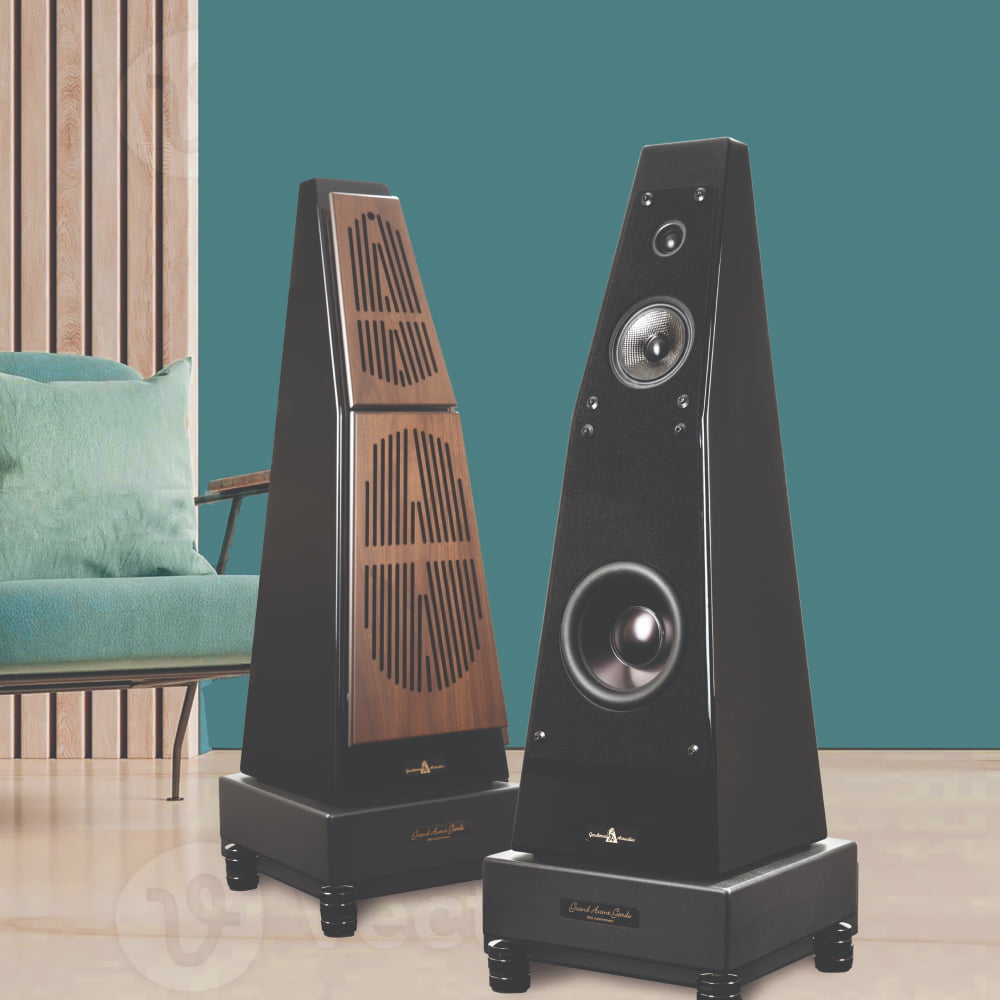
30th Anniversary Grand Avant Garde
Award-Winning Tapered Floorstanding Loudspeaker with Patented Back-Wave Control Technology (BCT)
Explore Model →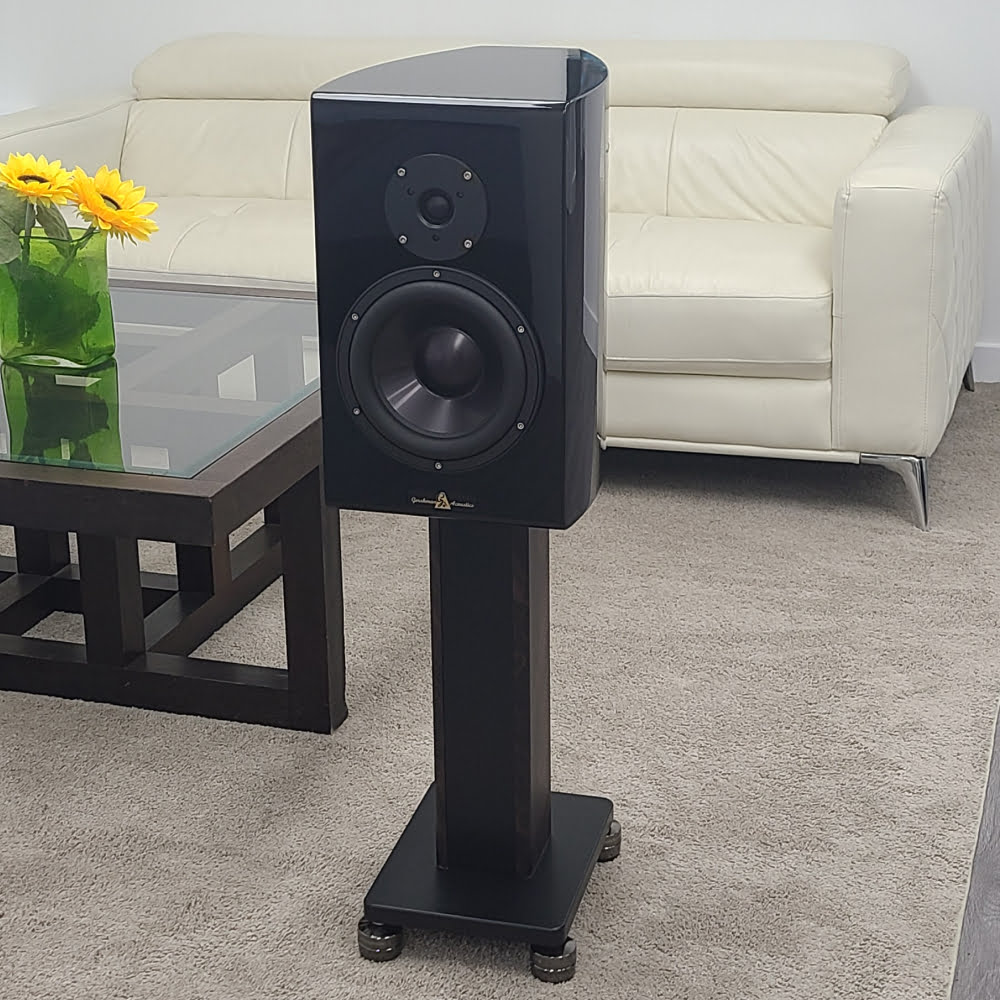
Studio II
Award-Winning Sealed Two-Way Reference Stand-Mount Loudspeaker (28Hz–24kHz)
Explore Model →