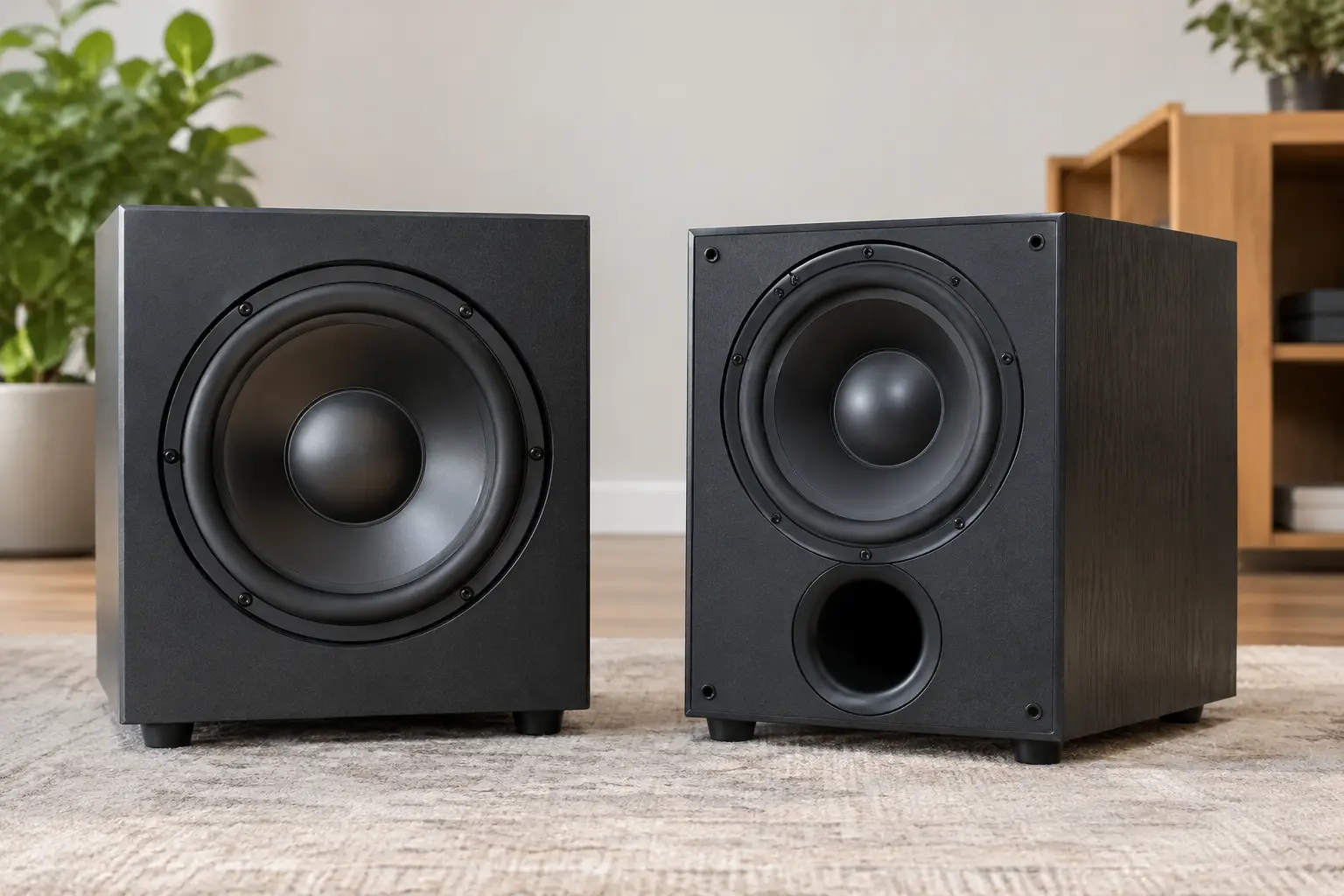
A double bass should reveal the pressure of bow against string, then the woody resonance of its body. A concert bass drum should arrive with force but stop before it blurs the next note. That is why sealed versus ported bass is not merely an engineering preference. It is a decision about how a loudspeaker conveys rhythm, weight, space, and the physical presence of music.
For the discerning listener, neither cabinet approach is automatically superior. Each can be executed beautifully or poorly. The meaningful question is how the enclosure, driver, crossover, room, and listener’s priorities work together to create a convincing musical experience.
What Sealed Versus Ported Bass Really Means
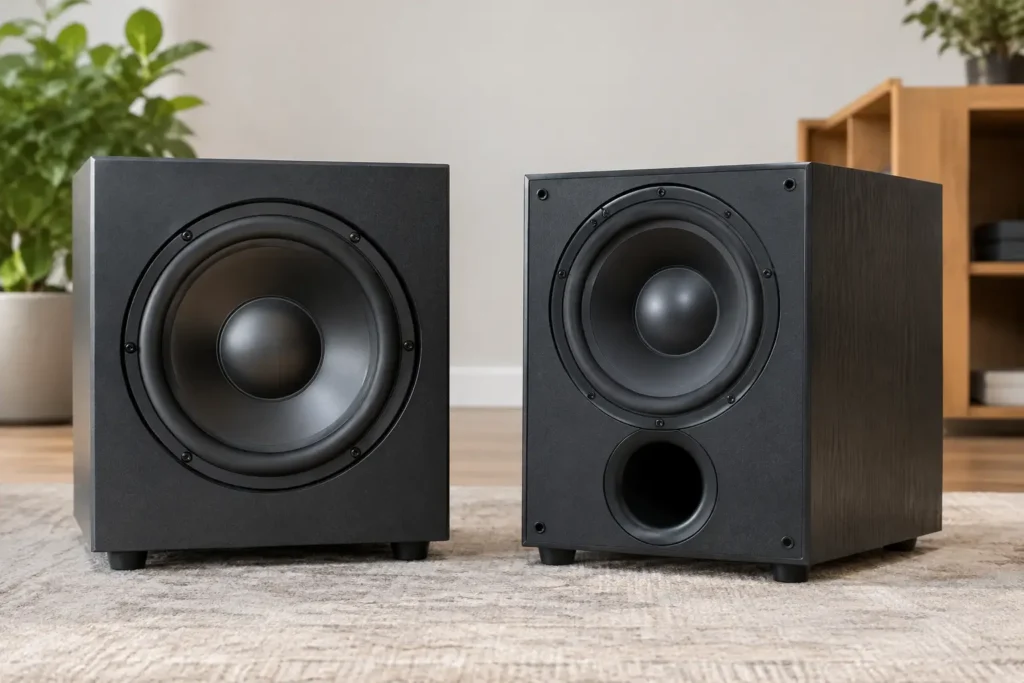
A sealed loudspeaker cabinet is airtight. As the woofer moves, the enclosed air acts as a controlled spring behind it. That air pressure helps restrain the driver, contributing to a gradual low-frequency rolloff and, when engineered with care, a sense of composure and articulation.
A ported cabinet, also called a bass-reflex design, uses a carefully sized opening or tube tuned to a particular frequency range. Near that tuning frequency, energy from the rear of the woofer reinforces the output from its front. This allows the speaker to produce greater bass output and often deeper extension from a given cabinet volume.
Those descriptions are accurate, but they do not tell the whole story. Cabinet alignment is only one part of a loudspeaker’s voice. Driver quality, cabinet rigidity, internal damping, crossover design, amplifier control, and room acoustics all influence whether bass feels taut, expansive, natural, or overripe.
The Character of Sealed Bass
Well-designed sealed bass is often admired for its restraint. Notes can seem to start and stop with exceptional clarity, especially on acoustic jazz, chamber music, percussion, and recordings built around intricate bass lines. The cabinet’s air spring provides predictable control of woofer movement, which can support a clean and coherent presentation.
This does not mean sealed designs are inherently faster in a simplistic sense. The familiar phrase “fast bass” is often used loosely. What listeners are usually hearing is reduced ringing, clean integration with the midrange, and bass notes that retain their individual shape rather than merging into a broad swell.
A sealed enclosure also rolls off more gradually at the bottom of its range. In some rooms, that can work gracefully with natural room gain, the tendency of enclosed spaces to reinforce very low frequencies. A speaker that appears modest on paper may sound surprisingly full in a real listening room, without excessive emphasis around a single upper-bass region.
The trade-off is efficiency and ultimate low-frequency output. To achieve substantial deep bass from a sealed cabinet, a designer may need larger drivers, greater enclosure volume, more amplifier power, longer driver excursion, or a combination of these measures. There is no shortcut around the physics.
The Scale and Authority of Ported Bass
A properly executed ported system can make a room feel larger than its dimensions. It can deliver the resonant foundation of a pipe organ, the sustained pressure of electronic music, and the cinematic impact of a large orchestra with impressive ease. By using the rear energy of the woofer constructively, the port can extend bass response and increase output where the speaker needs it most.
For listeners who value the lowest octave, this can be compelling. A well-tuned ported loudspeaker may reproduce the ambience and scale embedded in a recording with a generosity that a smaller sealed design cannot easily match. The result is not simply more bass. At its best, it is a greater sense of venue, foundation, and dynamic freedom.
Yet the port demands precision. Poor tuning, insufficient cabinet damping, or a port that contributes audible turbulence can make bass sound inflated or disconnected from the music. Below the port’s tuning frequency, woofer control can also diminish quickly, so intelligent engineering is essential. The best ported systems do not advertise their ports. They simply allow the musical foundation to breathe.
Why Room Acoustics Can Change the Answer
The listening room is effectively part of the bass system. At low frequencies, sound waves are long enough to interact strongly with walls, floors, ceilings, and furniture. A speaker that sounds balanced in a large, open space may produce too much energy in a compact room. Another that seems restrained in a showroom may become deeply satisfying once positioned correctly at home.
Ported loudspeakers can be especially rewarding in larger rooms where their extension and output have space to develop. They may need more care when placed near a rear wall, depending on the port location and tuning. A rear-ported speaker close to a boundary can receive added reinforcement, sometimes welcome and sometimes excessive.
Sealed speakers can offer more placement flexibility in certain rooms, but they are not immune to room modes. A standing wave around 50 Hz can turn even the most disciplined bass alignment into a persistent boom. Moving the loudspeakers or listening chair by a modest distance can transform the balance more dramatically than changing cables or electronics.
This is why an audition should never stop at the first impressive bass note. Listen to several familiar recordings. Pay attention to whether the bass guitar changes pitch cleanly, whether a kick drum has a distinct leading edge, and whether low notes remain proportionate when the arrangement becomes dense.
Musical Priorities Matter More Than Labels
A listener whose collection centers on small ensembles, vocal recordings, strings, and acoustic instruments may be drawn to the poised definition of a sealed design. The appeal is often not reduced bass, but bass that feels integrated with tone, timing, and image stability.
A listener who regularly plays symphonic works, live concert recordings, electronic music, or film scores may prefer the greater reach of a ported design. When the recording contains genuine low-frequency information, a ported system can reveal the foundation that gives a performance its grandeur and emotional scale.
Still, broad genre rules are incomplete. A great loudspeaker should reproduce a cellist’s lowest register with as much conviction as an electronic bass line. It should let a large drum sound powerful without making every male vocal sound chesty. The goal is not a bass signature that impresses for a few minutes, but one that remains believable through long listening sessions.
Cabinet Craftsmanship Is Part of Bass Performance
At high performance levels, the enclosure is not passive furniture around the drivers. It is a structural and acoustic instrument. Panels that store and release energy can cloud low frequencies. Inadequate bracing may soften transient impact. Poorly controlled internal reflections can color the lower midrange, where much of the texture and identity of bass instruments resides.
This is one reason handcrafted loudspeakers deserve close attention. A cabinet must combine rigidity, damping, and thoughtful geometry without becoming acoustically lifeless. The relationship between the woofer, enclosure volume, port behavior where applicable, and crossover is refined through measurement and listening, not chosen from a catalog formula.
At Gershman Acoustics, this holistic view is central to the pursuit of musical realism. Deep bass has value not as spectacle, but because it anchors the harmonic and emotional structure of a performance.
How to Listen Before You Choose
When comparing sealed and ported loudspeakers, begin at a realistic volume. Excessive volume can make almost any speaker seem exciting, while concealing the subtle distinctions that matter over time. Use recordings you know intimately, preferably including an upright bass, kick drum, piano, low male vocal, and a full orchestral passage.
Listen for pitch definition first. Can you follow the notes rather than just hear low-frequency pressure? Then listen for decay. Does the room continue to hum after the musician has stopped, or does the sound recede naturally? Finally, consider scale. Does the speaker preserve the physical dimensions of a performance without making the room feel pressurized or congested?
The most persuasive bass is not always the most immediately dramatic. It is bass that supports the entire musical picture: a stable soundstage, an unforced midrange, convincing dynamics, and the quiet spaces between notes.
Before making a final decision, ask for an extended session with music that has stayed with you for years. The right loudspeaker will not simply make its bass known. It will make the performance feel more complete, more human, and more difficult to leave.
Explore Gershman Acoustics Reference Loudspeakers
Experience the lifelike soundstage, deep controlled bass, and artisanal cabinetry discussed in our guides.
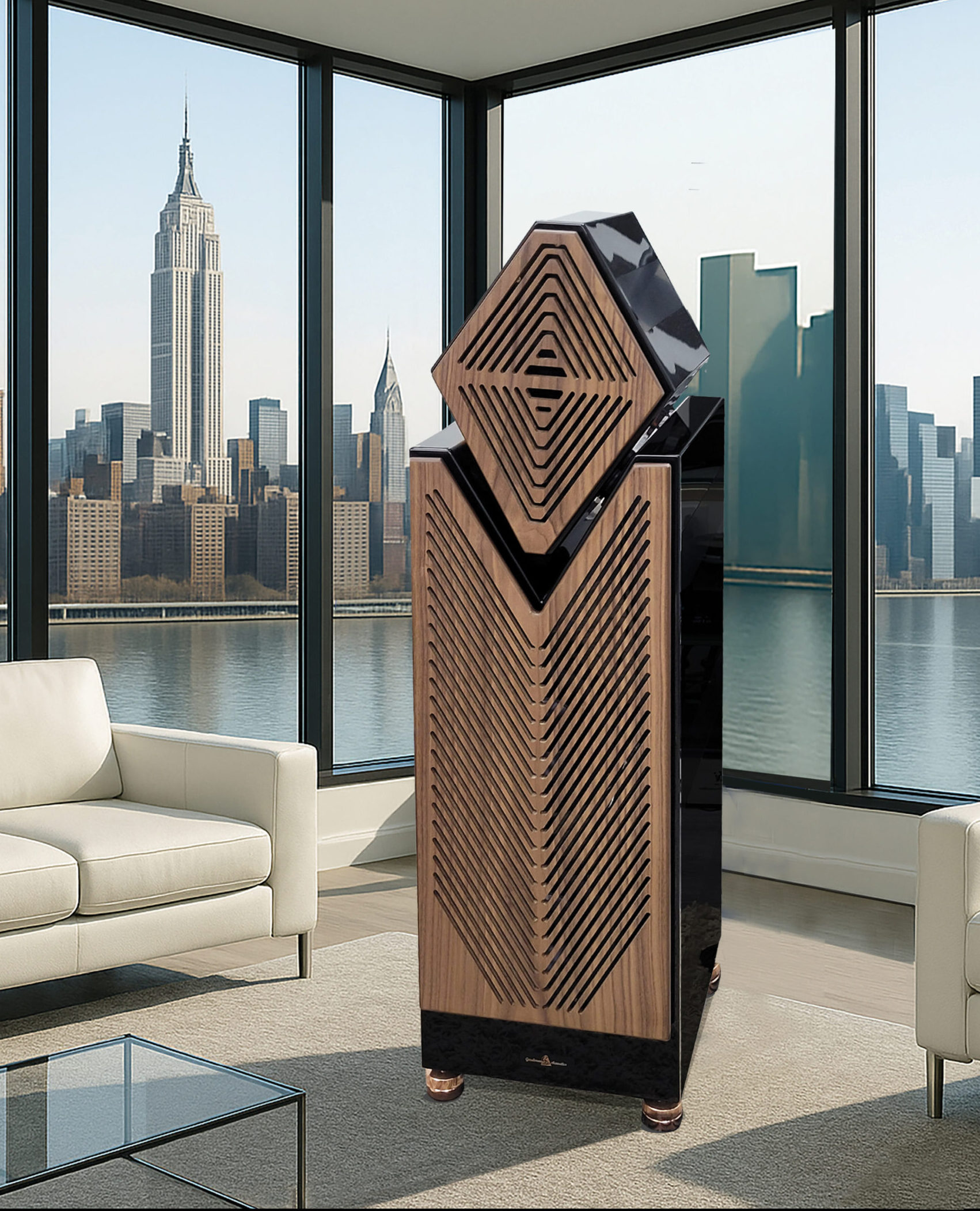
Symphoria
Flagship 3-Way Sealed Reference Loudspeaker with Dual Patented Bass Traps (BCT) & SSAS Isolation
Explore Model →
30th Anniversary Black Swan
No-Holds-Barred Reference Loudspeaker with SSAS A-Frame Enclosure (18Hz–24kHz)
Explore Model →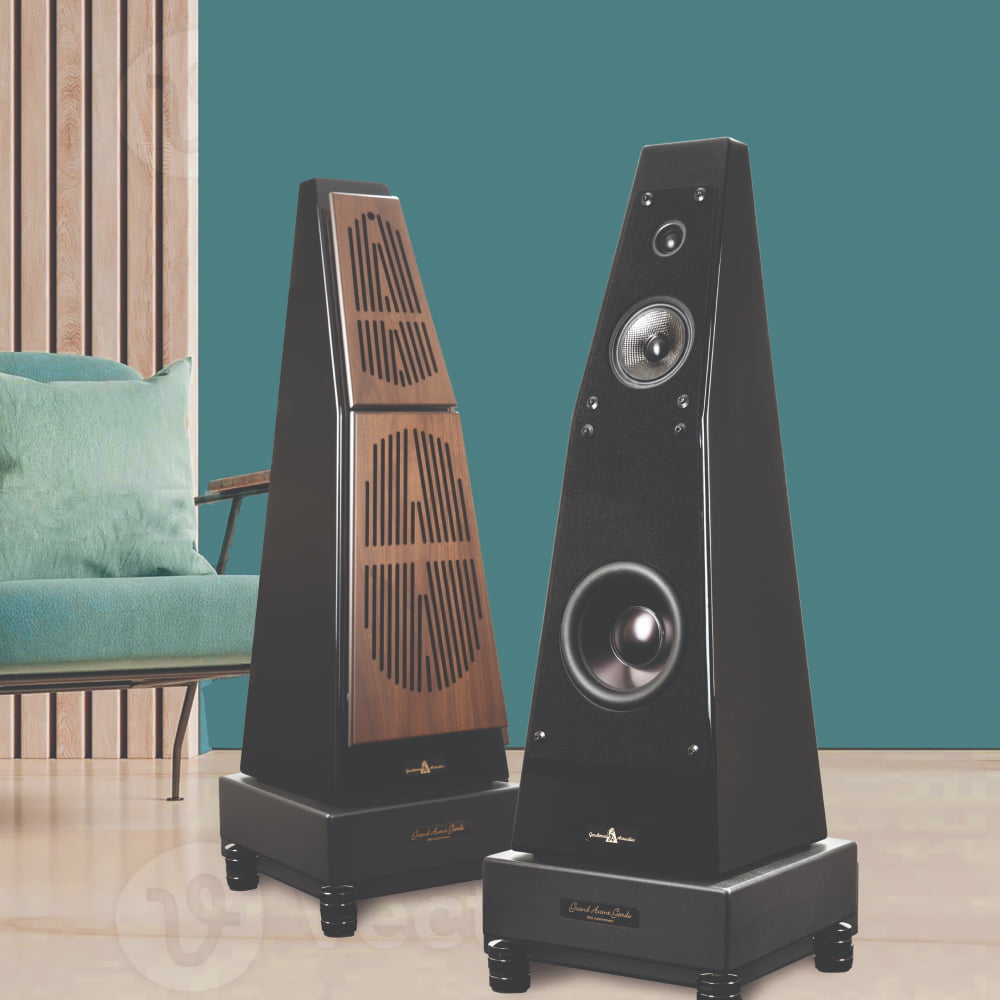
30th Anniversary Grand Avant Garde
Award-Winning Tapered Floorstanding Loudspeaker with Patented Back-Wave Control Technology (BCT)
Explore Model →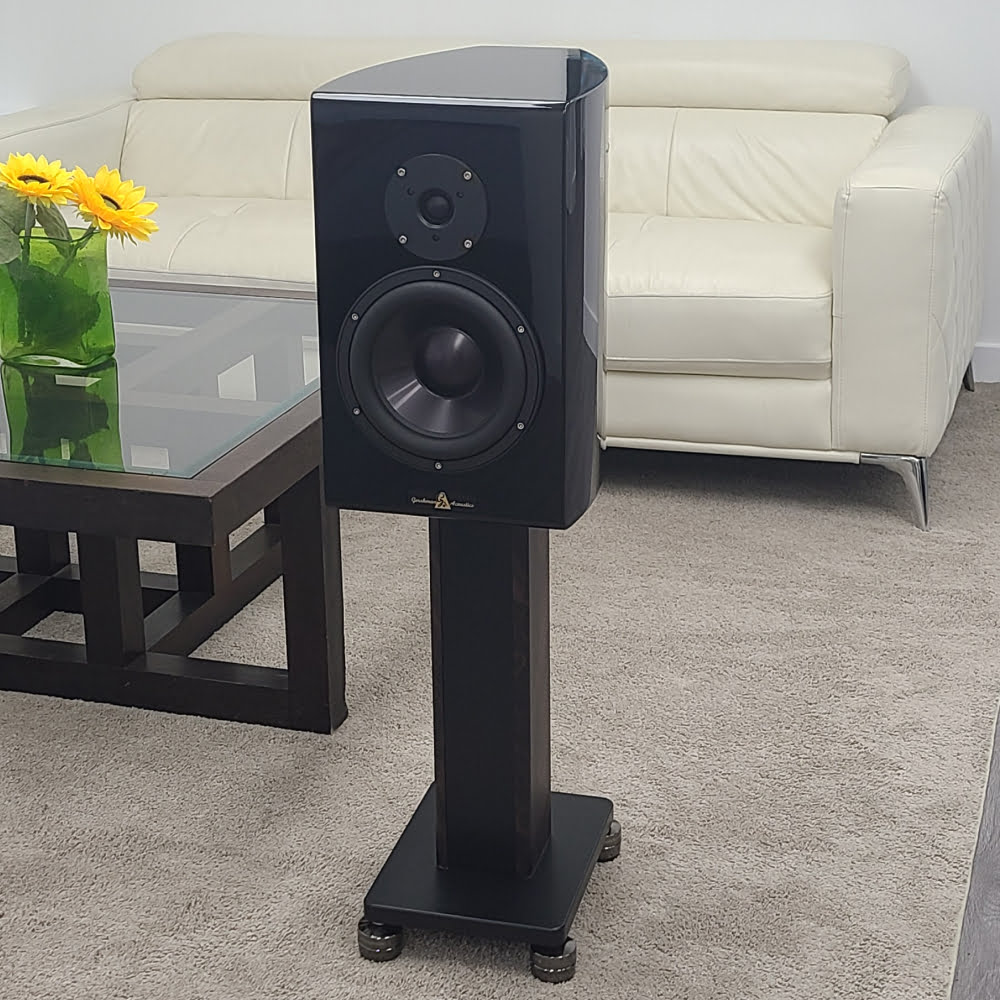
Studio II
Award-Winning Sealed Two-Way Reference Stand-Mount Loudspeaker (28Hz–24kHz)
Explore Model →