A solo cello should seem to occupy a physical space between the loudspeakers, its bow pressure and woody resonance intact. When the full orchestra enters, that intimacy should not disappear beneath a bright wash of strings or a swollen bass line. The best speakers for classical music preserve both truths: the scale of the hall and the individual voice within it.
That is a demanding assignment. Classical recordings can move from a near-silent pianissimo to a full orchestral climax in seconds, often with dozens of instruments sharing the same acoustic field. A loudspeaker chosen merely for bass weight, treble sparkle, or impressive specifications may sound exciting at first, yet fail to hold together the musical relationships that make a performance convincing.
What Classical Music Reveals About a Loudspeaker
Classical music places unusual demands on a system because it is not built around a single, closely miked vocal or a predictable rhythmic foundation. It asks a loudspeaker to resolve the tonal character of violins, violas, woodwinds, brass, percussion, and double basses without turning their differences into a single generalized sound.
Tone comes first. A violin should have sheen and harmonic complexity, not glare. A French horn should bloom with burnished warmth, not become a nasal projection. The lower registers of a concert grand should carry both pitch and body, while the leading edge of a piano note remains clear. These qualities depend on careful driver integration, low cabinet coloration, and a crossover design that serves musical continuity rather than isolated hi-fi effects.
Dynamic freedom is equally essential. A Mahler symphony, a Verdi Requiem, or a large-scale film score can rise far beyond ordinary listening levels. The relevant question is not simply how loudly a speaker plays. It is whether it remains composed as the orchestra expands – retaining the delicacy of inner strings, the force of timpani, and the air around a choir without compression or strain.
Then there is space. Fine recordings contain information about the recording venue: the first reflections from side walls, the height of the stage, the lingering decay after a final chord. The right loudspeaker does not manufacture an oversized soundstage. It allows the recorded acoustic to emerge naturally, with stable images and believable depth.
The Best Speakers for Classical Music Favor Wholeness
Many listeners begin their search with a checklist: wide frequency response, high sensitivity, a certain driver material, or a particular cabinet size. Those attributes matter, but classical music rewards a more holistic judgment. The finest systems make an orchestra sound coherent from the lowest foundation to the highest overtones.
A speaker with extended bass is valuable when it gives cellos, basses, organ pedals, and bass drum their proper scale. Yet bass extension without discipline can obscure the rhythmic articulation of the lower orchestra. In a well-designed loudspeaker, a double bass section has weight, texture, and placement. It does not simply make the room feel pressurized.
Treble deserves the same restraint. Cymbals, triangles, and upper strings must have air, but excessive brilliance can make a string section sound steely and turn a close recording into an exhausting one. Seek extension that feels open rather than emphatic. The difference becomes clear during long listening sessions: one presentation draws you deeper into the performance; the other keeps reminding you that you are listening to equipment.
Midrange realism is where musical recognition often begins. This is the region of solo piano, clarinet, cello, human voice, and much of the orchestra’s expressive language. A speaker with a naturally resolved midrange can reveal the breath before an oboe phrase or the shifting pressure of a pianist’s touch. Such details are not decorative. They are the gestures that carry interpretation.
Soundstage Is More Than Width
A wide stage can be impressive, but width alone is not the goal. Classical listeners should listen for lateral placement, front-to-back layering, image stability, and convincing scale. In a strong recording, the first violins should not drift when the music becomes complex, and the brass should occupy a recognizable plane behind the strings rather than appearing as a flat, bright layer.
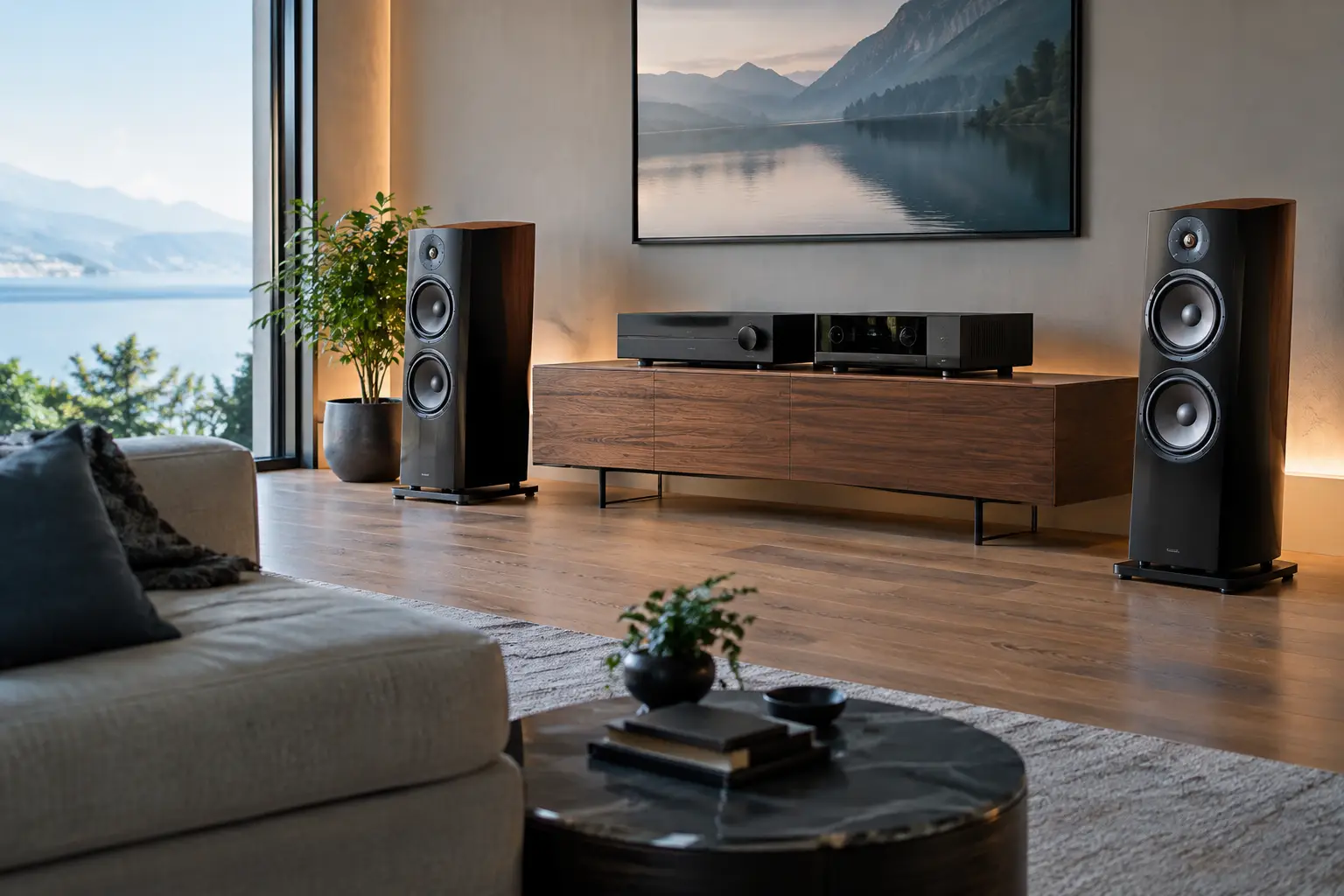
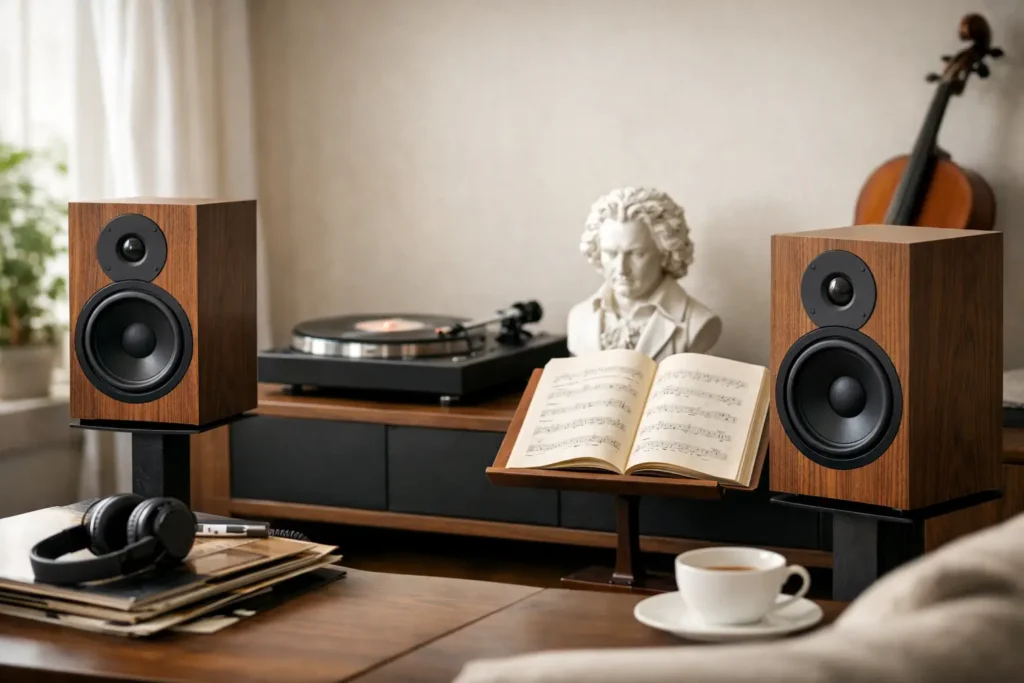
A well-engineered floorstanding speaker often has an advantage here, especially in a dedicated listening room. Its cabinet volume and driver complement can reproduce the foundation and dynamic ease of a full orchestra. But a refined stand-mount speaker may be the better choice in a smaller room, where a large loudspeaker can energize bass modes too aggressively. Bigger is not automatically more faithful.
Match the Speaker to Your Room and Listening Habits
The room is part of the instrument. Marble floors, large glass surfaces, open-plan layouts, and sparse furnishings can make even an excellent speaker sound too forward. A heavily furnished room may absorb some welcome reflections but can also reduce perceived openness. The objective is not a dead studio-like space. It is a room where the speaker can communicate tone, dynamics, and dimensionality without obvious interference.
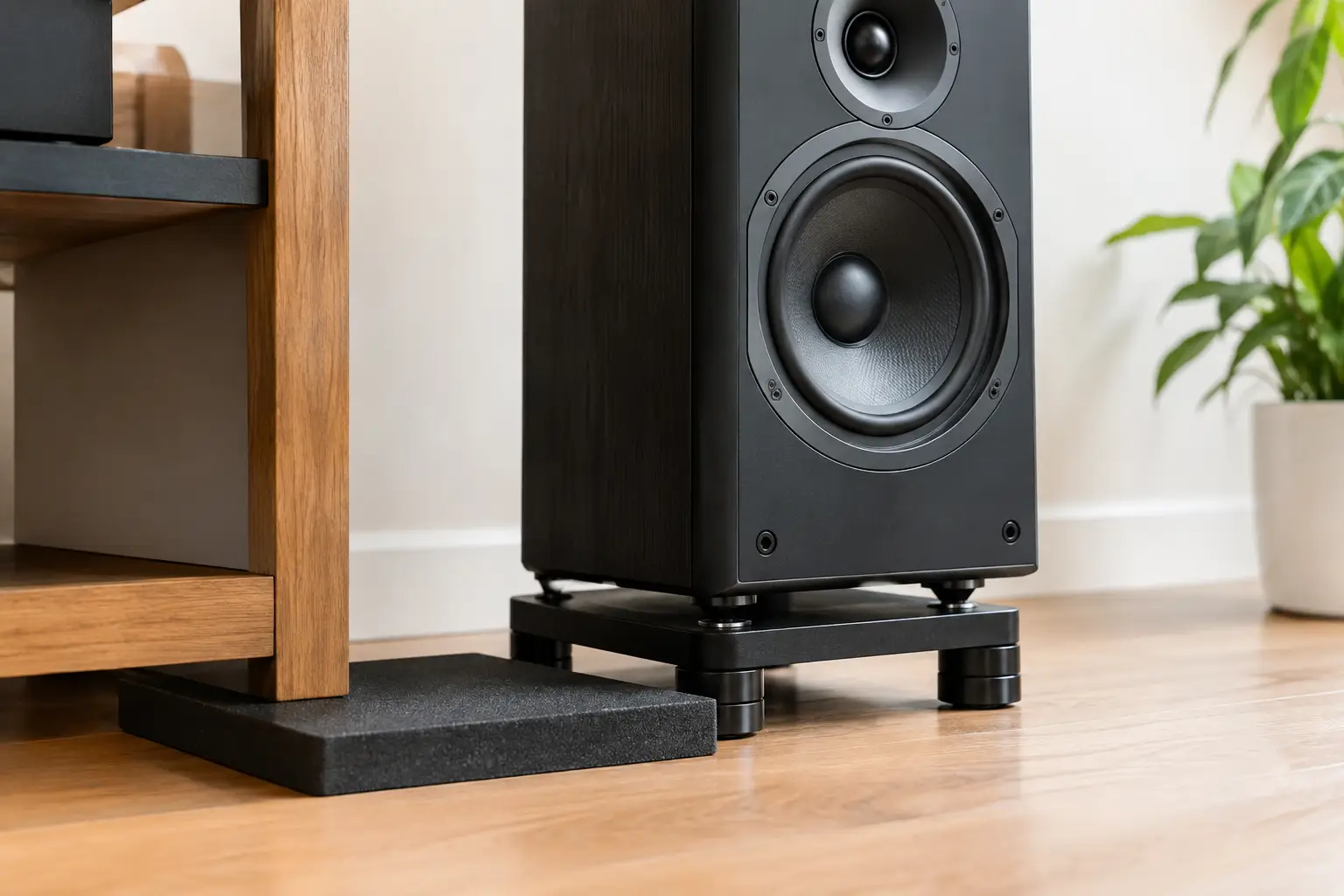
Placement should be treated as part of the audition, not an afterthought. Give the speakers room to breathe from the front wall where practical, and begin with symmetrical positioning relative to side walls. Small adjustments in toe-in can transform image focus and treble balance. The final position is often found by listening to familiar recordings, not by measuring tape alone.
Consider how you actually listen. If chamber music, solo piano, and lieder dominate your collection, prioritize tonal nuance, low-level resolution, and the physical believability of instruments. If your evenings are filled with Bruckner, Stravinsky, Wagner, or large choral works, reserve more attention for dynamic headroom, bass control, and the ability to maintain separation at scale.
Your associated components matter as well. A loudspeaker that is revealing enough for classical music will reveal the character of the amplifier, source, cables, and recording. This is not a reason to fear resolution. It is a reason to build a considered system, where amplification has sufficient current and composure to control the loudspeaker during demanding passages.
How to Audition Classical Loudspeakers Properly
An audition should extend beyond a brief, spectacular excerpt. Begin with music you know deeply, preferably recordings with real acoustic information and a broad range of instrumental colors. Listen at a moderate level first. If the speaker only becomes engaging when played loudly, it may be emphasizing excitement over communication.
Use a solo piano recording to judge timbre and continuity from low to high registers. Use chamber music to assess image specificity and the sense that each instrument occupies its own body of air. Then play a large orchestral movement. As the arrangement thickens, ask whether you can still follow the woodwinds, whether brass retains color rather than hardness, and whether the climaxes expand freely.
Pay attention to what happens after the dramatic moment. The decay of a hall, the quiet return of a string phrase, and the separation of low-level instrumental lines often reveal more than a fortissimo climax. A truly accomplished speaker can make silence feel charged because the acoustic space remains believable.
Avoid making a decision based on unfamiliar demonstration tracks alone. A dealer may select recordings that flatter a system, but your own collection is the real test. Bring music that includes both superb and merely ordinary recordings. A musically mature loudspeaker will not disguise poor production, yet it should remain inviting enough that you do not feel punished for listening to a treasured historical performance.
Craftsmanship You Can Hear and Live With
For a luxury music system, the loudspeaker must satisfy the eye as well as the ear. It will occupy a meaningful place in the home, often for decades. Cabinet design is therefore more than styling. Its proportions, materials, bracing, finish, and mechanical integrity contribute to both the visual presence and the control of unwanted resonance.
This is where handcrafted loudspeakers distinguish themselves from anonymous, mass-produced alternatives. The work is not only in selecting premium components. It is in voicing the system as an integrated musical object: cabinet, drivers, crossover, and finish brought together with a singular listening standard.
Gershman Acoustics has pursued that standard since 1993, creating Canadian-crafted loudspeakers designed for expansive soundstage, controlled bass, natural tonal balance, and emotional immediacy. Models such as the Symphoria and 30th Anniversary Black Swan reflect a philosophy particularly relevant to classical repertoire: authority without heaviness, resolution without edge, and a physical presence worthy of a serious listening room.
The best choice is ultimately the speaker that makes you stop evaluating sound and return to the performance. When an orchestra breathes as one organism, when a soprano’s phrasing feels unforced, and when the final resonance of a piano seems to remain in the room, a collection becomes something more personal: a private concert hall, ready whenever the music calls.