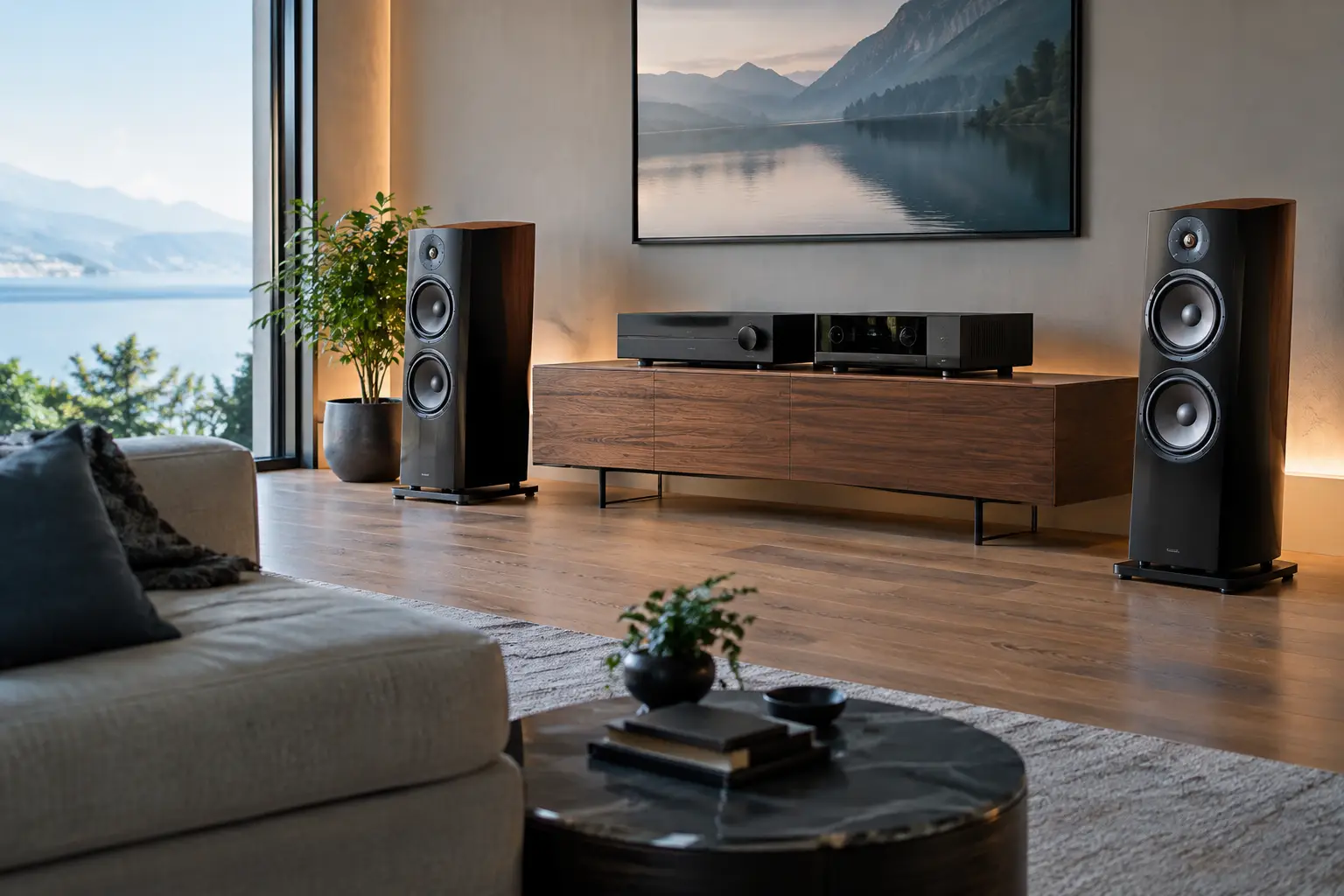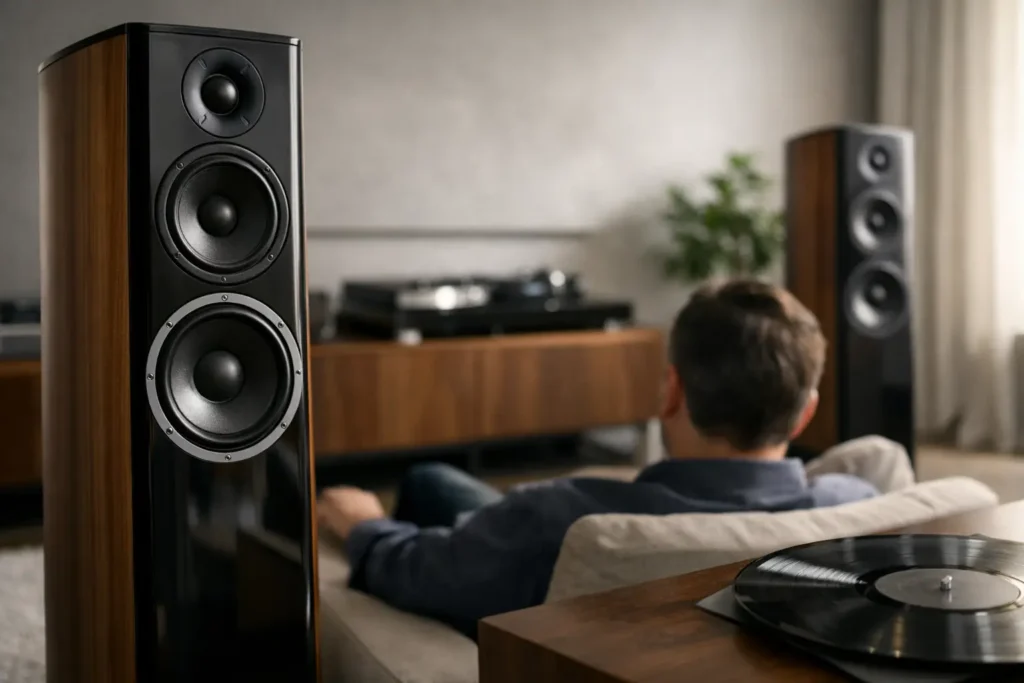
A great system announces itself in the first few seconds. Not with louder bass or brighter detail, but with a rare sense of ease – a piano occupies real space, a vocalist breathes between phrases, and the room seems to fall away. That is the promise of audiophile loudspeakers: not spectacle for its own sake, but a convincing recreation of music as an expressive, dimensional event.
For listeners who have outgrown generic sound, this difference is not subtle. Many speakers can impress during a brief demo. Far fewer can sustain long listening sessions without fatigue, preserve the character of a recording, and make familiar albums feel newly alive. The best ones do not simply play music. They communicate timing, texture, scale, and emotional weight with a kind of poise that turns listening into a ritual rather than background noise.
What sets audiophile loudspeakers apart
The term is used loosely, and that has made it easy to confuse price with performance. True audiophile loudspeakers are not defined by luxury materials alone, nor by marketing claims about extreme frequency response. They are defined by how coherently they reproduce music.
Coherence is the quality that makes a speaker sound whole. Bass should not feel detached from the midrange. Treble should not call attention to itself. A cello should retain its wooden body and harmonic richness, not become an outline of frequencies. When design is handled with care, the speaker stops sounding like a collection of drivers and starts behaving like a single musical instrument.
This takes far more than competent parts selection. Cabinet geometry, crossover execution, driver integration, internal damping, and resonance control all shape the final result. A loudspeaker may measure impressively in one area and still fail to move the listener if these elements are not brought into balance. The finest designs understand that musical realism is not one metric. It is the sum of many decisions, each affecting the naturalness of the whole.
Audiophile loudspeakers and the illusion of real music
Live music has structure, air, scale, and dynamic subtlety. Reproducing that convincingly in a domestic room is a formidable challenge. The reason audiophile loudspeakers matter is that they are built to preserve the relationships that make music believable.
A singer is not just a center image between two cabinets. In a well-resolved system, the voice has body, height, and emotional presence. Cymbals do not just shimmer at the top of the mix. They bloom, decay, and occupy air around them. Bass is not merely extension. It has pitch, grip, and timing, which is what allows rhythm sections to feel alive instead of heavy.
This is where lesser speakers often flatten the experience. They may deliver plenty of sound, yet compress the fine gradations that make one performance tender and another explosive. When those cues disappear, music becomes informational rather than involving. You hear the song, but not the intent behind it.
The best loudspeakers preserve microdynamics as carefully as major crescendos. They reveal the pressure of fingers on strings, the space around a jazz trio, the trailing resonance of a concert hall. These are not audiophile parlor tricks. They are the details that connect the listener to the performance on a human level.
Why design and craftsmanship matter as much as specs
Specifications have their place, but they do not tell the whole story. Two loudspeakers can share similar published numbers and deliver profoundly different experiences. One sounds mechanical. The other breathes.
That gap often comes down to craftsmanship and the discipline behind the design. A beautifully engineered cabinet is not only about appearance, though in a refined home that matters. It is also about suppressing unwanted vibration, preserving driver stability, and allowing the musical signal to emerge without cabinet-induced haze. Precision in construction affects clarity as surely as any electronic component in the chain.
There is also the matter of voicing. A serious loudspeaker designer does not aim for effect. The goal is long-term listenability and tonal truth. That means resisting exaggerated treble marketed as detail, or oversized bass mistaken for authority. Real authority comes from control. Real detail comes from low distortion and proper integration.
Handcrafted high-end loudspeakers tend to excel here because they are not developed under the same constraints as mass-market products. They can prioritize sophisticated cabinet work, proprietary solutions, premium materials, and painstaking quality control. The result is often audible in ways even non-experts can appreciate: greater dimensionality, more natural tone, and a sense that the speaker is working with the music rather than imposing itself on it.
Choosing audiophile loudspeakers for your room and taste
This is where good judgment matters. There is no universally perfect loudspeaker, because rooms, electronics, and listening preferences vary. A model that excels in a large dedicated space may overwhelm a city living room. A speaker prized for transparency may expose weak recordings if the rest of the system leans analytical.
The better question is not, What is the best speaker? It is, What kind of musical experience do you want to live with?
Some listeners are drawn to scale and orchestral power. Others want intimacy, vocal realism, and tonal beauty. Some prioritize explosive dynamics for full-scale recordings, while others value the nuanced coherence that makes chamber music or acoustic jazz feel uncannily present. The right loudspeaker respects those priorities without becoming narrow or genre-bound.
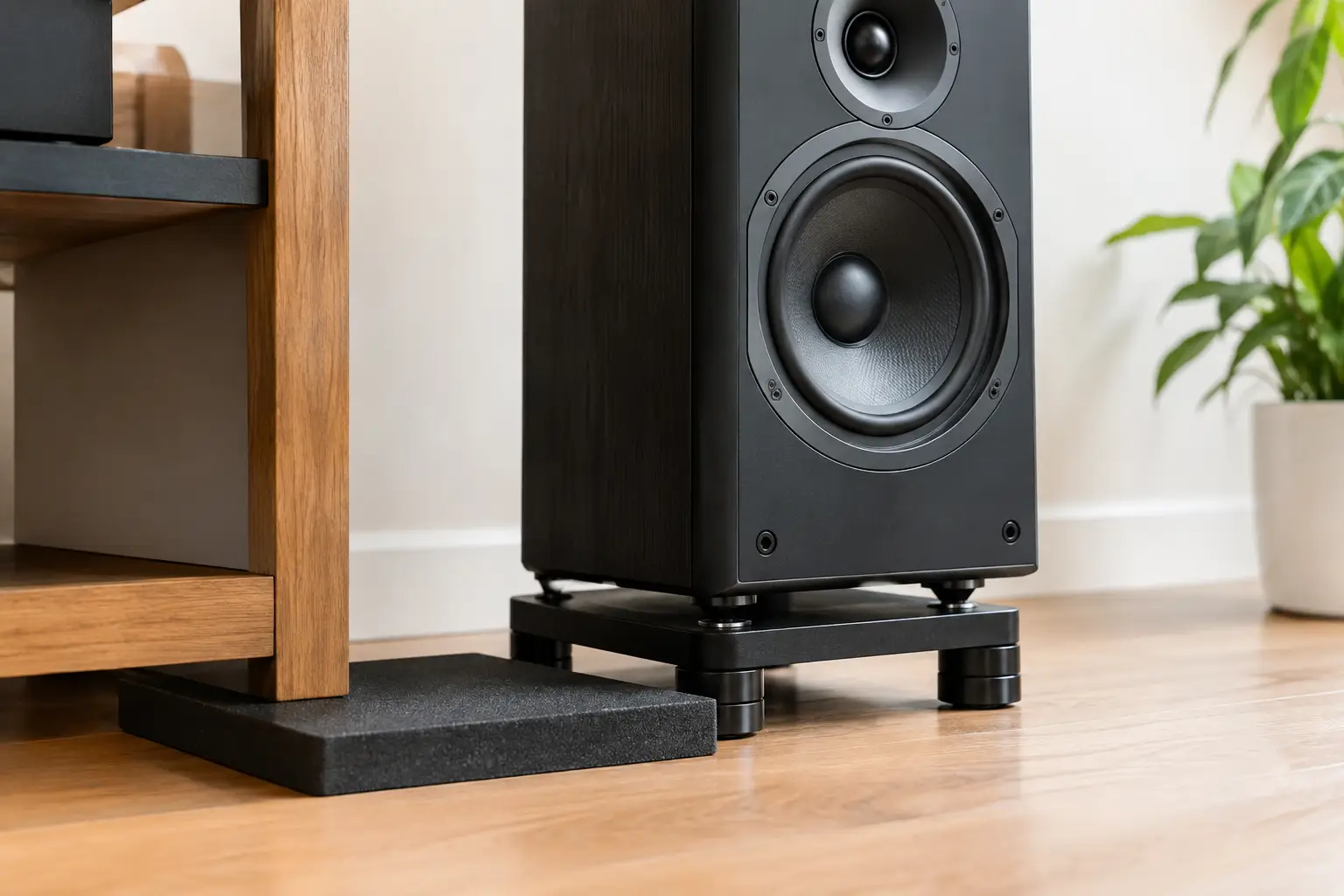
Room interaction is just as important. Audiophile loudspeakers do not perform in isolation. Placement, wall proximity, listening distance, and acoustic balance all shape the outcome. A sophisticated speaker can sound disappointing when poorly matched to its environment, while a well-chosen model in the right room can be astonishingly persuasive.
This is one reason experienced listeners often value brands with a clear design philosophy. When engineering is guided by musical realism instead of trend-chasing, the products tend to remain satisfying over time. They age gracefully because they are not built around sonic gimmicks that impress quickly and fatigue just as fast.
The luxury of emotional connection
There is a practical side to premium audio, but there is also a deeply personal one. People invest in fine loudspeakers for the same reason they collect exceptional watches, furniture, or art: because craftsmanship changes the experience of ownership.
A high-end loudspeaker occupies space both visually and sonically. It becomes part of the atmosphere of a room and part of the rhythm of daily life. The pleasure is not limited to technical performance. It includes the tactile confidence of meticulous construction, the visual harmony of elegant design, and the knowledge that what you are hearing was created with intention rather than compromise.
That is especially true when the speaker disappears as an object and leaves only music behind. At that point, luxury is not excess. It is refinement in service of feeling. The system no longer asks for attention. It rewards it.
For discerning listeners, this distinction matters. Music is not content to be consumed passively. It is memory, mood, identity, and atmosphere. A loudspeaker that captures that richness offers more than fidelity. It creates a place where listening becomes restorative, immersive, and emotionally exact.
Among the companies that have built their reputation around this philosophy, Gershman Acoustics stands apart for combining Canadian craftsmanship, advanced acoustic design, and a singular commitment to musical engagement. That kind of heritage matters because it reflects a long view of what high-end audio should deliver: not a brief thrill, but enduring connection.
When the upgrade is truly worth it
Not every system needs a dramatic overhaul, and not every listener wants one. But for those who feel that recorded music at home still sounds flat, constrained, or emotionally distant, loudspeakers are often the most transformative place to begin.
A meaningful upgrade does not just reveal more information. It changes how often you listen, how long you listen, and how deeply you reconnect with recordings you thought you knew. Albums return with fresh perspective. Performances gain emotional contour. Silence between notes starts to matter.
That is when audiophile loudspeakers justify their place. Not because they are exclusive, but because they restore something essential that lesser systems tend to lose – the sensation that musicians are communicating directly with you, in real space, with all the nuance, force, and fragility that made the performance worth recording in the first place.
If a loudspeaker can do that consistently, it is no longer just a component. It becomes part of how you experience music at its most vivid and lasting.